Proposed highway route went through a lost Celtic town full of gold, silver, and amber



 Follow Earth on Google
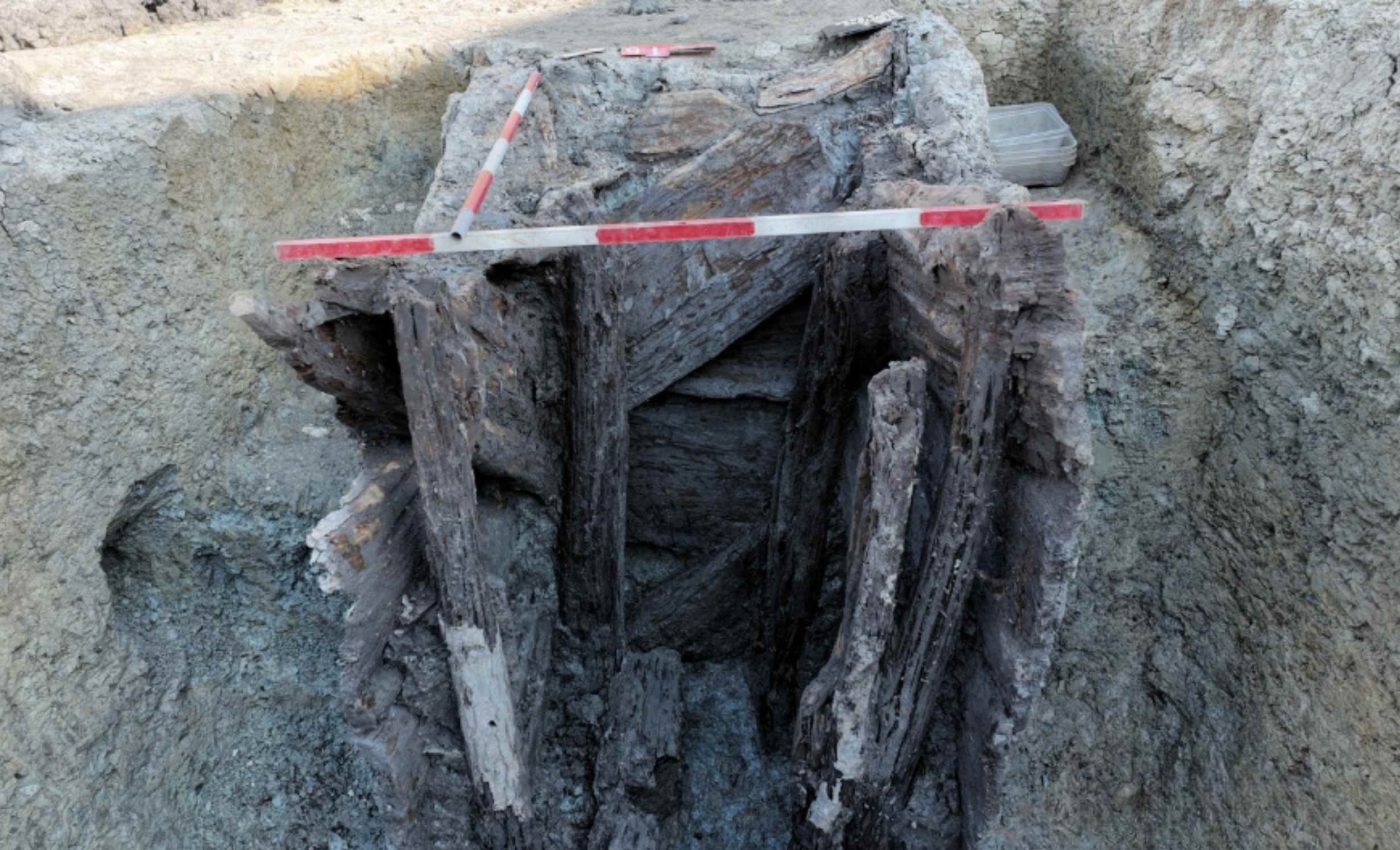
Archaeologists surveying the route of a new D35 motorway in the Czech Republic uncovered a buried Celtic town instead of empty farmland.
Spread across roughly 62 acres near the city of Hradec Králové, the site is one of the largest known Celtic settlements in Central Europe.

This Celtic town flourished in the 2nd century B.C., long before the big fortified hilltop centers that later dotted the region.
Excavations have turned up coins, jewelry, and amber in quantities that turn a routine construction project into a major window on Celtic life.
Celtic town hiding in plain sight
The excavation is led by Tomáš Mangel, an archaeologist at the University of Hradec Králové (UHK) who studies Celtic sites in eastern Bohemia.
His research focuses on how trade and craft production shaped power in late Iron Age communities.
Archaeologists now know the town belongs to the La Tène period, a late Iron Age Celtic culture in Europe. During this era, some settlements grew into open trade centers that rivaled later fortified towns in political and economic importance.
The team mapped a dense patchwork of houses, workshops, and storage pits stretching across the flat river terrace.
Because the area had never been heavily plowed or looted, the original ground surface survived with an unusual concentration of artifacts in the topsoil.
Unlike later oppida – large fortified Celtic towns that appeared in the late Iron Age – this settlement had no walls or ramparts.
Its peak came just before those strongholds rose, which helps researchers trace how open lowland centers evolved into more heavily defended hubs.
Treasure packed into ordinary soil
As digging progressed, archaeologists kept filling bag after bag until the count passed about 13,000 separate bags of finds.
“This is undoubtedly a very important location with economic and social functions,” said Matouš Holas of the Museum of Eastern Bohemia in Hradec Králové.
The collection ranges from gold and silver Celtic coins, and coin molds, to broken pottery, tools, and fine metal vessels.
There is also an unusually rich mix of jewelry, including brooch fragments, glass armlets, belt fittings, and beads that once flashed with color.
One standout piece is a ceramic shard scratched with a lively image of a horse, added after the vessel was fired. Archaeologists class this as graffiti rather than formal decoration; it is a small glimpse of what people chose to mark in their spare moments.
Foundations of houses stand alongside kilns, glass working areas, and at least one or two buildings that likely served as sanctuaries.
Together they show a settlement where religion, industry, and daily life were tightly woven into the same crowded landscape.
Trade hub on the Amber Road
Amber beads and raw fragments show that this town sat on the Amber Road, an ancient trade route by which Baltic amber was carried south.
Archaeologists studying amber distribution argue that communities who managed this corridor controlled valuable connections between northern coasts and inland markets.
“The presence of amber, luxury pottery, and local coin production indicates that this was not a typical rural village. It was clearly integrated into the Amber Road, a key trade route connecting the Baltic to the Mediterranean,” said Mangel.
Large overviews of amber finds suggest that La Tène communities kept using amber even when some northern neighbors abandoned it.
Those patterns support the idea that control over amber routes offered both material wealth and a powerful symbolic link to distant regions.
Years before the highway dig, a La Tène rein guide ring from Vendolí showed that eastern Bohemia sat on a communication corridor between Bohemia and Moravia.
That horse harness fitting turned up far from any hillfort, hinting that elite travelers moved along routes that sites like this town anchored.
Celtic town’s crafts and tech
The settlement includes kilns where craftspeople produced fine, wheel-made pottery alongside more ordinary household vessels.
Recent ceramic research shows that such wheel-made wares spread fastest in regions with dense populations and growing economic inequality.
Putting workshops, storage buildings, and shrines together in one open space marks this place as a planned center, not just a loose scatter of farmsteads.
It implies specialists who relied on full-time craft or trade work which, in turn, required steady demand from surrounding communities.
Artifacts take the place of records
Because Celtic societies in this region left almost no written records, the tools and waste from these workshops serve as their best surviving data.
Charcoal, misfired pots, and broken glass give clues to fuel use, temperatures, and recipes that archaeologists can reconstruct in the lab.
Studies of pottery technology show that innovations often cluster first in regional hubs, then spread outward into smaller villages over time.
Seen this way, the D35 town becomes a rare snapshot of that process in action, just before fortified oppida began to dominate maps.
Rewriting the map of Celtic Europe
Many historians link Iron Age Bohemia with the Boii, a Celtic group whose name survives today in the word Bohemia. The new town adds a concrete, carefully recorded site to that story, whatever the inhabitants called themselves.
“[This site is] comparable to major Celtic centers in the central Danube region or southern Germany,” said Miroslav Novák of the Museum of Eastern Bohemia.
His comparison places this open town in the same league as famous fortified sites that once dominated narratives about Celtic Europe.
Curators in Hradec Králové frame the discovery as a power center of the younger Iron Age that forces a rethink of textbook maps.
Celtic town’s treasures on exhibit
The museum’s current exhibition, nicknamed “Forgotten city under the highway,” lets visitors see key finds before most objects disappear into long-term study stores.
For historians, the D35 town matters because it captures a moment when economic power clustered in open lowland centers that were tied together by trade.
Instead of viewing Celtic history only through hillforts and war, this site highlights markets, craft workers, and long-distance connections that shaped everyday lives.
—–
Like what you read? Subscribe to our newsletter for engaging articles, exclusive content, and the latest updates.
Check us out on EarthSnap, a free app brought to you by Eric Ralls and Earth.com.
—–