Radar reveals 100 trillion insects flying over the U.S.



 Follow Earth on Google
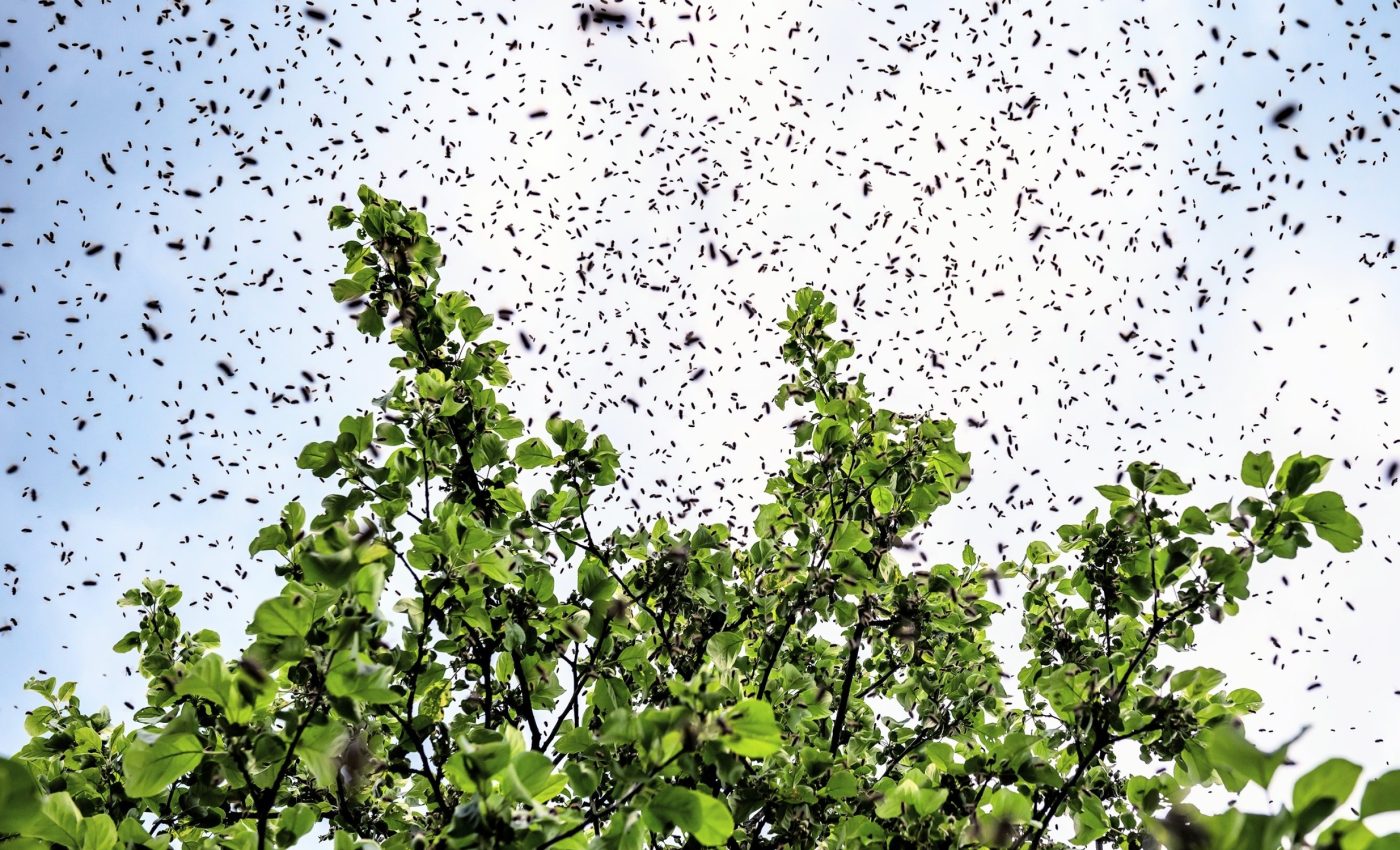
On a typical summer day, researchers used U.S. radar data to estimate about 100 trillion insects flying above the contiguous United States.
The count comes from the National Oceanic and Atmospheric Administration (NOAA), which shares radar data from a network run with federal partners.
Counting life aloft

The work was led by Dr. Elske Karolien Tielens at the Swiss Federal Institute for Forest, Snow and Landscape Research (WSL).
Her research tracks flying insects at huge scales and tests how climate and land use shape what radar sees.
Instead of catching insects in nets, the team counted radio echoes and turned them into daily maps of insect density.
Using radar to spot flying insects
Most people think radar spots rain, but weather radar detects many things aloft. The Next Generation Weather Radar network, called NEXRAD, includes 160 sites, and NOAA archives 5 raw scans for public use.
Dual-polarized radar adds dual-polarization, paired signals that reveal shape and texture, which helps software screen out raindrops and birds.
To avoid double counting, the team used one scan near local noon for each radar and day. They removed obvious precipitation, and then used radar signatures to flag hail and other clutter that can mimic insects.
That cleaning step created a conservative snapshot, because any uncertain pixels were dropped instead of being guessed.
From echoes to insects
In each scan, reflectivity – the strength of returned radar energy – rose when more small bodies occupied the air column.
The experts tallied insects within a two-mile-high column, finding an average midday density of about 4.3 insects per square meter.
When the team modeled August 25, 2021, they found the thickest daytime swarms near the Gulf Coast and southern plains.
Together, those airborne insects amount to millions of tons of biomass – the total living weight in a region – flowing through food webs.
The researchers treated weather cells as blank spots, because heavy rain can overwhelm insect echoes and confuse the model.
A decade on record
Using dual-polarization data, they built a time series, repeated measurements collected in the same way over years, from 2012 to 2021.
Across the whole country, the overall daytime insect density did not show a net drop across that decade.
Year-to-year, the data jumped around, which warns against reading too much into short records or single bad seasons.
Flying insect numbers on the radar
At the local level, 52% of radar sites measured rising insect density, while 48% measured declines during the study.
Neighboring stations sometimes moved in opposite directions, which suggests that nearby landscapes can create very different outcomes.
The patchwork matters because it can hide trouble spots, even when the national average looks calm.
Warming winters and insect decline
The strongest link appeared in winter, where insect density fell most in places with rising average winter temperatures.
At higher latitudes, warming winters matched sharper declines, while lower-latitude sites showed little relationship between winter trends and insects.
Because many insects overwinter as eggs, larvae, or adults, extra warmth can disrupt dormancy and drain stored energy.
The team also tracked year-to-year changes, and summer warmth often boosted flight activity compared with a site’s long average.
Spring rain helped too, but a warm winter before the season usually meant fewer insects aloft the next year.
These climate anomalies, departures from a long-term seasonal average, show why single-year surveys can mislead even careful observers.
Cities and warmth
Insect density dropped more in developed areas, and the pattern stayed even after accounting for local winter temperature trends.
Cities warm more in winter, creating an urban heat island – a developed area that stays warmer than nearby land.
A warmer city winter can speed metabolism, which may leave insects short on stored fuel before spring arrives.
Radar cannot identify species, so rising totals could still hide the disappearance of sensitive insects and the growth of hardy ones.
“It is therefore important to combine radar data with other data sources,” said Dr. Tielens.
Pairing radar counts with traps and citizen-science reports can connect big patterns to real species, including pests, pollinators, and predators.
Why insects matter
Flying insects spread pollen, help control agricultural pests, and provide food for birds, bats, and fish – so their abundance matters to people.
Big changes in insect abundance can affect harvests and forest health, and they can also change how fast disease risks spread.
Because the radar counts focus on insects in flight, they highlight an active stage that links faraway habitats in one day.
A global toolset
Many countries run radar networks like NEXRAD, and those systems could track aerial insects wherever ground monitoring is sparse.
New algorithms may pull more history from older archives. At WSL, researchers see radar as a practical way to build long records, especially in the Global South.
Future work can tighten the conversion from echoes to individuals, using field measurements of insect size and reflectance.
If scientists link radar trends to local land management, communities could track whether restoration and lighting changes help insects rebound.
The study is published in the journal Global Change Biology.
—–
Like what you read? Subscribe to our newsletter for engaging articles, exclusive content, and the latest updates.
Check us out on EarthSnap, a free app brought to you by Eric Ralls and Earth.com.
—–