Rare pygmy sperm whale dies after swallowing a plastic bag



 Follow Earth on Google
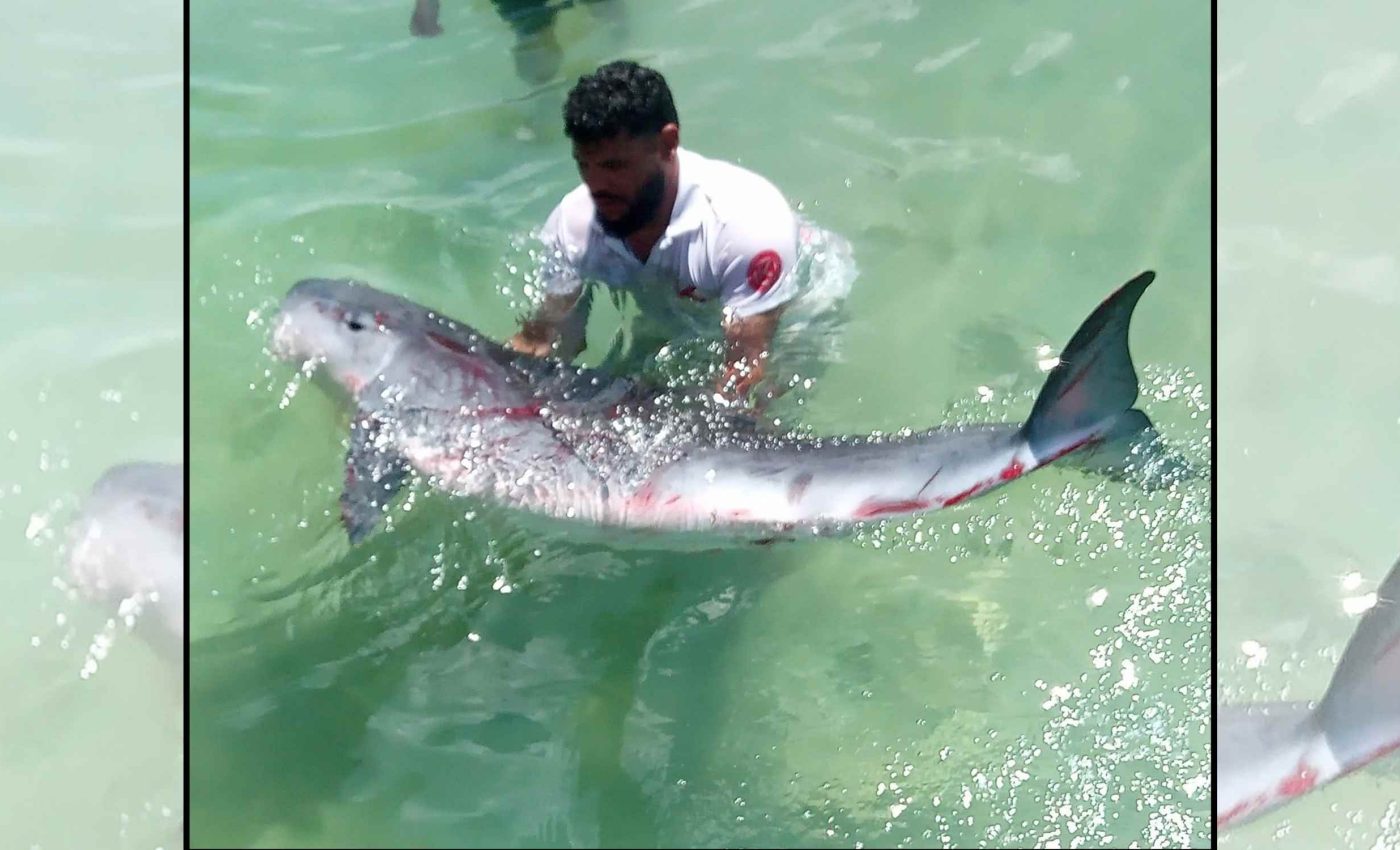
A rare young pygmy sperm whale died near the Honduran island of Utila after swallowing a plastic bag that its body could not pass. The case has turned a single six-foot-long animal into a stark warning about what floating trash can do to wildlife.
For the small island community, it was also the first confirmed sighting of a pygmy sperm whale in local waters. Scientists working nearby suddenly had a rare chance to study both the animal and the plastic that helped kill it.
Young pygmy whale in distress

The work was led by the Kanahau Utila Research and Conservation Facility (KWC), a nonprofit research center on the Honduran island of Utila. Its team focuses on marine conservation and wildlife monitoring in the waters around the island.
On the day of the incident, observers saw the whale near shore, and reports described it repeatedly beaching itself.
This unusual stranding, when a marine animal comes ashore alive or dead, signaled that something was badly wrong inside its body.
“This rare and tragic event highlights the devastating impacts of ocean plastics on Utila’s marine life,” the organization wrote in a public statement. Rescuers tried to guide the animal back into deeper water and monitored its breathing and movement.
Results of the necropsy
After the whale died, specialists carried out a necropsy, an internal examination of an animal after death. They checked each organ, recorded its condition, and opened the stomach to look for anything unusual.
Inside the stomach they found a torn plastic bag about 11 inches wide, crumpled and stuck among the folds of tissue. They also saw nematodes, parasitic roundworms that can irritate and damage the gut wall.
Taken together, the bag and the worms could have slowed food movement and set up a serious digestive blockage. That blockage likely left the whale unable to feed properly, weakened it, and added to the stress of stranding.
More than just floating trash
Scientists estimate that around 8 million tons of plastic move from land into the ocean each year. Much of that waste comes from mismanaged trash on land and drifts as floating marine debris, discarded human trash that ends up in water.
Large plastic items such as bags and ropes can clog the guts of wildlife. Smaller microplastics, tiny plastic pieces under 0.2 inches long, can work their way into tissues and leave animals with injuries and slow starvation.
In dark offshore waters, floating plastic can look and move a lot like prey such as squid or fish scraps. Deep divers that hunt by sound rather than sight may run into plastic by chance and swallow it without realizing anything is wrong.
Studying pygmy sperm whales
Pygmy sperm whales belong to the group of cetaceans, whales, dolphins, and porpoises that live in the ocean. They have a compact body, a flat head, and a small curved dorsal fin, and they favor warm and tropical waters in many oceans.
These animals rarely approach boats and often float just below the surface, so even trained observers may miss them. Because they are so hard to spot at sea, most of what scientists know about them comes from stranded individuals.
“Little is known about (the) species because of limited information, and they are considered rare,” according to NOAA. That rarity makes every documented encounter tied to a clear cause of death scientifically important.
Small pieces, big risks
A recent global analysis of more than 10,000 necropsies found plastic inside about 12 percent of marine mammals examined at death.
In the same work, plastic also turned up in many sea turtles and seabirds, showing that this is not just a whale problem.
One detailed case described a pygmy sperm whale whose stomach was packed with plastic fragments and bags.
The whale survived long enough for treatment, but plastic still damaged its gastrointestinal tract, the organs that digest and move food.
By contrast, the Utila whale had a single bag instead of many pieces, yet that was still enough to interfere with feeding.
In a small animal that already carries parasites and has to work hard to find food, even one extra obstacle can be fatal.
Global plastic problem
Once plastic reaches the sea, currents can carry it across entire ocean basins and into deep trenches. It can break into smaller and smaller pieces without ever really going away, lingering for decades or longer.
That means the bag inside the Utila whale did not need to be dropped near the island at all. It could have drifted there from another coastline or fishing route, crossing thousands of miles before the animal encountered it.
Each step that keeps plastic out of the water lowers the chance of another animal dying this way. Policies that cut disposable plastic and improve waste systems can also protect whales, fish, turtles, and seabirds important to coastal communities.
Lessons from a pygmy whale
This case shows how careful field notes, lab work, and statistics fit together. Stranding teams recorded behavior at the shore, veterinarians studied tissues in the lab, and other researchers linked those findings to wider patterns.
The story is sad, but it also adds one more data point for scientists trying to understand how plastic harms wildlife.
Each new piece of evidence helps fill gaps in our knowledge and shapes the questions the next generation will ask.
Anyone who cares about the ocean can contribute through careers in biology, engineering, law, or education, or by supporting better choices about plastic use.
Small actions in many places add up, whether they happen in classrooms, political domains, a coastal town, or a city far from the sea.
—–
Like what you read? Subscribe to our newsletter for engaging articles, exclusive content, and the latest updates.
Check us out on EarthSnap, a free app brought to you by Eric Ralls and Earth.com.
—–