Rice plants toughen their roots to push through hard soil



 Follow Earth on Google
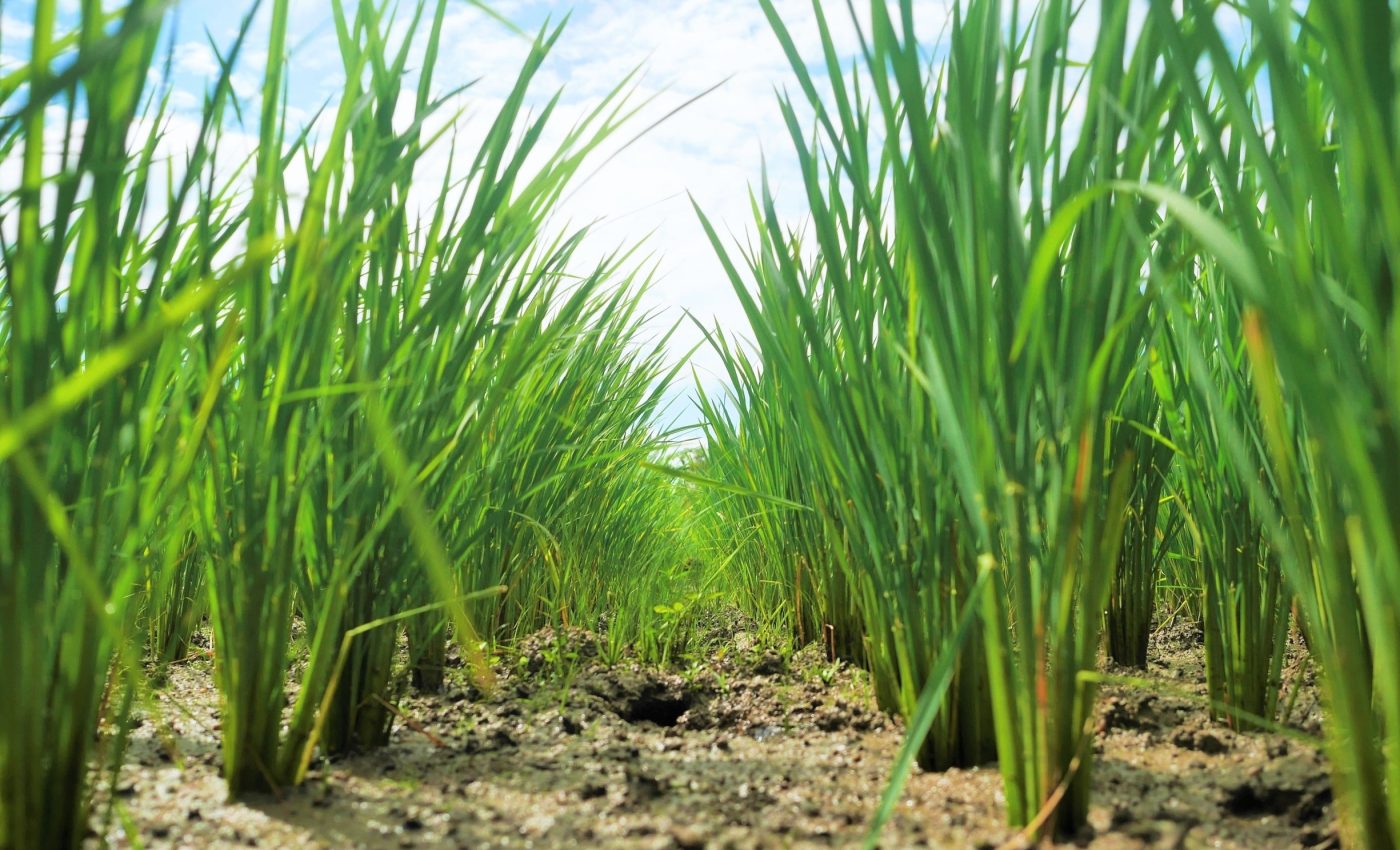
Plant scientists in China, Denmark, and the UK have uncovered a quiet engineering trick inside rice roots that helps them punch through hard soil.
By rearranging the thickness and stiffness of their own cell walls, the roots turn into stronger probes that keep growing instead of stalling.

Across large crop regions, heavy tractors and harvesters squeeze the ground until pores collapse and water and air have nowhere to go.
Compacted soils have cut yields in some fields by about 50 percent, a serious hit when food demand keeps rising.
Growing crops in degraded soil
The work was led by Staffan Persson, professor of plant biology at the University of Copenhagen. His research focuses on how plant cell walls give roots enough strength and flexibility to cope with difficult ground.
Global assessments of land suggest that about one third of the world’s soils are moderately or highly degraded, with compaction among the causes.
For farmers already dealing with heat and drought, extra resistance at the root tip can decide whether a crop survives or fails.
Why soil health drops
Scientists describe land degradation, the long term decline of soil productivity, as a slow emergency that erodes food security over decades.
Compaction adds to this pressure by reducing drainage, increasing erosion risk, and forcing plants to invest more energy just to push roots downward.
As machines get larger and farm schedules tighter, operators often drive on soil that is still wet, which locks in compaction once it dries.
Long dry periods can then bake the compacted layers harder, so the next crop faces an even tougher barrier near the surface.
Rice roots sense pressure
Earlier work showed that trapped ethylene, a gaseous plant hormone that signals stress, builds up around roots when soil pores close.
That buildup slows the extension of the root tip and encourages the root to swell sideways instead.
Follow-up research in rice linked ethylene signaling to the hormones auxin and abscisic acid, a stress hormone that helps plants conserve water.
Together, these signals encourage roots to shorten, thicken, and spread their tips when they encounter dense layers. The new paper follows how ethylene signals lead to structural changes inside root tissues.
Instead of looking only at how long roots grow, the team zoomed in on cross sections to see how every layer responds.
How rice roots strengthen
In plants, growth is controlled not just by internal pressure but by the patterning of the cell walls that surround each cell.
If walls yield more in one direction than another, cells elongate in that direction, so any change in wall mechanics can redirect growth.
The researchers found that cells in the root cortex, the middle layer that stores nutrients, become larger under compaction so the root bulges outward.
Meanwhile, the outer epidermis keeps a tight ring of smaller cells, so the root as a whole ends up thicker and mechanically more stable.
A key player is a gene called OsARF1, which produces a transcription factor, a protein that sits on DNA and turns other genes down.
Shifting root walls
Under compaction, OsARF1 becomes more active in cortex cells and suppresses genes that build key wall components.
One important target is cellulose, a tough sugar based polymer that strengthens plant cell walls.
By cutting cellulose levels in cortex walls while leaving the outer layer reinforced, root tips can push more forcefully into compacted soil without bending.
“Our results show that by increasing the levels of a specific protein, the root becomes better able to penetrate compact soil,” said Jiao Zhang, the study’s lead author.
In the experiments, rice lines with extra OsARF1 pushed their roots farther through dense gel and hard soil than unmodified plants.
What this could mean for farming
Similar ideas have appeared in other crops, where thicker outer tissues help roots stay straight as they pierce dense layers of soil.
Studies of maize and wheat roots show that certain anatomical traits make penetration easier while reducing the chance that tips buckle or break.
The new study pinpoints molecular levers that breeders can now use to design roots with specific wall patterns for difficult soils.
How other crops cope
“It is fascinating to see how plants draw on mechanical concepts familiar from construction and design to solve biological challenges,” said Persson.
“Our results could help develop crops that are better equipped to grow in soils compacted by agricultural machinery or climate-related drought. This will be crucial for future sustainable agriculture,” said study co-author Wanqi Liang.
Turning these molecular insights into better harvests will take time, including field trials in compacted soils and checks that roots still reach deep water.
If breeders and engineers combine such root traits with smarter machinery use and soil care, crops may keep growing as pressures on land increase.
The study is published in the journal Nature.
—–
Like what you read? Subscribe to our newsletter for engaging articles, exclusive content, and the latest updates.
Check us out on EarthSnap, a free app brought to you by Eric Ralls and Earth.com.
—–