Scientists are searching for the 'genetic footprint' of Leonardo da Vinci in his living descendants



 Follow Earth on Google
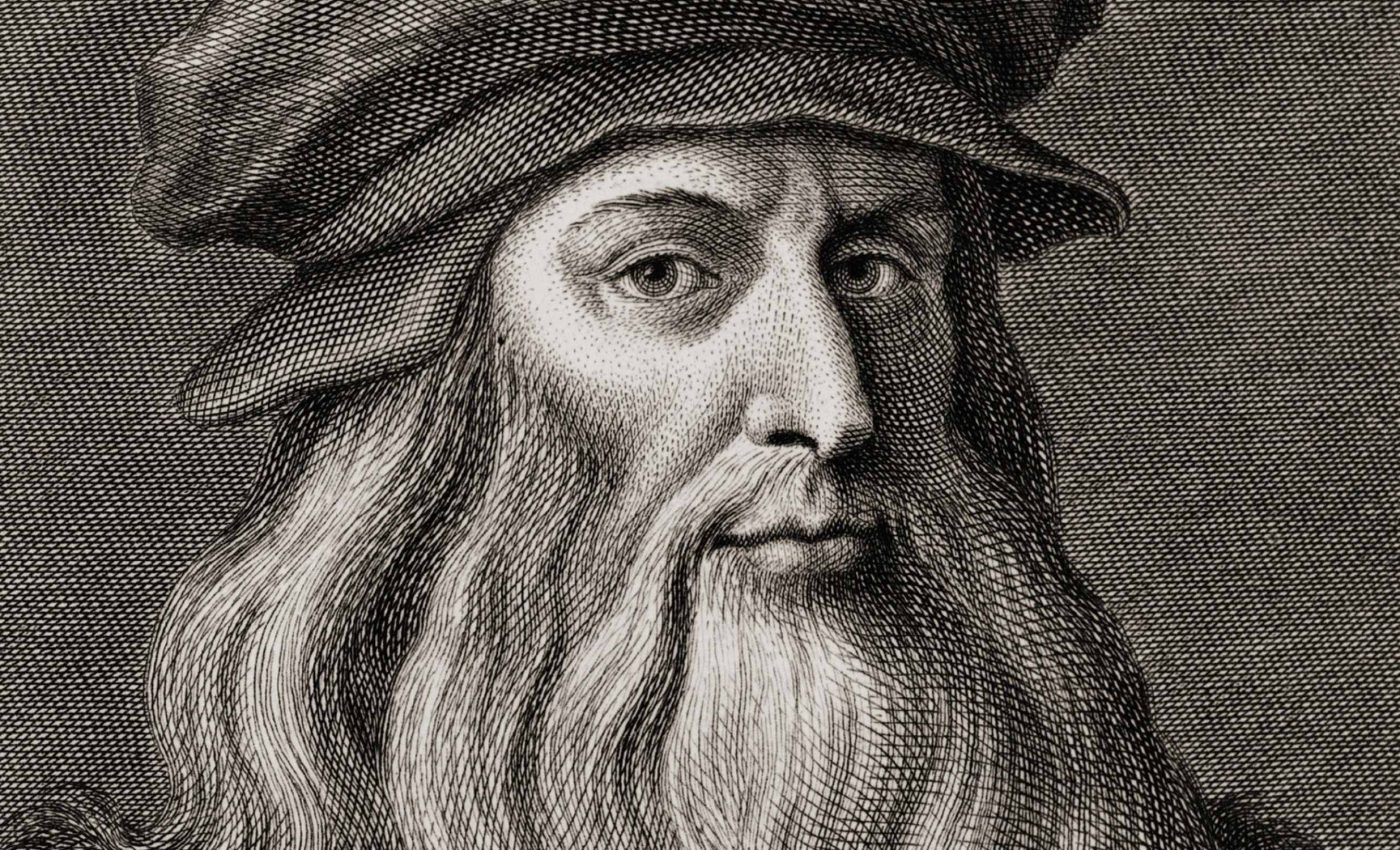
Scientists are tracing Leonardo da Vinci’s story in a new way – through the DNA carried by his distant relatives. A family tree that spans twenty one generations now gives them a rare chance to piece together parts of his genetic code.
The Leonardo da Vinci DNA Project links historians and biologists in Italy and the United States. Working with living descendants and bones from family tombs in Vinci, they hope to build a scientific portrait of the man behind the paintings.
Following Leonardo’s male line

The work was led by Alessandro Vezzosi, a Leonardo scholar and director of the Museo Ideale Leonardo Da Vinci in Vinci, Italy. His research traces Leonardo’s family history and ties it to modern genetic tools.
After decades of searching archives and registers, the team has documented a direct male line from a fourteenth century ancestor named Michele. That line now reaches fourteen living men in Italy and spans roughly seven hundred years.
The focus on sons matters because the Y chromosome, a sex chromosome that makes a person biologically male, passes mainly from father to son.
When several men share the same Y chromosome pattern, it strongly suggests they share a distant male ancestor.
Geneticists in Florence have already tested six of the living men and found shared stretches on their Y chromosomes. Those matches point to a continuous Da Vinci male line that runs unbroken through many generations.
Reading DNA in old bones
The research team has located a Da Vinci family tomb in the Church of Santa Croce in Vinci. Records suggest it holds his grandfather Antonio, his uncle Francesco, and several half brothers from Leonardo’s paternal line.
From those remains, anthropologists collected bone fragments and dated them using radiocarbon dating, a method that estimates age from the decay of radioactive carbon.
One fragment from the right period has already shown, through paleogenomics, the study of ancient DNA, that it came from a man.
“Further detailed analyses are necessary to determine whether the DNA extracted is sufficiently preserved. Based on the results, we can proceed with analysis of Y chromosome fragments for comparison with current descendants,” said David Caramelli of the University of Florence.
If the Y chromosome pattern in those bones matches that in the living descendants, it would support the family tree and parish paternity records.
It would also point to the specific tombs and manuscript pages most likely to carry biological traces linked directly to Leonardo.
Inside da Vinci’s DNA
A reliable match between tomb DNA and living relatives would open the door to testing notebooks, sketches, and other objects Leonardo handled.
If those surfaces still hold skin cells or fingerprints, ridge patterns left when fingers touch a surface, they could reveal parts of his genome.
Leonardo himself thought carefully about heredity and what parents pass on to their children. “Leonardo questioned the origins of human life not only biologically,” said Agnese Sabato, a historian with the Leonardo Da Vinci Heritage Association.
Modern scientists describe some of these layered effects using the term epigenetics. The word refers to chemical markings on DNA and its support proteins that help control which genes are active.
Health agency guidance notes that behavior and environment can shape epigenetic patterns that influence how bodies grow and respond to illness.
Experimental research shows that diet, pollution, and other exposures can leave long lasting epigenetic changes that alter disease risk.
Linking art and biology
The Leonardo da Vinci DNA Project brings together laboratories in Italy, France, and the United States. Teams at The Rockefeller University in New York and the J. Craig Venter Institute in California (JCVI) handle much of the genetic analysis.
“Even a tiny fingerprint on a page could contain cells to sequence. 21st-century biology is moving the boundary between the unknowable and the unknown,” said Jesse H. Ausubel of The Rockefeller University.
His published essay explains how comparing DNA from descendants, tombs, and artworks could reveal new details about Leonardo. The same work suggests that similar methods could help museums protect, date, and authenticate fragile pieces of cultural heritage.
Family stories behind the data
The new genealogy does not just list names on a chart, it reconnects Leonardo’s relatives to real houses and fields. Researchers track Da Vinci family properties in the village of Vinci and follow inheritances that later reached Leonardo himself.
Among the most striking figures is his grandfather Antonio, remembered not only as a farmer but also as a merchant. Sources describe him traveling between what is now Spain and Morocco, suggesting a wider world around Leonardo’s childhood than many accounts describe.
The research also revisits the life of his mother Caterina, who some records suggest may have been enslaved in a wealthy Florentine household. That possibility adds another layer to the social and ethical questions that arise when modern science revisits lives from the distant past.
Lessons from da Vinci’s DNA
All of these strands, from careful archival research to delicate DNA sequencing, lead toward a single shared goal. Researchers hope to assemble enough fragments to outline a cautious genetic portrait of Leonardo that still respects the limits of current methods.
Any DNA that can be linked to Leonardo with confidence may reveal hints about his health, metabolism, or rare sensory traits. The same work could improve ways to study other creative figures whose traces survive on paper, canvas, stone, and wood.
At the same time, the project raises questions about privacy for living descendants whose DNA makes the comparisons possible. For the town of Vinci, the prospect of hearing Leonardo’s “genetic voice” brings a fresh connection to its most famous son.
The study is published in Human Evolution.
—–
Like what you read? Subscribe to our newsletter for engaging articles, exclusive content, and the latest updates.
Check us out on EarthSnap, a free app brought to you by Eric Ralls and Earth.com.
—–