Scientists declare elkhorn and staghorn corals 'functionally extinct'



 Follow Earth on Google
Scientists have concluded that two of Florida’s reef-building corals are in functional extinction, meaning they are too rare to keep the reef working. Across survey sites, between 97.8 and 100 percent of elkhorn and staghorn colonies in the Keys were gone after the 2023 marine heat wave.
The finding centers on Florida’s only coral barrier reef, which runs offshore along the state’s southern-Atlantic coast. During that summer, water temperatures there stayed above 90-degrees for nearly three-months.
Understanding “functional extinction”

The work was led by Derek Manzello, a coral reef scientist with NOAA’s Coral Reef Watch and Atlantic Oceanographic and Meteorological Laboratory (AOML).
His research tracks how rising ocean temperatures and changing chemistry reshape Florida and Caribbean coral communities.
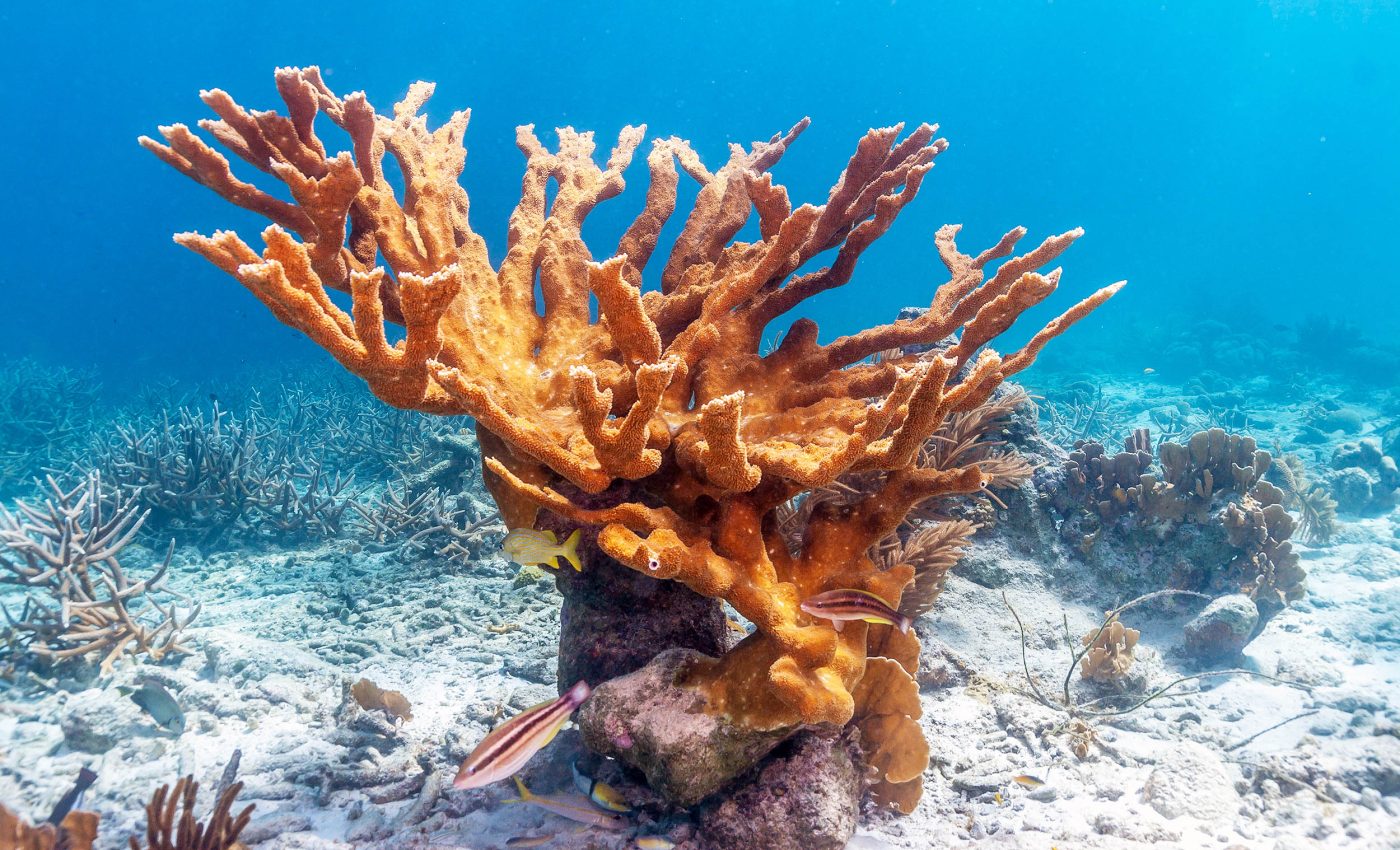
In this case, functionally extinct means the corals no longer build the branching-thickets that once dominated many shallow-reef ridges.
Small, scattered colonies may hang on, but they no longer create the kind of continuous habitat that fish, lobsters, and other reef animals need.
That is why the new study focuses not only on whether individual corals survived, but on whether they still play their old ecological roles.
For elkhorn and staghorn in Florida, that answer is now effectively no, so the authors describe them as “functionally extinct.”
Florida’s Elkhorn and Staghorn coral
Florida’s coral reef stretches about 350 miles from the Dry Tortugas near Key West to the St. Lucie Inlet on the southeast coast.
It is the only extensive shallow-reef system next to the continental United States.
Before the crash, elkhorn and staghorn were the main reef building corals, animals that lay down hard skeletons and create the reef’s structure.
Their thickets once formed living breakwaters in waist-deep water, slowing waves and giving shelter to huge numbers of fish and invertebrates.
Long before this heat wave, though, these species had already been battered by disease, water pollution, ship groundings, and heavy coastal development.
By the early 2000s, scientists estimated that their Florida populations were below three percent of former levels.
Both corals were later listed as threatened under the Endangered Species Act, a federal law that protects species at risk of extinction.
On paper they were protected, but in practice their numbers kept sliding downward as the ocean warmed.
2023 heatwave that broke the reef
Scientists call this event a marine heatwave (MHW), a period of unusually high ocean temperatures lasting weeks.
Across the reef, sea surface temperatures stayed at or above 87.8 degrees Fahrenheit, about 31 degrees Celsius, for an average of about forty days.
That level of heat stress was between two and four times higher than anything recorded on Florida’s reef since satellite monitoring began.
In the Keys and Dry Tortugas, shallow-reef zones simply cooked, leaving once dense coral gardens reduced to catastrophic losses.
Farther north off southeast Florida, cooler water spared more colonies, but more than a third of the studied elkhorn and staghorn corals still died.
That pattern shows just how close the entire reef system came to total loss of these species statewide.
Corals die quickly in hot water
Corals are tiny animals called polyps that live in colonies and grow hard skeletons made of calcium carbonate.
Inside their tissues lives symbiotic algae, microscopic plants that share food and color with the coral.
When water gets even a couple of degrees hotter than the usual summer maximum and stays there, this partnership breaks down.
The stressed coral expels its algae, turns white in a process called bleaching, and begins to starve.
If temperatures drop again within weeks, some bleached corals can slowly recover, but extended extremes damage cell structures and make disease more likely.
During the heat wave, the water stayed so hot for so long that many elkhorn and staghorn colonies lost tissue and died outright.
Elkhorn, staghorn, and corals’ future
Losing elkhorn and staghorn is not just a wildlife story, because these corals have been a natural breakwater for Florida’s communities.
Florida’s coral reef already provides more than 650 million dollars in annual flood protection and supports about 1.1 billion dollars in tourism, according to state estimates of the reef’s value.
Those same reefs help sustain roughly 71,000 jobs across South Florida in diving, snorkeling, fishing, and reef-related tourism businesses.
As the living coral framework erodes, the region faces tough economic choices about building seawalls, rebuilding after storms, and which fisheries can stay open.
Scientists and managers are not walking away from the reef, even in the face of this near-total loss.
Teams in Keys nurseries and partner aquariums have rescued genetic fragments from the last wild elkhorn and staghorn colonies, hoping to breed tougher strains.
The study is published in Science.
—–
Like what you read? Subscribe to our newsletter for engaging articles, exclusive content, and the latest updates.
Check us out on EarthSnap, a free app brought to you by Eric Ralls and Earth.com.
—–