Sea urchins don’t have a brain - so they became one



 Follow Earth on Google
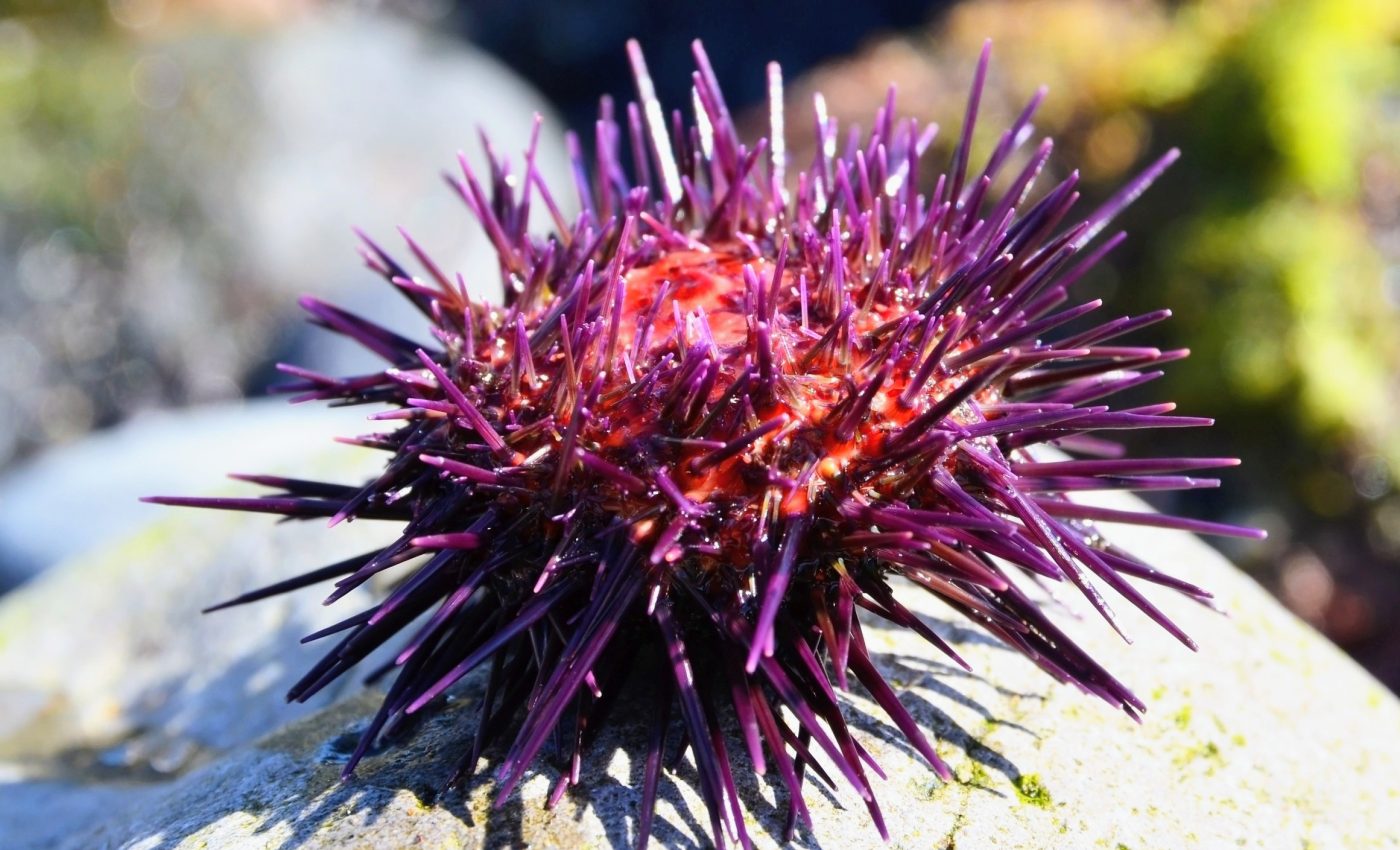
Sea urchins look simple, but a new cell atlas shows that a young urchin’s whole body behaves like a distributed brain.
Researchers mapped major cell types in juvenile Paracentrotus lividus, revealing neural networks where scientists once expected a loose nerve net.

Instead of a tiny control center, these juveniles spread neuron rich tissue across much of the body surface and inner organs.
That layout challenges old ideas about what counts as a brain and how complex nervous systems first evolved in animals.
The project was led by Periklis Paganos, a developmental biologist at the Stazione Zoologica Anton Dohrn. His work explores how marine invertebrates reuse and rewire nervous system cell types across very different life stages.
Hidden brain of the sea urchin
To see what cells build a young urchin, the team used single-nucleus transcriptomics (SNT), a technique that reads active genes inside many individual nuclei.
The researchers collected nuclei from whole two week old juveniles, sequenced their RNA, and grouped cells with similar gene activity into shared types.
The atlas showed 25,000 nuclei falling into 48 molecular clusters that grouped into eight broad families of tissues and organs.
Those families covered neurons, body surfaces, tube feet, muscles, skeleton, immune cells, gut, and the water vascular system (WVS) – a fluid network that powers movement.
Roughly two-thirds of the clusters were neurons, revealing a neuron-rich body in juveniles millimeters long, according to the study.
Sea urchin transform themselves
Sea urchins start life as swimming larvae with bilateral symmetry and tiny arms for feeding.
During metamorphosis, they rebuild into bottom-dwelling juveniles with a pentaradial arrangement, a body organized around five repeating sectors.
Earlier work had mapped gene regulatory networks (GRN), sets of interacting control genes that assign cells to skeleton, muscle, gut, and other larval tissues.
How one genome builds two bodies
The new atlas shows that many of these circuits are reused in juveniles, so the same genomic toolkit builds two very different bodies.
Some digestive cell types keep using familiar controllers while adding new factors better suited to life on the seafloor.
Other gut regions seem to be built largely from scratch, with juveniles combining old regulators in fresh ways that support new diets and behaviors.
A nervous system with variety
Within the atlas, neurons stood out for their sheer variety. The team identified 29 distinct neuronal families that use all the main transmitters, including serotonin, dopamine, acetylcholine, glutamate, gamma aminobutyric acid, and histamine.
Neuronal clusters relied heavily on neuropeptides, short signaling proteins released alongside classical transmitters, to fine tune how circuits respond to incoming signals.
Others mixed transmitters and peptide sets in changing combinations, pointing to fine-grained specialization rather than a simple repetitive nerve ring.
What diverse neurons reveal
“This fundamentally changes how we think about the evolution of complex nervous systems,” said Dr. Jack Ullrich-Lüter of the Natural History Museum in Berlin, Germany.
Inside the atlas, classical head patterning genes known from vertebrates and insects light up across most neurons and outer tissues.
By contrast, trunk-linked genes cluster in internal organs such as the gut and water vascular system, giving the body a head-like signature.
Sensing light without eyes
Sea urchins have no camera eyes, yet their bodies bristle with photoreceptors – light sensitive cells that guide behavior.
Juveniles and larvae can respond to light from many directions, changing posture, movement, and tube foot activity as conditions shift.
Earlier work in this species showed that juveniles and larvae use at least seven opsins, light sensitive proteins that tune cells to specific colors.
That analysis mapped different pigment classes across the skin and tube feet, laying groundwork for the new atlas.
In the juvenile atlas, that diffuse light sensing system resolves into 15 photoreceptor neuron types, each with its mix of opsins and control genes.
One population stands out: a cluster of neurons near each tube foot. These cells coexpress melanopsin, a blue-light-sensitive opsin, along with Go-opsin3.2.
What mixed opsins suggest
Go-opsin, a light sensing protein that signals through the Gene Ontology (GO) pathway, also appears in marine worms where it fine tunes behavior.
In the marine worm Platynereis dumerilii, coexpression of Go-opsin with other opsins shapes color-sensitive swimming.
A separate study found similar proteins essential for a rapid shadow reflex in adult worms, linking extraocular photoreceptors to fast defensive responses.
What this means for brain evolution
Sea urchins belong to the deuterostomes – a branch of the animal tree that also includes vertebrates – so their nervous systems help illuminate deep evolutionary history.
Discovering a neuron-dense body plan in an animal long described as having only a simple nerve ring reshapes how we think about brain organization.
The all-body atlas shows how single-cell tools can reveal hidden complexity, transforming a supposed uniform nerve net into dozens of distinct neuronal and photoreceptor types.
As similar atlases emerge across other echinoderms, scientists can finally test whether this whole-body brain is a common strategy or a sea urchin specialty.
The study is published in the journal Science Advances.
—–
Like what you read? Subscribe to our newsletter for engaging articles, exclusive content, and the latest updates.
Check us out on EarthSnap, a free app brought to you by Eric Ralls and Earth.com.
—–