Archaeologists found a treasure hoard of Persian gold that's been buried for 2,400 years



 Follow Earth on Google
In an ancient Greek city on Turkey’s Aegean coast, archaeologists have uncovered a small clay pot filled with Persian gold coins buried about 2,400 years ago.
The hidden stash looks like royal pay for hired soldiers, yet it likely stayed underground because its owner never came back.

The find comes from Notion, a coastal city that once sat between Persian and Athenian rule.
The team recorded every stone, pot, and coin around the container. As a result, the gold now doubles as a snapshot of life and war on this contested shoreline.
Gold hidden under a home
The work was led by Christopher Ratté, a professor of ancient Mediterranean art and archaeology at the University of Michigan. His research focuses on how classical cities and their objects reflect political change across the eastern Mediterranean.
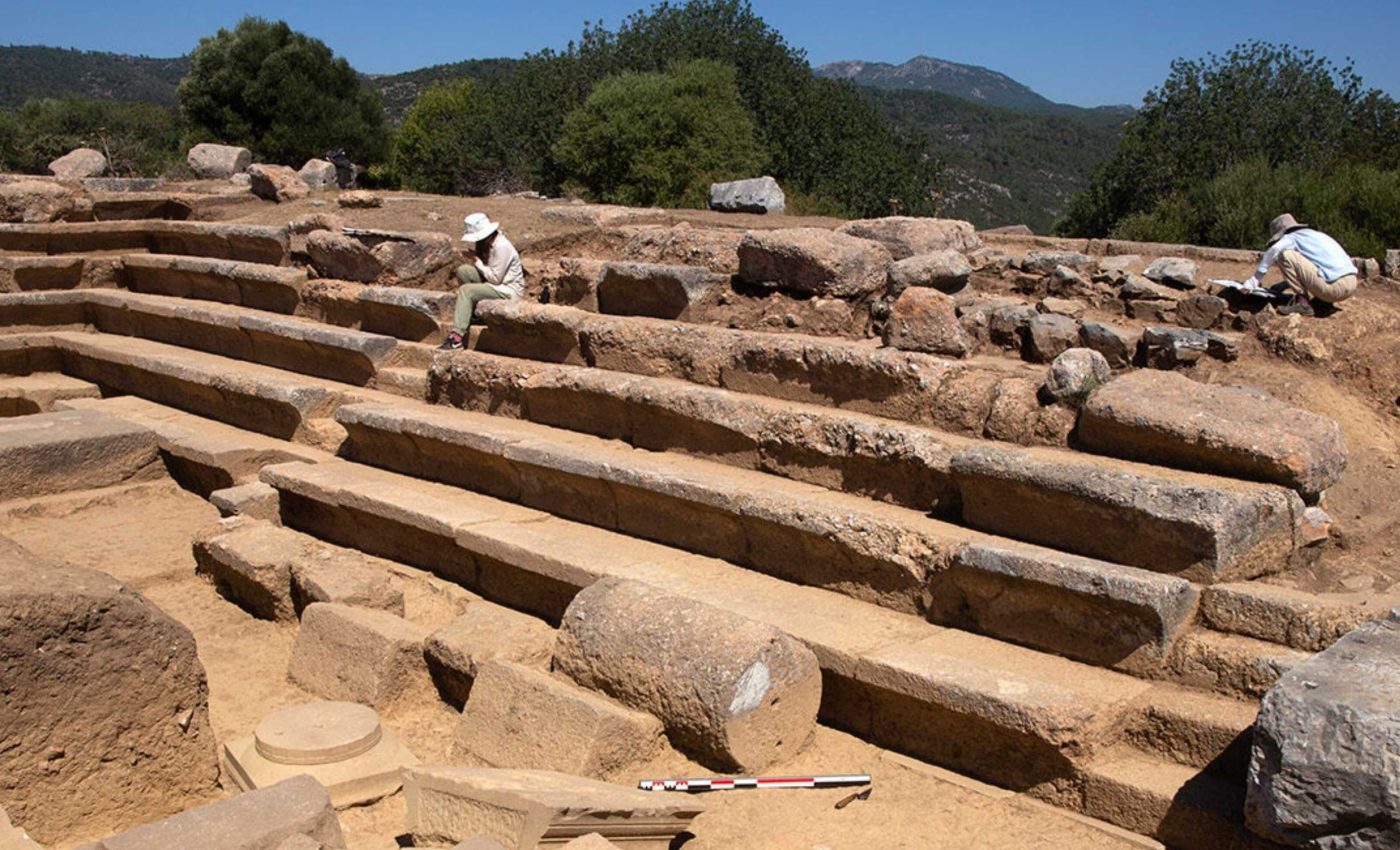
Ratté’s team was excavating a courtyard house near the center of Notion, where a later Hellenistic home sat above an earlier classical era dwelling.
Under the stone floor of the courtyard, against a buried wall, they uncovered a narrow room from the older house. Tucked in one corner, the experts found a clay jug filled with gold coins.
Pottery and building remains around the jug show that the classical house went out of use in the late fifth century B.C.. This gives the hoard an independent date separate from the coins themselves.
That tight frame turns the deposit into a fixed marker inside Persian monetary history rather than an object floating in a vague past.
“The discovery of such a valuable find in a controlled archaeological excavation is very rare,” said Ratté.
He argues that nobody hides gold like this without planning to come back, so some grave misfortune must have frozen the hoard in place.
What made these coins special
The gold pieces are a royal coin known as the daric, a high value gold coin used across the Persian Empire.
Introduced under King Darius I, the coins followed a strict weight of about 8.4 grams of very pure gold and carried the image of a kneeling archer.
Because that design stayed stable for centuries, experts sort darics into a sequence by tracking tiny differences in how the archer and his weapons are engraved.
A securely dated cache from a known room in a known house lets them check whether that stylistic sequence matches what actually lay in the ground at a given time.
Ancient writers saw these coins mainly as pay for soldiers in the Achaemenid, the royal Persian dynasty that ruled from the sixth to fourth centuries B.C., empire, not as everyday change.
In his campaign narrative Anabasis, Xenophon describes Persian offers of one gold daric each month to Greek troops.
Once that monthly rate is clear, a small bundle of gold begins to look like years of wages. A pot of high value coins buried under a floor starts to resemble a long term savings plan for someone whose job depended on constant risk.
Persian gold coins left behind
Notion stood on a stretch of coast where imperial frontiers blurred and shifted, with Persian administrators and Athenian commanders both fighting for control.
Local communities in the region often had to navigate between these powers, sometimes under their own city walls.
Thucydides describes how, between 430 B.C. and 427 B.C., Persian leaning groups from nearby Colophon used Greek and foreign mercenaries, professional soldiers who fought for pay, to seize part of the settlement around the harbor.
In 427 B.C., the Athenian commander Paches trapped their leader in a supposed meeting, killed the fighters, expelled the faction, and reorganized the community under Athenian rules.
Against that backdrop, a person carrying Persian gold into a modest house may have planned only a brief stop between campaigns.
Any sudden defeat, arrest, or death on the road could have left the pot under the floor as the last trace of that person’s wages.
Why context matters more than glitter
Many caches of Persian gold have surfaced through treasure hunting or construction work, where coins were scooped up without careful notes on their surroundings.
Those finds keep their shine but lose their power to answer questions about who used them and when.
In Notion, every layer of the classical house was mapped, photographed, and logged before the coins were removed, from the courtyard paving stones to the pottery fragments near the jug.
That careful record lets researchers tie the gold to a specific room, floor level, and closing date, which is what turns money into historical evidence.
“This is a spectacular find of the highest importance,” said Andrew Meadows, a professor of ancient history at Oxford University.
Professor Meadows noted that a securely dated cache like the one from Notion can sharpen the entire sequence of Persian gold coinage.
A sharper timeline of the empire
For historians of money, the Notion coins offer a rare check on charts built from scattered finds and museum drawers.
If their styles match the existing order of Persian royal issues, the hoard will confirm years of work; if not, specialists may need to redraw parts of the timeline.
For historians of war and politics, the hoard shows how imperial pay coursed through a border city that moved, more than once, between Persian and Athenian control.
Gold struck under distant kings ended up under the floor of a private house, where one person’s savings could vanish when power shifted again.
As curators in Turkey clean and study the coins, each scratch and die mark will feed new data into debates about mints, routes, and campaigns.
At the same time, the carefully recorded house and courtyard keep drawing attention back to the unnamed person who trusted a clay pot and a quiet corner with the earnings of a dangerous life.
—–
Like what you read? Subscribe to our newsletter for engaging articles, exclusive content, and the latest updates.
Check us out on EarthSnap, a free app brought to you by Eric Ralls and Earth.com.
—–