Uranus and Neptune may be rock giants, not ice giants



 Follow Earth on Google
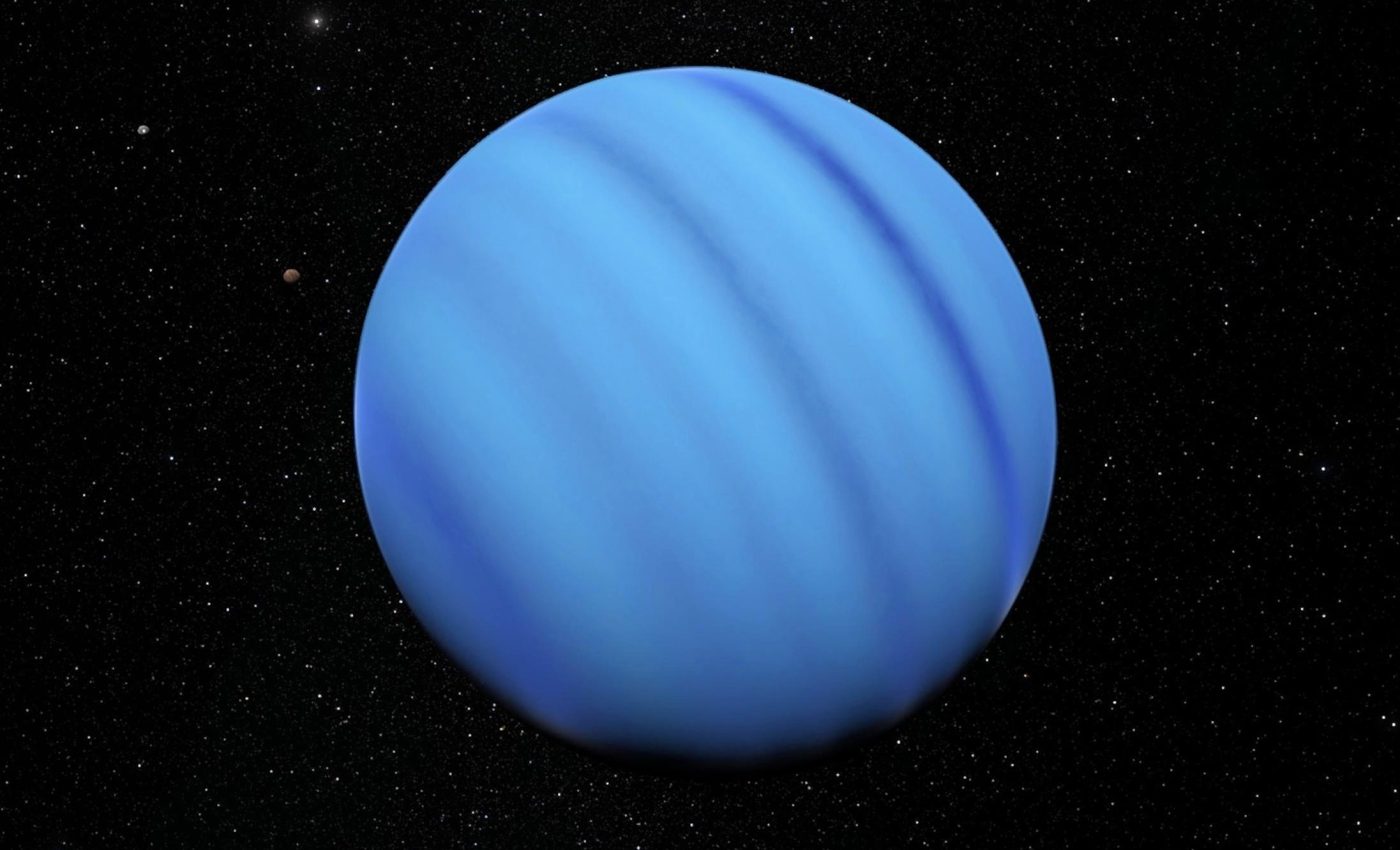
New computer models of Uranus and Neptune suggest these distant worlds might be rock giants rather than pure ice giants.
The simulations allow everything from water-rich planets to ones where rock outweighs water by nearly four to one inside Uranus.

Both planets sit far beyond Saturn, yet what they are actually made of remains surprisingly uncertain, even after Voyager 2 flew past.
Classifying Uranus and Neptune
The work was led by Luca Morf, a doctoral student at the University of Zurich (UZH) who specializes in giant planet interiors.
His research focuses on building agnostic models, computer generated interior structures that make as few assumptions as possible about what lies inside.
For decades Uranus and Neptune have been grouped as ice giants, planets whose interiors should be dominated by water, methane, and ammonia.
Standard models place most of their mass in a hot dense fluid of ices above a small rocky core.
The new study asks whether those same observations could also match planets where rock contributes much more of the total mass than usual.
Planets that are poorly understood
Earlier interior studies often used physical models that enforced a single density, temperature, and composition profile for each planet.
Other teams relied on empirical fits that matched spacecraft data but sometimes produced interiors with unrealistic temperatures or sharp density jumps.
“The ice giant classification is oversimplified as Uranus and Neptune are still poorly understood,” said Morf.
His team wanted models flexible enough to include many possible rock and water combinations yet strict enough to obey known physics.
How planets are modeled
The new framework begins with a randomly generated density profile from the center of the planet to its outer atmosphere.
From that profile, the team computes the planet’s gravity field and gravitational moments, numbers that describe how mass varies with depth.
They then adjust mixtures of hydrogen, helium, water, rock, and iron using an equation of state, which links pressure, temperature, and density.
Each time the algorithm cycles, it nudges density and pressure toward values that respect hydrostatic balance while matching the observed gravity data.
Rock hidden under icy layers
In their new study, Morf and Ravit Helled show that Uranus can have rock to water ratios between 0.04 and 3.92.
Their Neptune models span ratios from 0.20 to 1.78, ranging from water-dominated interiors to ones strongly dominated by rock.
Those numbers include classic water-rich cases and more extreme options where rock supplies most of the interior mass.
The same flexible approach can accommodate very different mixtures of rock and volatile material without forcing everything into a single preferred interior blueprint.
Taken together, these results suggest large outer solar system planets may hide rock-heavy interiors under layers that only look icy from afar.
Strange magnetic clues
Voyager 2 revealed that Uranus and Neptune have lopsided multipolar magnetic fields rather than the simple two pole pattern seen on Earth.
“Our models have so-called “ionic water” layers which generate magnetic dynamos in locations that explain the observed non-dipolar magnetic fields,” said Helled.
Ionic water, high-pressure water where molecules break into charged particles, conducts electricity strongly and can drive a magnetic field when it moves.
Earlier calculations linked ionic or even superionic water to the unusual magnetic fields of Uranus and Neptune.
The new models place those conducting layers at depths consistent with that earlier scenario overall.
What other worlds teach us
Measurements of Pluto’s bulk density indicate that roughly two-thirds of its mass is rocky, with the rest mainly composed of water ice.
A rock-rich interior beneath bright surface ice suggests that large, cold bodies do not always fit simple labels.
Sub-Neptune planets, worlds between Earth and Neptune in size, are now a standard category in exoplanet surveys.
They also appear to be the most common planets around Sun-like stars in current catalogs. Understanding Uranus and Neptune in detail could anchor interpretations of hundreds of distant planets with similar masses and radii.
Working with limited data
Even with the new algorithm, the biggest unknown is how mixtures of water, rock, and other materials behave under deep interior pressures.
Small uncertainties in high-pressure equations of state can change inferred densities by several percent, yielding different totals for rock, water, and gas.
Gravity measurements for Uranus and Neptune mostly come from brief Voyager 2 flybys, leaving only limited constraints on how mass is layered inside.
Because many interior structures can reproduce the same mass, radius, and gravity field, the authors argue that no single model should be final.
Future missions to Uranus and Neptune
To learn whether these planets are rock dominated, water dominated, or something between, scientists need better data than one flyby.
“Both Uranus and Neptune could be rock giants or ice giants depending on the model assumptions,” said Helled, the study’s principal investigator.
Orbiters could map their gravity and magnetic fields, while atmospheric probes would sample composition, winds, and heat flow at greater depths.
Such missions would resolve arguments about the two blue worlds and sharpen the tools used to interpret ice-rich exoplanets across our galaxy.
The study is published in Astronomy & Astrophysics.
—–
Like what you read? Subscribe to our newsletter for engaging articles, exclusive content, and the latest updates.
Check us out on EarthSnap, a free app brought to you by Eric Ralls and Earth.com.
—–