Why did the hobbits disappear? New evidence points to a clear answer



 Follow Earth on Google
A new study ties a long dry spell to the disappearance of Homo floresiensis, a small bodied ancient human relative, on Flores Island.
Researchers report that summer rainfall fell to about 18 inches during a crucial window tens of thousands of years ago, and the species fades from view soon after.

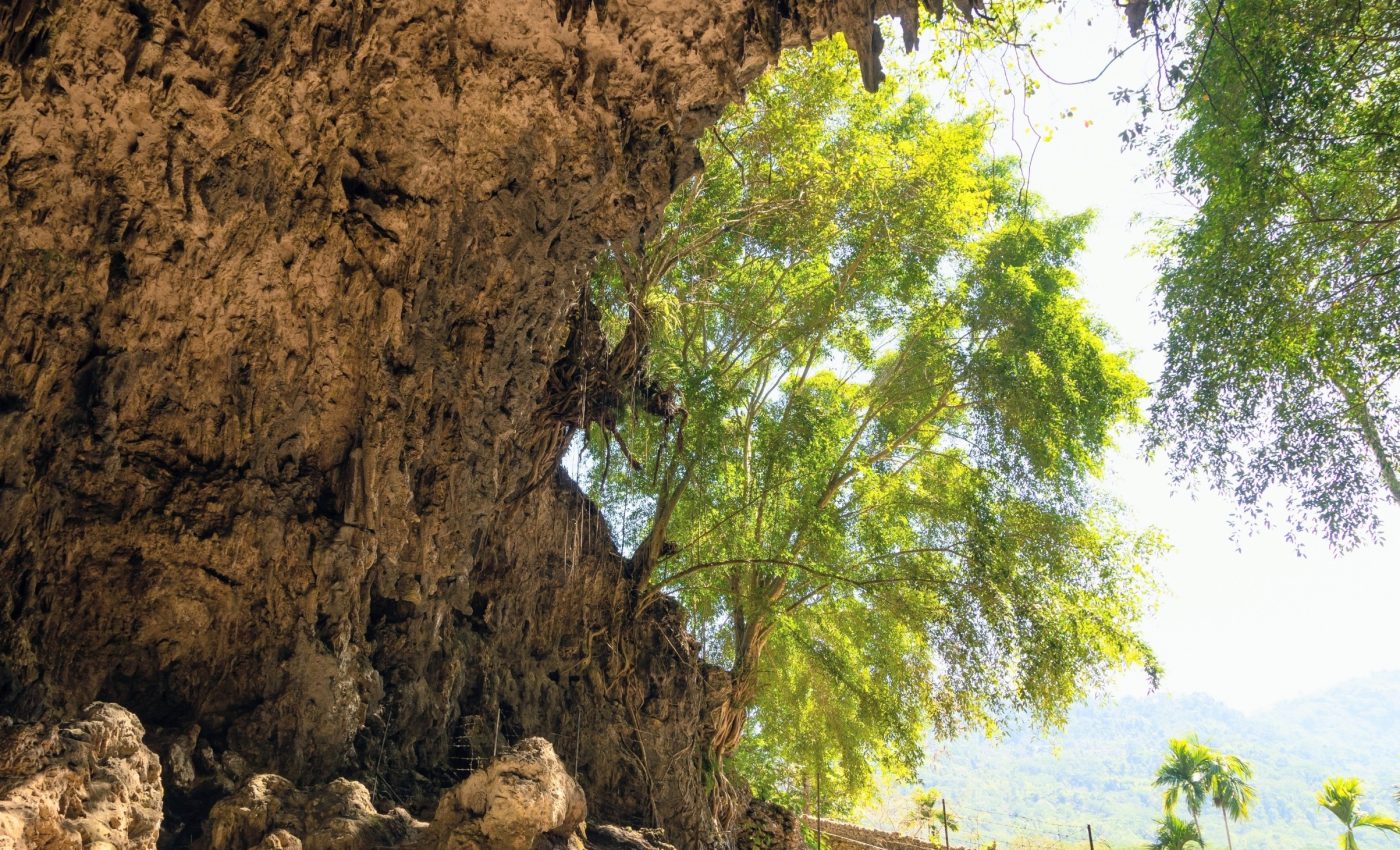
The work centers on Liang Bua, the cave where the first Homo floresiensis fossils were found in 2003 and later nicknamed “hobbits” because of their unusually small stature.
The core finding is simple and stark, drought tightened for millennia, and survival options narrowed.
Climate records preserved in a cave
The work was led by Michael K. Gagan, Honorary Professor at the University of Wollongong (UOW). His research focuses on paleoclimate records and monsoon rainfall history.
The team read the cave like a natural archive by sampling a stalagmite, a mineral column rising from cave floors. Layer-by-layer, the chemistry of that column tracks changes in rainfall through time.
One proxy is the ratio of magnesium to calcium in the calcite, which tends to rise as infiltration slows in drier years.
Another is the oxygen isotope, atoms of oxygen with different masses, which varies with the strength of summer rain.
Together, those signals let the group separate wet season and dry season patterns. The timing lines up with fossils from the cave, allowing a tight link to the local ecosystem.
A shrinking water supply
The record shows a long drying trend beginning about 76,000 years ago, followed by especially lean summers between 61,000 and 55,000 years ago.
In that span, summer precipitation fell to roughly 18 inches, about half of modern levels near Liang Bua. In simple terms, the monsoon grew weaker, and streams lost dependable flow.
The drought signal does not stand alone – it matches what the fossils say about water use. Local water can be tracked in tooth enamel, and those values move in step with the cave, pointing to shrinking river supply.
According to the researchers, certain animals disappeared when summer rainfall dropped to record lows.
The team reports that Stegodon, a key prey animal, thinned out by about 61,000 years ago and vanishes from the cave by roughly 57,000 years ago.
Clues from elephants and stone tools
Stegodon, a pygmy elephant once living on Flores, left teeth that preserve what it drank. Those isotopes show reliance on river water that would falter when baseflow turned seasonal.
The hobbits hunted subadult Stegodon that had not yet reached full physical maturity at the time of death, and those remains cluster in layers that predate the worst summers.
When summer water became scarce, a staple vanished, and a hunter without prey lost its footing.
Fossils and tools at Liang Bua form a tight sequence across the late Pleistocene. That stratigraphy lets researchers pin the decline of both Stegodon and hobbits to the same extended dry window.
The cave layers also help separate species. Toolmaking materials shift around 46,000 years ago at Liang Bua, a signal of modern humans on Flores.
Hobbits lost their lifeline
Overlap is uncertain, but the timing invites questions about contacts as groups moved through the archipelago.
A broader survey of the site places hobbit bones between about 100,000 and 60,000 years ago and stone tools until about 50,000 years.
Those ranges leave a gap between last bones and later tools, which fits a picture where the species leaves the cave before other changes arrive. The drought gives that gap a plausible cause.
Climate does not act alone, but it sets the stage. Reduced freshwater amplifies every other stress, from competition to volcanic ash, and it does so right where people and animals meet.
The new record shows that the most severe stress came in summer, when the rivers should have been lifelines.
That seasonality matters because it affects how far animals can range and how often people must move.
A lost branch of humanity
Freshwater remains the quiet hinge of survival. In small watersheds, baseflow, groundwater that keeps rivers running, drops fast when recharge fails, and today’s dry seasons are already stretching in many monsoon regions.
The cave’s chemistry also highlights a broader lesson. In karst country (karst is a porous limestone terrain that drains quickly), short rains do not add up, and drought cuts deeper than totals suggest.
These findings do not say drought alone ended the hobbits, but they show a clear bottleneck. When prey declined and waterholes went patchy, leaving Liang Bua may have been the only move left.
The research shows that climate can undermine a species quietly until a threshold is crossed. The cave’s record now anchors that shift in place and time, linking a single valley to the disappearance of an entire human branch.
The study is published in Communications Earth & Environment.
—–
Like what you read? Subscribe to our newsletter for engaging articles, exclusive content, and the latest updates.
Check us out on EarthSnap, a free app brought to you by Eric Ralls and Earth.com.
—–