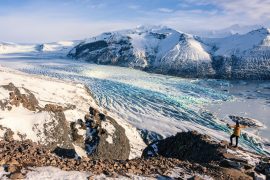
Why glaciers are reaching their top speeds earlier each year



 Follow Earth on Google
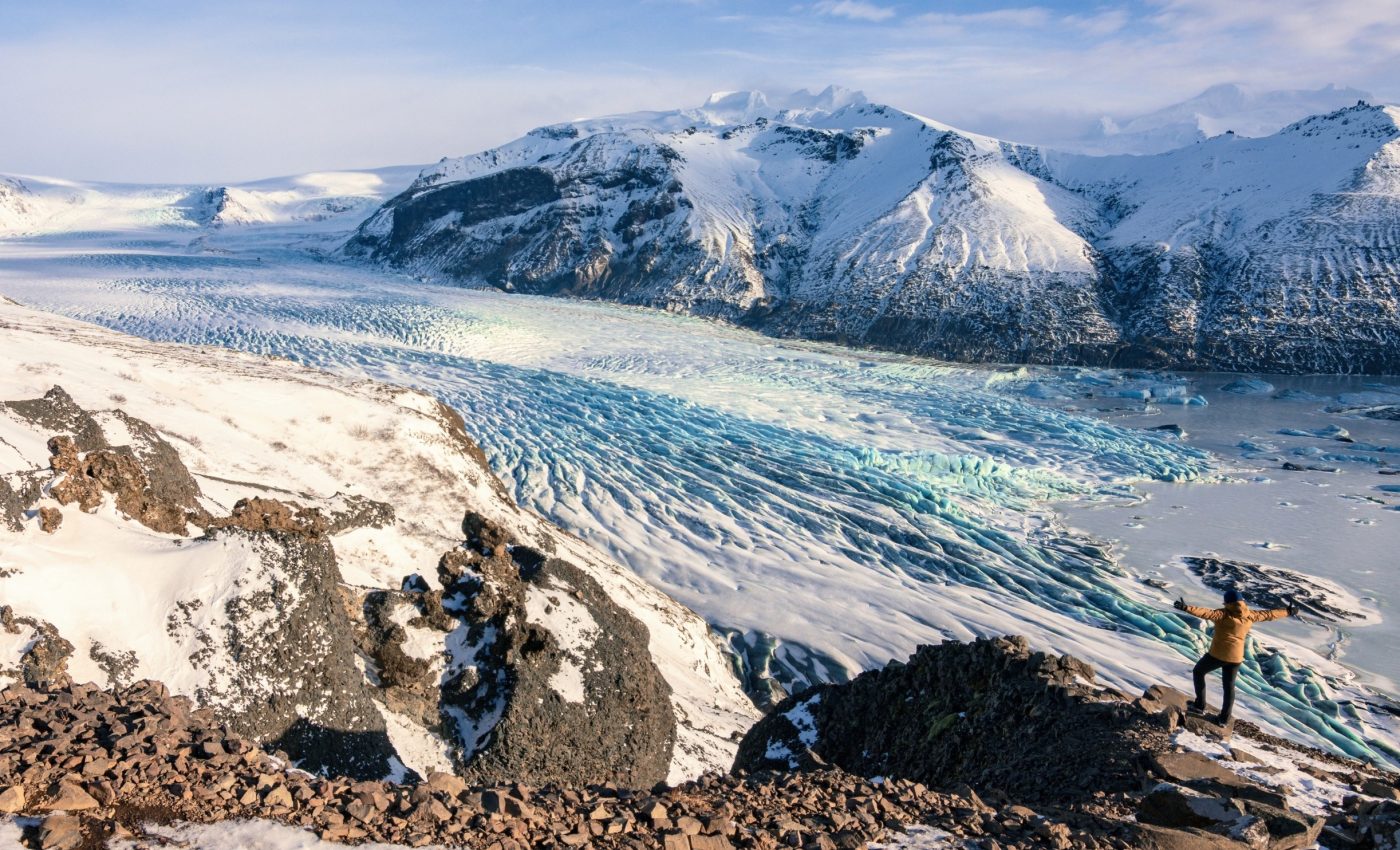
Earth’s glaciers are not steady rivers of ice. They surge, slow, and surge again as the seasons change. A new global study shows those pulses are strongest where air temperatures climb above freezing.
Using almost ten years of NASA satellite images, researchers tracked the seasonal speed of every land glacier on the planet larger than about two square miles.

They found that warmer glaciers not only speed up more each year, they also tend to reach their top speeds earlier in the calendar.
How glaciers change
To uncover these rhythms, scientists combined more than 36 million pairs of satellite images into a single global map of glacier motion.
They used this map to measure seasonality, regular changes that repeat each year, in how fast ice flows across mountain ranges and ice sheets worldwide.
The work was led by Dr. Chad A. Greene at NASA’s Jet Propulsion Laboratory (JPL) in Pasadena, California.
Dr. Greene works in the Sea Level and Ice Group, using remote sensing to track changing ice.
Across most regions, glacier speeds rose in the warmer months and slowed in colder months, but the details were far from uniform.
Patterns in glacier flow
In places where summertime air temperatures rise above freezing, glaciers showed the biggest annual swings in speed and tended to hit their fastest flow earlier in the year.
In contrast, much of Antarctica barely changed speed over the seasons because air there generally stays below freezing.
Only a few coastal glaciers, especially along the Antarctic Peninsula, showed strong seasonal motion where surface melting and ocean contact both play a role.
Warming speeds up glaciers
When air warms above 32 degrees Fahrenheit, surface snow and ice start melting and produce meltwater, liquid water from melting snow or ice.
Some of that water can find cracks, reach the base of a glacier, and reduce friction so the ice slides more quickly downslope.
The new study revealed that once local annual maximum temperature rises above freezing, seasonal speed swings grow steadily larger for each extra degree of warming.
Earlier glacier peaks
In those warmer places, peak glacier speed also arrives earlier in the year, often closer to the first burst of widespread melting than to the hottest days of summer.
Precipitation, whether falling as snow or rain, showed a weaker and more complicated connection to seasonal speed.
The researchers saw only a modest link between how much water falls from the sky and how strongly glaciers respond over the year.
Where glaciers react most
To build a clear picture, the team focused on faster moving ice covering more than 400,000 square miles of the planet’s glacierized surface.
They then averaged seasonal behavior along thousands of glacier centerlines to see how entire ice bodies respond over a typical year.
Patterns jumped out by region. Alaska and the Southern Andes showed intense spring speedups, parts of the Arctic favored autumn peaks, and high mountain regions like the Himalaya displayed their own mix of timing and strength tied to elevation and climate.
In a separate global satellite study, experts found that glaciers lost about 290 billion tons of ice each year between 2000 and 2019. That loss made up roughly one-fifth of the sea level rise observed in that period.
Seasonal shifts and trends
Dr. Greene’s team also compared seasonal swings with year-to-year changes in glacier speed and found a weak but real connection.
Glaciers that had strong seasonal cycles tended to show larger interannual variability, changes in glacier behavior from one year to the next, even after accounting for how fast they flow on average.
This pattern points to conditions at the glacier bed as a common thread. Where water pressure under the ice is often near the point where friction can suddenly drop, relatively small changes in meltwater input can alter sliding on seasonal and longer timescales.
Water under the ice
In such places, the subglacial drainage system (SDS), channels and cavities that carry water under the ice, appears especially sensitive to how quickly and how long meltwater is supplied.
If warming air adds more water earlier in the year, those drainage pathways may evolve differently, changing not only when glaciers move fastest but how they respond over many years.
Glaciers matter far beyond the high mountains and polar regions where they sit. They store fresh water for downstream communities, shape landscapes, and add meltwater to the ocean that contributes to sea level rise.
Sea level rise and coastal risks
A major climate assessment concluded that melting glaciers already contribute notably to rising sea level, alongside the ice sheets and warming oceans.
Because glaciers respond relatively quickly to temperature changes compared with larger ice sheets, their behavior over the next few decades will strongly influence coastal risk.
World Glacier Monitoring Service data show glaciers losing about 370 billion tons of ice each year between 2006 and 2016.
That loss raises sea level by nearly 0.04 inches a year and accounts for roughly a quarter to a third of the observed rise.
Research on warming and glaciers
The dataset behind the new work automatically measures glacier motion from thousands of satellite image pairs a day.
The tool is part of ITS_LIVE, a NASA project that turns long records of satellite images into detailed glacier speed maps.
“Our results are the outcome of open data sharing and NASA policies that make satellite data public and freely available to all,” said Dr. Greene.
“Open science and the NASA Making Earth System Data Records for Use in Research Environments (MEaSUREs) program that funded this work maximize scientific integrity by making the scientific process fully transparent and replicable.”
The study is published in the journal Science.
—–
Like what you read? Subscribe to our newsletter for engaging articles, exclusive content, and the latest updates.
Check us out on EarthSnap, a free app brought to you by Eric Ralls and Earth.com.
—–