Archaeologists think they found a Spanish ship that exploded 300 years ago


 Follow Earth on Google
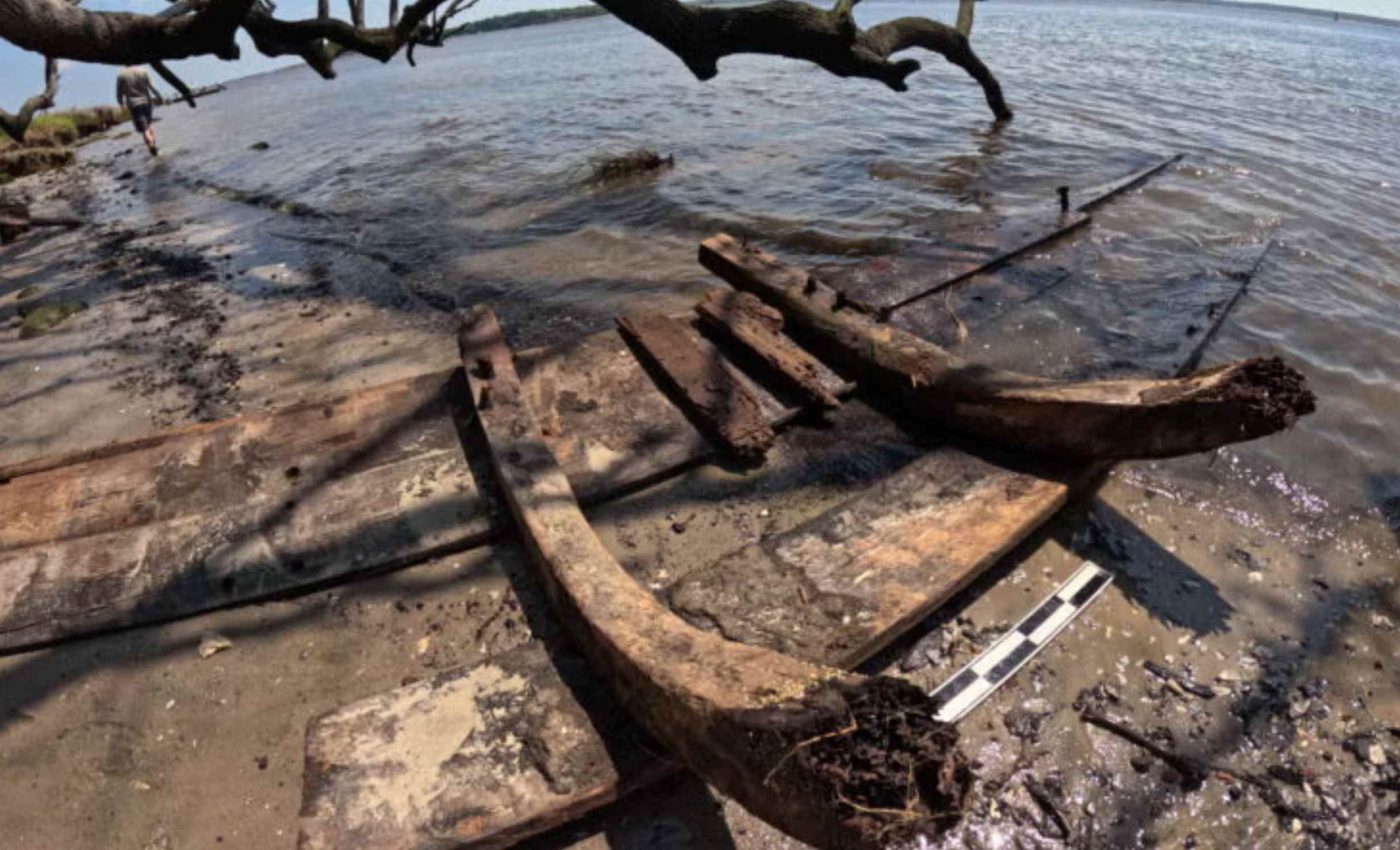
On a quiet stretch of North Carolina’s Cape Fear River, archaeologists have uncovered four 18th century shipwrecks clustered around a colonial waterfront. One wreck may be La Fortuna, a Spanish ship of war that exploded during a raid in 1748.
The new finds sit on the riverbank of Brunswick Town Fort Anderson State Historic Site, an early colonial port near present day Wilmington.

As erosion strips away marsh and sand, ships that once lay hidden beneath the mud are now emerging before scientists can fully document them.
Under the Cape Fear River
Cory van Hees was supposed to be measuring an old wharf on the river bottom when the murky water left him disoriented.
The work was led by Jason Raupp, an assistant professor of history and expert in maritime archaeology, the study of past human activity underwater.
His research centers on eighteenth century shipwrecks, colonial ports, and how changing coasts threaten the stories they still hold.
Once Raupp examined the exposed frames, he recognized the heavy timbers of an ocean going vessel rather than loose wharf debris.
For students in East Carolina University‘s maritime studies program, that moment turned a training dive into a chance to document a colonial wreck.
Brunswick Town’s colonial waterfront
In the seventeen hundreds, Brunswick Town grew into the first successful European settlement on the lower Cape Fear and a busy export port.
Merchants shipped naval stores, shipbuilding supplies like tar, pitch, and turpentine, that fed the wooden fleets of the British empire.
Long before this summer’s dives, a high resolution sonar survey had already mapped dozens of targets along the same riverfront.
Those earlier scans hinted that colonial wharves and possible ballast piles lay just offshore, waiting for divers to investigate them in detail.
In September 1748, during the closing days of King George’s War, Spanish raiders sailed up the Cape Fear to attack the town’s waterfront.
Local militia eventually drove them off, and during the fighting La Fortuna exploded near the docks and sank into the river.
Spanish ship La Fortuna
Analysis of the ship’s timber showed cypress from Central America, linking the vessel to a Spanish Caribbean colony.
Spanish majolica ceramics recovered among the timbers add to the case that this wreck carried goods and crew from the Spanish Caribbean world.
La Fortuna is the only Spanish ship recorded as sinking in this stretch of river, so the match looks promising even if still unconfirmed.
Researchers also noted the placement of the wreck in relation to the colonial wharves, which matches written accounts from the 1748 attack.
Nearby artifacts tied to port activity help narrow the timeline and strengthen the argument that these remains belong to the same vessel lost during the raid.
Four wrecks, four different stories
Not all of the newly uncovered vessels were lost in battle. One hulk appears to have been set beside a wharf, likely used as a box to hold fill and extend the waterfront.
A second vessel looks like a colonial flatboat, a shallow workboat with a broad bottom used to haul cargo. That sort of craft would have been perfect for moving barrels of tar or bundles of lumber between the port and nearby estates.
The final wreck barely peeks from the river mud, with only a few eroded planks showing where a hull still lies buried.
Details of its age and purpose will have to wait for future dives, but early clues suggest another vessel from the same colonial period.
Lessons from La Fortuna
Engineers documented how constant tides, ship wakes, and storms rapidly erode this shoreline in a technical paper based on measurements taken after 2008.
They found that tidal marsh had already retreated by many feet, exposing buried colonial wharves and even undermining Civil War earthen batteries.
In response, managers installed a living shoreline, a nature based barrier of concrete units that dampen waves and encourage marsh grasses to grow.
Along the protected stretch, newly trapped sediment and young marsh plants help shield the colonial shoreline from further pounding by ship traffic.
Those beams rest in the Queen Anne’s Revenge lab in Greenville, where specialists remove salt and study tool marks left by eighteenth century shipwrights.
Researchers will continue to examine the timbers, the ceramics, and the remaining structures along the shoreline as they work toward a firm identification.
Each new detail helps build a clearer picture of the ships that once moved through this port and the events that shaped the coast nearly three centuries ago.
Image courtesy ECU Program in Maritime Studies.
—–
Like what you read? Subscribe to our newsletter for engaging articles, exclusive content, and the latest updates.
Check us out on EarthSnap, a free app brought to you by Eric Ralls and Earth.com.
—–