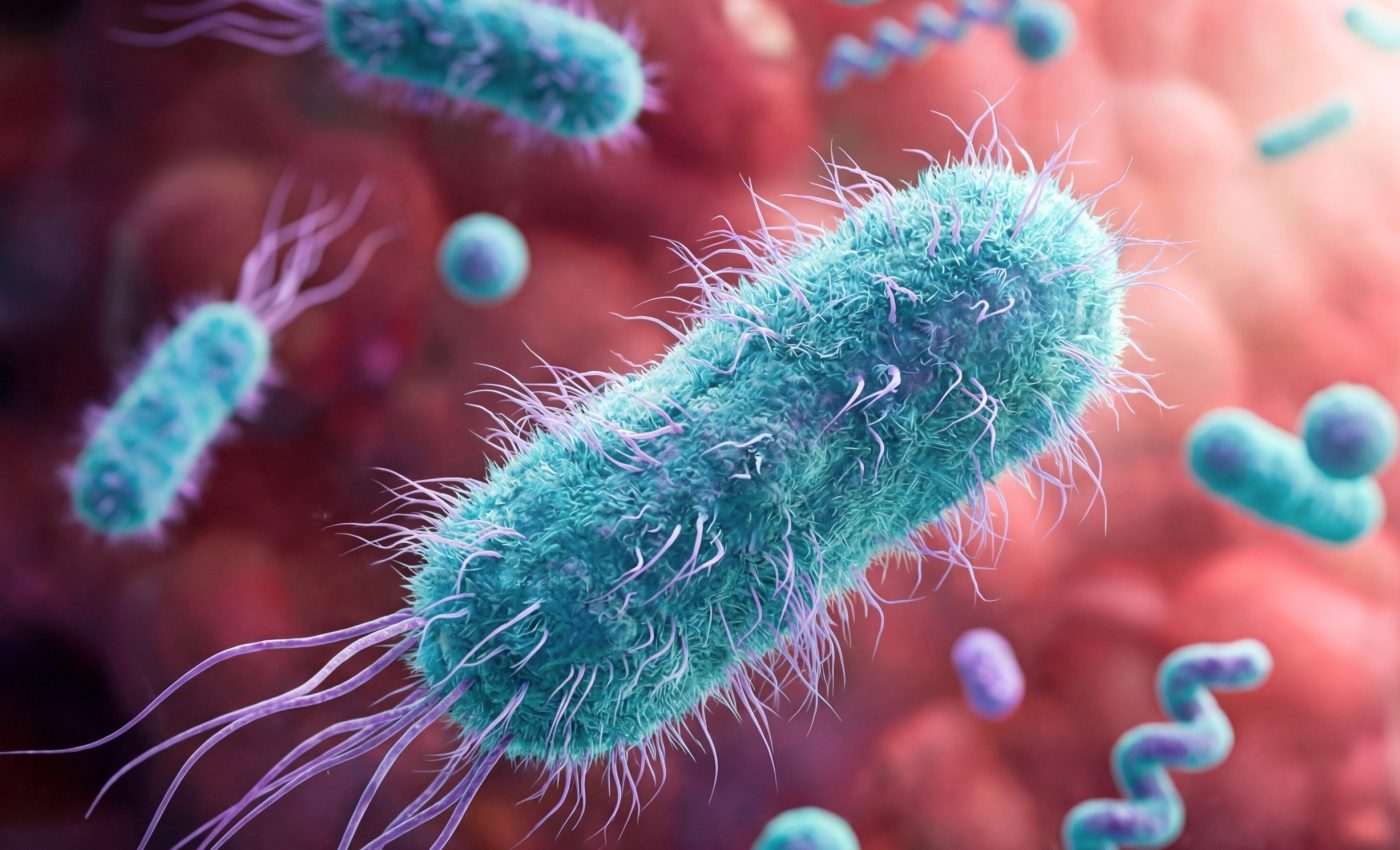
Bacteria self-destruct to defeat invading viruses before they spread



 Follow Earth on Google
Bacteria have been locked in a long war with viruses, and some of their defenses are surprisingly ruthless.
In a new study, researchers in Lithuania show how one bacterial system can detect viral RNA and then deliberately destroy its own cell to stop an infection from spreading.

The system, called SPARDA, uses a short RNA guide – just about 20 genetic letters – to confirm that an invader is present. Once that check is made, a molecular switch flips, triggering a coordinated DNA-cutting attack that leaves the cell beyond repair.
The work was led by Dr. Mindaugas Zaremba at Vilnius University, where scientists study how bacteria recognize and respond to genetic threats.
The findings reveal a hidden layer of bacterial immunity – one built not on survival, but on sacrifice.
Bacterial defense through self-destruction
A defense system called SPARDA belongs to a class of bacterial safeguards that protect the broader population by sacrificing infected cells.
Once activated, SPARDA locks in the bacterium’s fate, launching a DNA-cutting attack that shreds genetic material.
“SPARDA is interesting in that its activation determines the further fate of the bacterium,” said Dr. Zaremba.
The team traced this response from the moment foreign RNA is detected to the final destructive step, when DNA is cleaved beyond repair.
Hidden bacterial defenses
The chain reaction begins when a virus, or phage, slips inside a cell, injects its genetic code, hijacks the host’s machinery, and eventually bursts the bacterium open to release copies of itself.
SPARDA can also respond to plasmids, small circular DNA molecules that bacteria often exchange with one another.
While scientists are already familiar with bacterial defenses such as restriction enzymes and CRISPR, many protective systems like SPARDA remain largely hidden, despite playing a crucial role in microbial survival.
Proteins act together
SPARDA starts with Argonaute proteins, which use short guides to find matching nucleic acids inside the bacterial cell. The guides bind a snippet of viral RNA, and that match signals danger without immediately destroying anything.
Scientists named Argonautes after the Greek Argonauts, because these proteins roam cells looking for genetic clues from intruders.
The key switch is a beta-relay inside Argonaute – a protein mechanism that flips between inactive and active shapes.
When the RNA guide locks onto its target, that shape change ripples through Argonaute, exposing a sticky surface that allows activated units to link up.
Those units then rapidly stack into filaments rather than acting alone. In this cooperative form, SPARDA turns into a powerful DNA-cutting machine, chewing through double-stranded DNA from any source.
The response is so extreme that it shuts down replication in the infected cell and prevents the virus from spreading to nearby bacteria.
DNA pays the price
The system does not pick favorite genes, so it shreds the invader’s DNA and the bacterium’s own genome.
Researchers tested SPARDA complexes from Xanthobacter autotrophicus and Enhydrobacter aerosaccus and watched them switch from pairs to filaments.
Once filament assembly begins, DNA breaks spread across the cell, and repair systems cannot keep up with the damage.
Bacteria suicide to stop virus spread
Scientists call this kind of last-resort defense abortive infection – infected-cell suicide that halts viral spread and protects nearby relatives.
“This is a kind of cellular altruism,” said Dr. Zaremba, highlighting why a single bacterium would destroy itself even after a virus has already slipped inside and escape is no longer possible.
That sacrifice is tightly controlled. SPARDA remains inactive unless Argonaute confirms the presence of foreign genetic material, because a false alarm would kill a healthy cell.
In its resting state, the beta-relay stays switched off, and the proteins remain paired in a quiet, inhibited form.
Only when a matching guide-target duplex appears does the relay flip, allowing the units to separate, assemble, and trigger the destructive response.
Imaging the kill switch
To see the switch in action, the VU team combined several high-resolution techniques. The researchers used cryogenic electron microscopy to image frozen samples with an electron beam, allowing them to map SPARDA’s active filaments in detail.
X-ray crystallography then captured the system in its inactive state, revealing atomic positions from diffraction patterns before any infection signal appears.
Single-molecule experiments completed the picture, showing filaments assembling in real time along long strands of DNA, compacting them and setting the stage for rapid cutting.
Those observations hint at a broader rule. “We detected a similar mechanism in other prokaryotic Argonaute proteins,” said Dr. Zaremba, suggesting that beta-relay signaling may be a common way bacteria link detection to powerful enzymes.
By requiring assembly before activation, cells keep dangerous DNA-cutting tools in check until a genuine threat arrives.
Harnessing bacteria’s defenses
In food fermentation, phage attacks can crash starter cultures, and better defenses could protect entire batches of yogurt.
Lab researchers used Cas9, a DNA-cutting enzyme guided by RNA, to help turn CRISPR into a gene-editing workhorse.
Researchers think SPARDA could inspire new nucleic-acid sensors, like CRISPR tests, because it recognizes sequences before unleashing broad DNA cutting.
When cell defenses block treatment
As antibiotic resistance grows, phage therapy, treating infections with bacteriophages rather than antibiotics, offers one option for hard cases.
For phages to work, scientists must know which defenses a target bacterium carries, because those defenses can stop therapy.
“If we want to develop bacteriophages for therapy, we need to understand what defense mechanisms bacteria use,” said Dr. Zaremba.
Decisions at the molecular level
Next, researchers can test how often SPARDA-like filaments form during real infections, not just in engineered lab strains.
Experts may also learn how to tune this molecular switch, keeping DNA cutting inactive until a specific signal appears in a sample.
Each new mechanism uncovered helps map the hidden rules of microbial life, where survival often depends on outcomes at the group level rather than the individual cell.
SPARDA shows that even tiny cells can run a strict decision system, tightly linking detection, molecular assembly, and self-sacrifice.
By laying out that logic in detail, the Vilnius team has given scientists a new handle for designing research tools and, potentially, smarter treatments.
The study is published in the journal Cell Research.
—–
Like what you read? Subscribe to our newsletter for engaging articles, exclusive content, and the latest updates.
Check us out on EarthSnap, a free app brought to you by Eric Ralls and Earth.com.
—–