Birds rely on internal clocks that are increasingly being disrupted



 Follow Earth on Google
Life on Earth follows natural time patterns. Changes in light, temperature, and seasons guide how living beings act.
Birds are especially sensitive to timing. Even small changes can affect survival and the ability to reproduce.
How birds rely on timing

Living organisms have built-in timing systems that help control daily and seasonal activities. Daily cycles manage sleeping, feeding, and movement, while yearly cycles guide breeding, molting, and migration.
Birds rely on these rhythms to balance energy use and avoid danger. Light levels signal when to forage or rest. Seasonal food peaks signal when to raise chicks.
Climate conditions also provide important cues. When natural timing stays stable, birds survive and reproduce successfully.
When timing shifts because of climate change or human activity, food may appear too early or too late. Such mismatches reduce breeding success, weaken health, and increase survival risks.
Humans alter natural timing
Cities create loud sounds, bright lights, and warmer temperatures. These changes confuse animals about when to sleep, move, or find food.
Birds may start singing or breeding earlier than usual, or migrate at the wrong time.
Problems arise when natural signals stop matching real conditions. Birds may arrive before food becomes available or raise chicks during poor weather.
Such situations act like traps, where birds follow signals that once worked but now reduce survival and breeding success.
Birds and aircraft risk
Bird movement follows seasonal abundance and breeding cycles. Aviation now intersects with avian flight paths.
“Bird collisions with aircraft are a serious concern for the aviation industry, and an increasing threat to human safety worldwide – I wanted to see if I could identify any patterns that could help mitigate bird strike,” said Tirth Vaishnav from the Victoria University of Wellington.
“While seasonal trends weren’t apparent in the Southern Hemisphere, I could see that bird strikes were more seasonally concentrated in the Northern Hemisphere, and seemed to correspond with fledgling season and migration.”
“This aspect of my research will hopefully be helpful for airports when developing strategies to deal with wildlife hazards.”
Birds follow plant cycles
Plant reproduction follows predictable seasonal rhythms. Nectar and fruit availability alternate across annual cycles.
Birds track such shifts using dietary switching. Pollination and seed dispersal depend on synchronized timing.
“The birds in New Zealand act as both pollinators and seed dispersers for plants, so it was interesting to find out exactly how and when they interacted with flowers and fruits differently,” said Tirth.
“Flower and fruit visitation peaked at opposite times of the year, in spring and autumn, respectively. Birds used different seasonal strategies for visiting flowers and fruits of various plant species.”
Kākā adjust food use
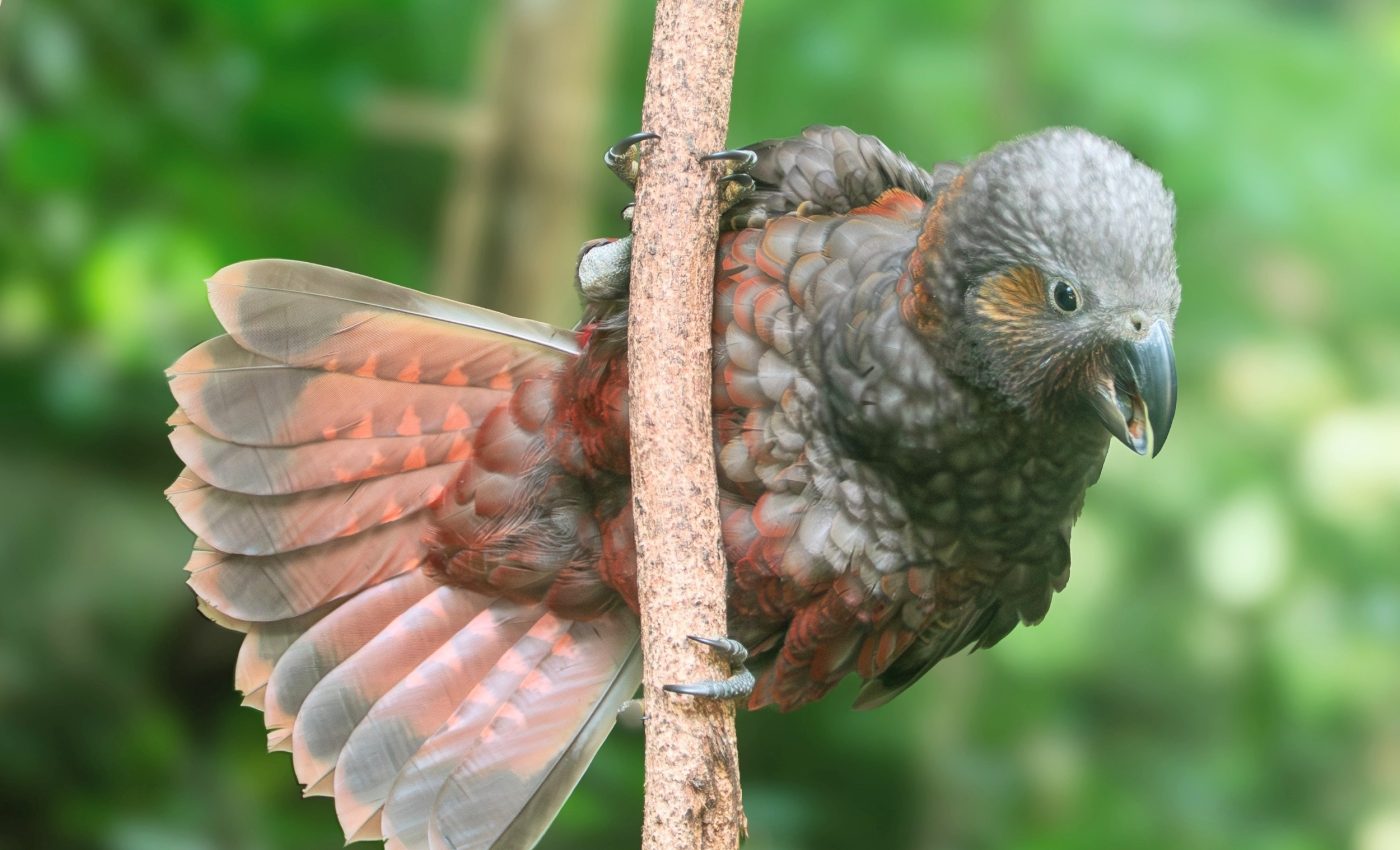
Parrots rely on dietary plasticity. Resource switching supports survival in modified habitats. Kākā adjust feeding across seasons and food types. Exotic plants now enter dietary cycles.
“Kākā are known to switch their food resources seasonally as they become available. I looked at their seasonal foraging patterns on native food resources, as well as on pine seeds, which are available year-round,” said Tirth.
“I found that they are opportunistic feeders and they have a lot of dietary plasticity to include these new resources in their diet.”
Tirth noted that as kākā move further into urban areas, their reliance on pine trees raises important conservation questions. Pines can provide a reliable food source when native plants are scarce.
“But you don’t want kākā to lose out on that natural behavior where they switch resources seasonally. It’s definitely something for conservationists to consider in restoration planning.”
Bird timing extends into night
Most birds follow daylight schedules. Partial nocturnality remains rare yet significant. Extended activity windows may reduce competition or support dispersal. Energy tradeoffs remain critical.
“Kākā behavior was known in Mātauranga Māori, but the details have been lost post-colonization. My findings show what is, to my knowledge, the first detailed scientific account of partial nocturnality in a parrot species,” said Tirth.
“While the light and noise of urbanization may be a factor, I looked at kākā in Zealandia, which – as a relatively dark and quiet environment – is more reflective of their native habitat. But I could still see that they foraged more during the day and moved around more at night.”
Protecting birds from ongoing changes
Ecology depends on timing. Seasonal shifts influence species interactions and ecosystem balance.
“We are starting to see these temporal patterns shift as climate change gets worse,” noted Tirth.
“As disturbances like this, along with the effects of urbanization on habitats, continue to alter the timing of natural events on a large scale, it’s increasingly crucial to understand how that affects the way birds behave and interact with their environments.”
Read the entire study here.
—–
Like what you read? Subscribe to our newsletter for engaging articles, exclusive content, and the latest updates.
Check us out on EarthSnap, a free app brought to you by Eric Ralls and Earth.com.
—–