Bumblebee colonies have a surprisingly organized defense drill



 Follow Earth on Google
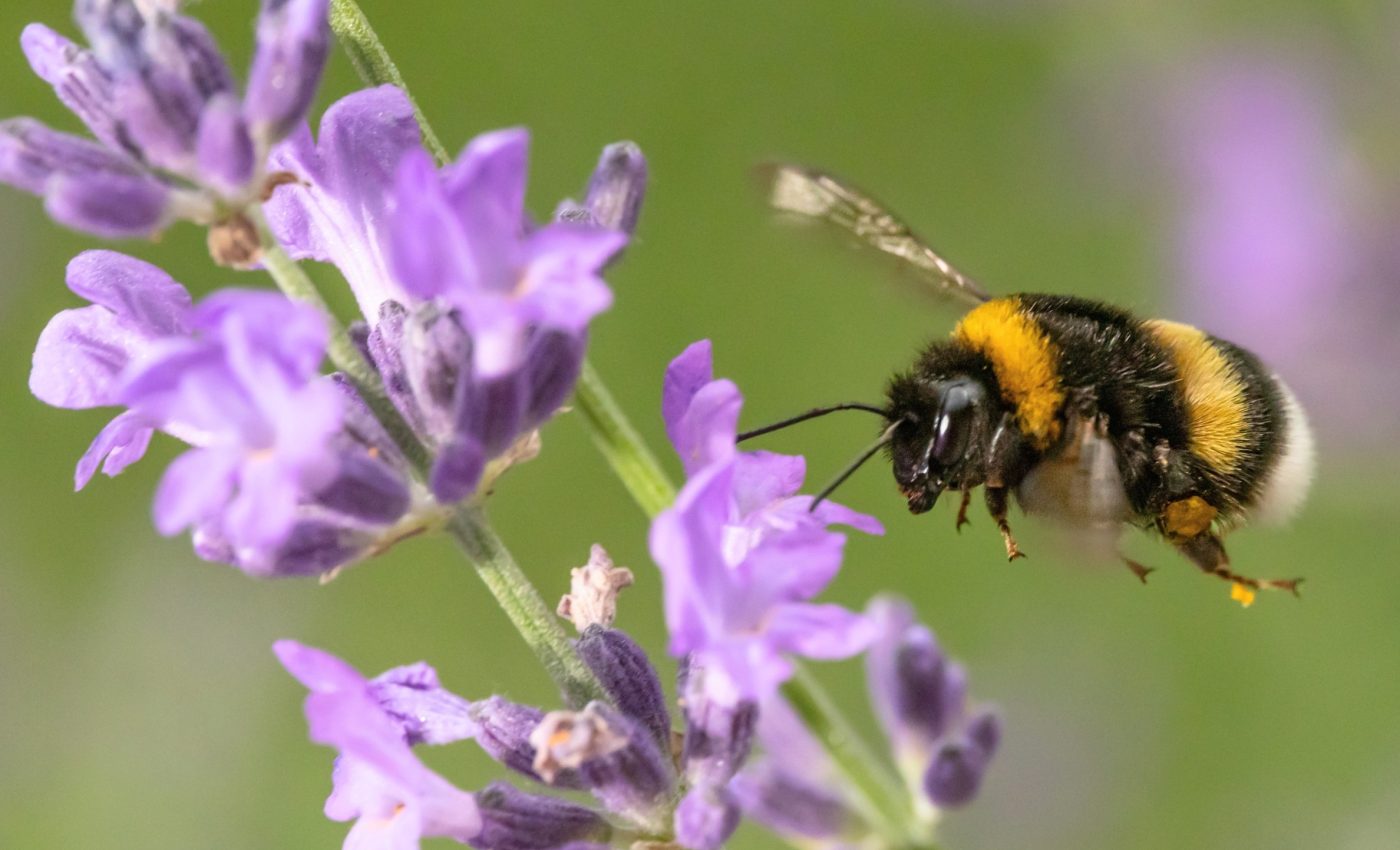
Bumblebees may look like mellow garden visitors, but disturb their home and a carefully choreographed defense rapidly kicks in.
In lab tests mimicking a badger or a clumsy human bumping the nest, researchers saw commercially reared Bombus terrestris colonies snap to attention within seconds.

Worker bees accelerated their movements, patrolled, climbed, flew along the nest walls, and searched for the source of trouble.
That heightened state didn’t vanish right away. Elements of the response persisted for several minutes, with the full defensive sequence lasting up to about ten minutes.
The work, led by Sajedeh Sarlak at the University of Konstanz with colleagues, was published in the journal PLOS ONE.
How the experiment worked
To standardize a “threat,” the team delivered a controlled mechanical jolt to the nest box, then recorded the colony’s response using synchronized video and audio.
That simple nudge proved enough to flip colonies into alert mode. Immediately after the disturbance, workers often buzzed their wings or raised their legs – classic defense signals of bumblebees.
Leg lifting advertises readiness to sting, while wing buzzing likely functions as an alarm to nestmates and a deterrent to intruders.
Between one and three minutes later, the tone shifted: bees began grooming and producing short, rhythmic buzzes.
These behaviors may help the colony de-stress once the worst has passed, although the authors note the patterned buzzing could also help maintain a low level of vigilance until the resolution is certain.
Coordinated defense pattern
The recordings show a clear arc: prepare, warn, search, and recover. Immediately after the mechanical jolt, activity spikes and warning displays abound.
Then, as minutes pass, the colony transitions into self-maintenance behaviors while still holding a defensive posture if the threat returns.
The study suggests bumblebees sustain an elevated vigilance window for roughly four minutes after the disturbance, which is long enough to catch a second hit without being caught off guard.
Working safely around colonies
Bumblebees are heavyweight pollinators in wild ecosystems and on farms. They’re also widely used in commercial greenhouses, which means people regularly work near nest boxes.
Knowing what sets off a colony, what signals to watch for, and how long bees stay on edge can reduce stings and stress for both sides.
The new study provides a baseline description of bumblebee defense behavior over time, rather than a snapshot. It offers growers, field biologists, and safety managers a clearer sense of when to stop work and when it’s safe to begin again.
The research also breaks down how to interpret buzzing, patrolling, and leg-lifting as they occur.
Roadmap for future research
By mapping how bumblebee colonies react to a disturbance, researchers can use this work as a starting point for deeper insight.
Their findings raise new questions that now have a clear behavioral framework to build on.
“What are the functions of these behaviors? Is this defensive response regulated by social or environmental factors? Some behaviors are not performed by all bees, are these responders specialized in defense?” said Morgane Nouvian, co-author of the study.
Cues inside the colony
Bumblebee colonies rely on fast, reliable defense cues to coordinate. The initial wing buzzing likely serves double duty: it’s loud enough to broadcast an alert within the dark nest interior, and it may also act as an acoustic “back off” signal to a predator probing from outside.
Leg lifting is a visual threat that is easy to see at close range if the intruder is another insect or a mammal sniffing near the nest.
The later grooming phase may restore cuticular chemicals disturbed by frantic movement and reduce internal stress.
The rhythmic buzzes could be a meta-signal to communicate “stay sharp, but don’t panic.” Parsing those functions will take targeted manipulations (varying light, temperature, colony brood stage, or intruder type) layered onto the same standardized disturbance.
Practical takeaways for handlers
If you manage or study bumblebee nests, the implications are straightforward.
Avoid sudden bumps to nest boxes and surrounding structures. If a jolt happens, expect several minutes of elevated activity, and wait before approaching again.
Watch for leg lifting and intense buzzing as signs the colony still perceives a threat.
Once grooming and patterned buzzes dominate, the system is likely down-shifting, but the four-minute vigilance window suggests it’s wise to give bees time before further interventions.
These are general guidelines, and different colonies, seasons, brood compositions, or surrounding temperatures may stretch or compress the timeline. However, having a time-resolved template beats working blindly.
Beyond the fuzzy exterior
Bumblebees are often viewed as the teddy bears of the pollinator world: fuzzy, unhurried, friendly.
This study reframes that softness as discipline under pressure. When danger touches the nest, the response is precise, ordered, and sustained.
Bumblebees’ defense response reads less like panic and more like a trained drill: rally, warn, search, reset.
Understanding that drill – minute by minute – helps us keep bees safer in human-dominated landscapes and sharpen our broader picture of social insect defense.
In short, bumblebees don’t just startle – they organize. Thanks to synchronized audio and video records of whole colonies, we finally have a field guide to that organization, from the first thrum of alarm to the last calming buzz.
This study is published in the journal PLOS ONE
—–
Like what you read? Subscribe to our newsletter for engaging articles, exclusive content, and the latest updates.
Check us out on EarthSnap, a free app brought to you by Eric Ralls and Earth.com.
—–