Buried silver treasure from the 11th century found at a nuclear power station



 Follow Earth on Google
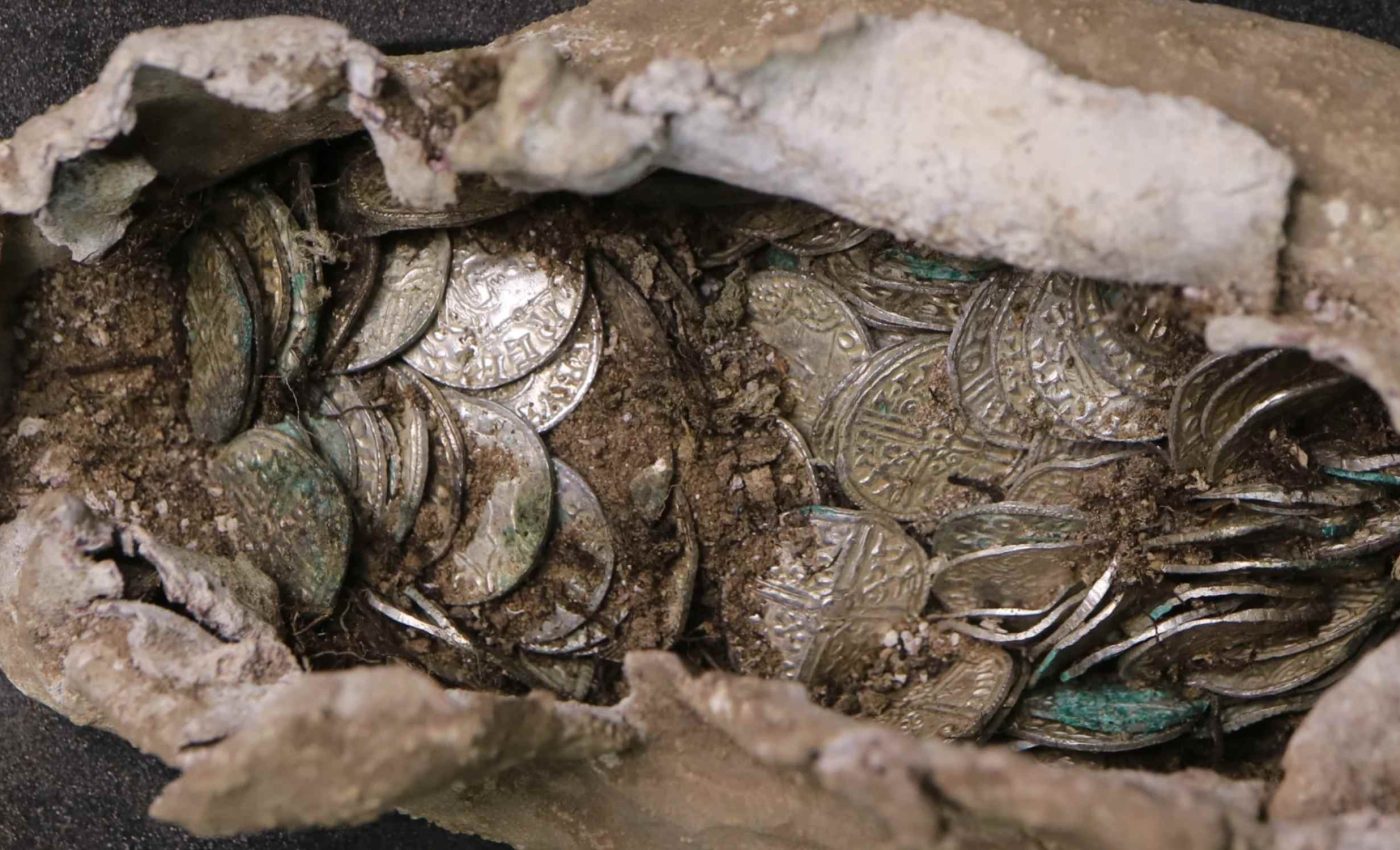
On the Suffolk coast, at the Sizewell C nuclear power site, archaeologists uncovered a tightly wrapped bundle of silver pennies during construction. Those coins had not seen daylight for about a thousand years.
The coin hoard, a hidden stash of coins buried on purpose, was worth about 320 pennies, enough to buy roughly sixteen cows.

The coins were minted between 1036 and 1044, when power in England shifted from Danish born kings back to the old royal family.
Hidden silver at Sizewell C
The work was led by Alexander Bliss, a coin specialist with Oxford Cotswold Archaeology, which is leading many of the excavations around Sizewell C.
His research focuses on late Anglo-Saxon, the last phase of early English history before the Norman Conquest, and on what money reveals about life.
The Sizewell C silver bundle sat at the meeting point of two early medieval field boundary ditches that once divided farm plots.
That position makes it look planned, not something a traveler simply dropped on the way home. For a peasant or craft worker, that pot of coins would have been far beyond normal spare change.
Archaeologists think it probably belonged to someone with local status, perhaps a prosperous farmer who could afford to build up savings.
Early English law codes show that an ox could be valued at a mancus and a cow at twenty pence in London. A mancus was a small gold coin used in important payments.
Tracking power and politics
The Sizewell coins bridge the short reigns of Harold Harefoot, his half brother Harthacnut, and the new king Edward the Confessor.
Their dates line up with a turbulent moment when Danish control ended and the older English royal line returned.
By this time, a system of regular recoinage meant that each style of penny stayed in circulation for only a few years. Recoinage was a planned replacement of old coins with new designs.
In that system, Harold’s Jewel Cross, Harthacnut’s Arm-and-Sceptre, and Edward’s PACX designs can each be matched to only a short span of years.
Those tight date bands help archaeologists use coin hoards as time markers when written records are thin.
Silver pennies from this period were small, light discs that packed real buying power into a tiny object people could carry easily.
Reconstruction work on early prices suggests that a silver penny weighed around one and a half grams and could buy basic goods.
People behind the Sizewell silver
Every coin in the Sizewell hoard carries tiny lettering naming a mint, an official workshop that struck coins, and the moneyer in charge there.
That combination turns even a single penny into a label that links the image of the king to a specific town and person.
Records show that the office of moneyer, an official trusted to oversee minting, brought profit but also penalties if the king was shortchanged.
People in that role likely ran workshops, hired workers, and bought silver, turning coin production into a business that raised their local standing.
The Sizewell stash traces a web of towns that fed silver into the economy, because the hoard contains pennies from more than thirty mints.
Nearly half of the coins came from London, while others point to Norwich, Thetford, Lincoln, and even far off Somerset towns.
The Jewel Cross pennies of Harold I show a portrait on one side and a cross of shapes on the other, catalog.
That careful design, paired with the moneyer’s name, helped protect quality and made forgeries easier to spot.
Fear, change, and buried savings
The hoard seems to have gone into the ground after Edward the Confessor took the throne in 1042, when loyalties were shifting fast.
His arrival ended decades of Danish rule, and some landowners suddenly found themselves tied to factions that might now be out of favor.
Edward expelled nobles and seized property in his early years, so people with regional influence had reason to feel nervous. “Perhaps the owner of the hoard was concerned about the new regime,” said Bliss.
Bliss also notes that three hoards from 1042 to 1044 are known across England, hinting that many people felt unease and hid their savings.
The owner did not return, so the plan to cash out pennies vanished with them, whether through death, exile, or a move from home.
What survives is a snapshot of one person’s choices and a glimpse of how money, power, and fear lined up in 11th century England.
Images: Cotswold Archaeology.
—–
Like what you read? Subscribe to our newsletter for engaging articles, exclusive content, and the latest updates.
Check us out on EarthSnap, a free app brought to you by Eric Ralls and Earth.com.
—–