Dominance means less sleep at nights for baboons



 Follow Earth on Google
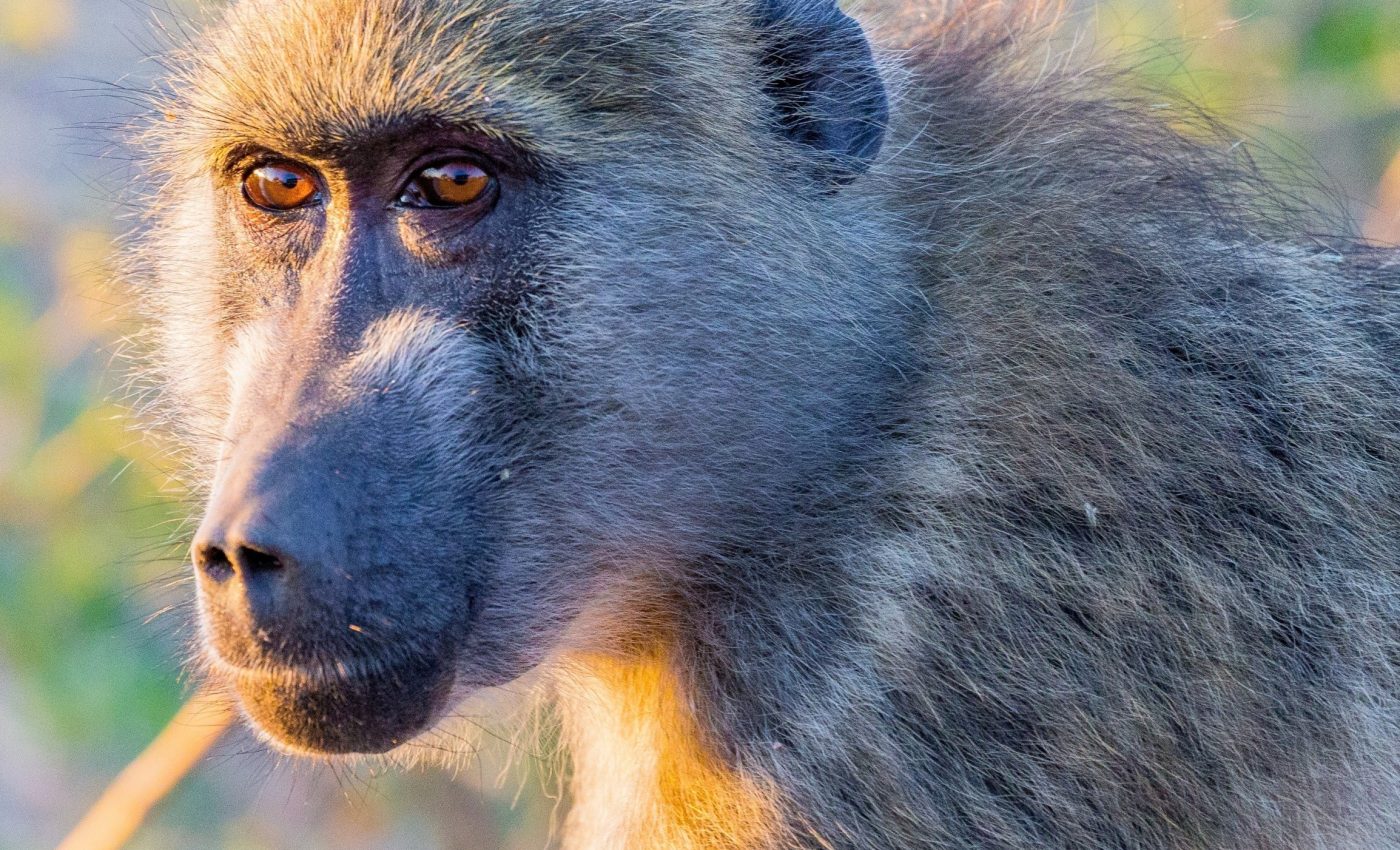
Power usually comes with perks. In social animals, higher rank often means first access to food, safer positions, and fewer threats. But in one troop of wild chacma baboons, dominance carried an unexpected cost: less rest at night.
Tracking the group after dark in South Africa, researchers from Swansea University found that top-ranked baboons experienced more frequent nighttime disruptions than their lower-ranking troop mates.

Instead of sleeping soundly, the animals at the top of the hierarchy woke more often, stirred their neighbors, and spent less time settled overall.
In a species where rank governs daily life, the findings suggest that power does not switch off at bedtime, and may quietly erode one of biology’s most basic needs.
Following baboons while sleeping
Collars logged 40-times-per-second motion and once-per-second Global Positioning System (GPS) positions.
An accelerometer, a sensor that tracks tiny body motions, turned bursts of movement into a simple rest-or-active label.
Field observations and daytime spacing helped the team map who dominated whom, then link that pattern to nighttime rest.
Measuring sleep in wild primates
Wild primates rarely tolerate brain sensors overnight, so the researchers used stillness as a practical stand-in for sleep.
The team defined nighttime rest as periods with no measurable body movement and tracked brief activity bursts that interrupted it.
While this approach cannot distinguish light sleep from deep sleep, it reveals how consistently individuals remain settled and how often they stir.
When dominance disrupts rest
The data showed that baboons did not follow independent sleep schedules. Instead, the troop often shifted between resting and moving in tight synchrony, with animals of similar social rank matching one another most closely.
When a single baboon woke, nearby animals frequently followed, allowing wakefulness – and rest – to ripple through clusters of sleepers.
The team expected dominant animals to rest better, assuming higher rank would grant control over safer or more comfortable sleeping spots.
“We expected dominant baboons to get better rest at night,” said Marco Fele, a Ph.D. student at Swansea University who led the study.
Instead, the data showed the opposite: top-ranked baboons experienced more interruptions and less overall nighttime rest than their lower-ranked counterparts.
Crowded nights at the top
Higher-ranked baboons tended to settle with more troop mates nearby, so the chance of being jostled or nudged rose.
Because those neighbors were also high-ranking, their movements influenced each other, making wake-ups more likely in the inner cluster.
This kind of social influence, one animal’s behavior changing another’s, can turn leadership into extra nighttime disruption.
Baboon status shapes sleep timing
Pairs with similar dominance rank were more likely to share the same state, either resting or active, at the same time.
Daytime spacing patterns helped explain which animals ended up close at night, linking social rank with the sleeping neighborhood.
Even during rest, the troop acted as a unit, showing that daily group life continues after sunset in measurable ways.
Mapping influence from day to night
Researchers first converted second-by-second motion recordings into timelines of activity and rest.
They then compared those patterns across individuals to see whether some animals tended to trigger wake-ups or settling periods that others soon followed.
To test who moved first, the team used cross-correlation, a method that compares the timing of changes between two signals.
They then linked those nighttime patterns to daytime social structure. Dominant baboons often sit near many others during the day, a tendency that can carry into nighttime settling.
Using eigenvector centrality, a measure of how connected an individual is to other well-connected neighbors, the researchers identified animals that sat at the crossroads of daytime social networks.
Those baboons were not just physically central. They were also behaviorally influential when rest spread through the group at night.
Status leaves a bodily mark
Sleep supports attention, memory, and immune defenses, so repeated interruptions could have real consequences, especially for animals that must make daily group decisions.
Decades of primate research show that social status often leaves a mark on the body, sometimes in unexpected ways.
In this case, dominance may confer advantages during daytime disputes, while lower-ranked animals may benefit from steadier rest that supports sharper choices the next day.
The study also has clear limits. Night-time rest was inferred from movement, which cannot capture brain sleep stages or brief arousals.
External factors such as weather, predators, and moonlight may also influence alertness at night, independent of social rank. And because the work followed a single troop, broader datasets from other habitats will be needed to test how widely these patterns apply.
Protection versus peaceful sleep
Many primates sleep in groups for protection, but close quarters can come at a cost, as nearby animals may bump, groom, or quarrel, disrupting rest.
In species with strong dominance hierarchies, higher-status individuals often claim central sleeping positions, while lower-ranked animals rest farther out or alone. If those central spots pack in more bodies, the safest place may also be the noisiest in practice.
Earlier research on wild baboons reached a similar conclusion, showing that animals routinely trade sleep time for safety and social demands, even without laboratory control.
That work highlighted how flexible sleep becomes in natural settings, where rest must be balanced against food, predators, and social partners.
The new findings add another layer, identifying dominance itself as a factor that can reshape when and how well animals sleep.
What baboon sleep loss means
The next step is to link disrupted rest to real-world consequences, such as injury risk, parenting success, or the ability to find food.
“Future work now needs to test the consequences of these night-time disruptions,” said Professor Andrew King, a co-author of the study.
Expanding the research to more troops, especially those living in riskier habitats, could reveal whether danger shifts sleep timing and whether leaders behave differently under threat.
The findings also underscore that social hierarchy does not fade after dark. Instead, nighttime behavior appears to mirror daytime politics, with power dynamics shaping even the most basic biological processes.
As tracking tools improve, researchers are gaining clearer insight into how social life reaches deep into physiology, including when – and how – animals rest.
The study is published in the journal Current Biology.
—–
Like what you read? Subscribe to our newsletter for engaging articles, exclusive content, and the latest updates.
Check us out on EarthSnap, a free app brought to you by Eric Ralls and Earth.com.
—–