How Romans created concrete that heals itself



 Follow Earth on Google
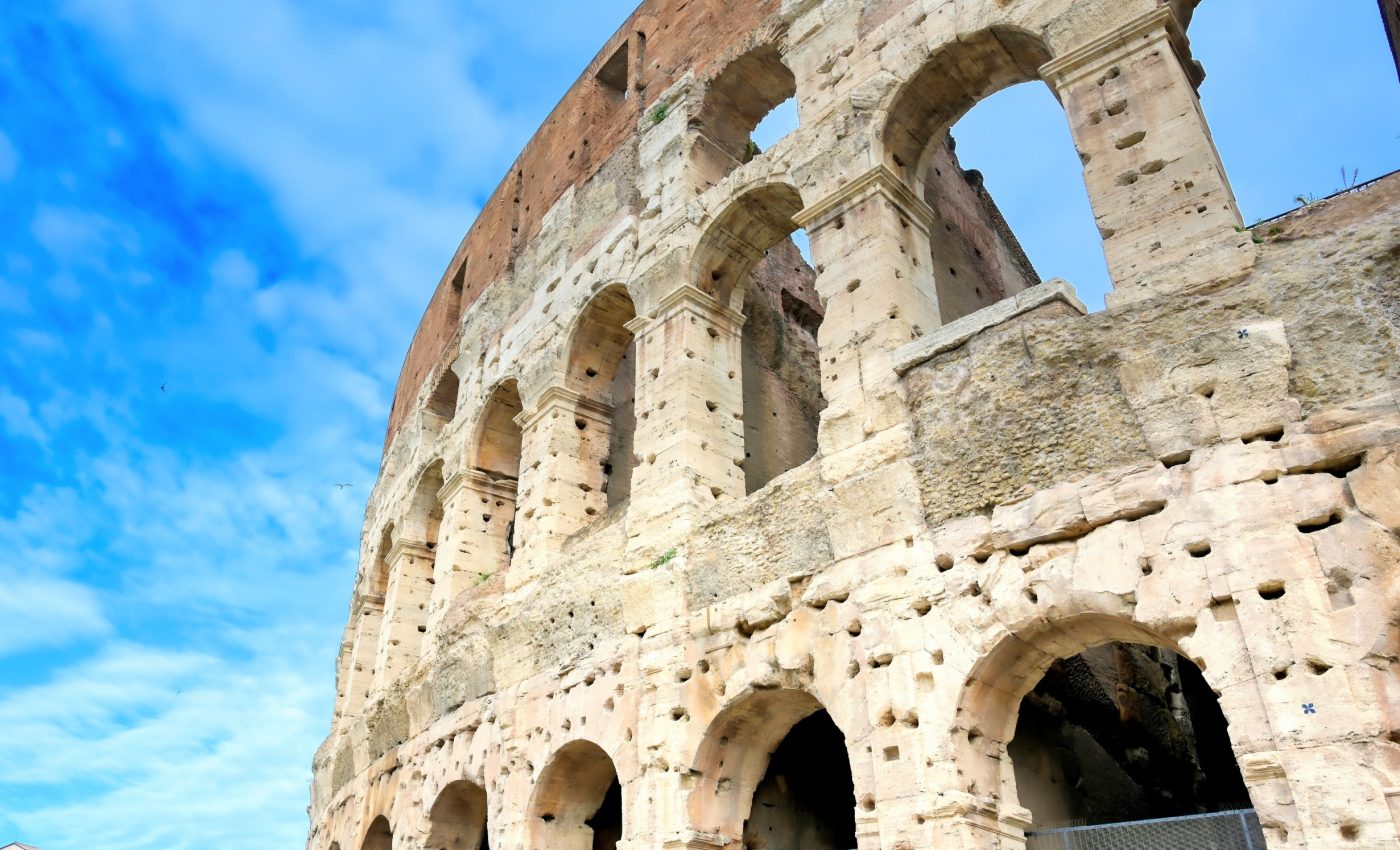
Walk through Rome’s ruins and one question comes to mind: how has this concrete lasted nearly 2,000 years? Massive walls, arches, and channels built by an ancient empire still stand, while many modern structures struggle to survive even a century.
Concrete may seem simple – a binder, sand, stones, and water – but tiny choices in how builders mix those ingredients determine whether a structure crumbles or endures.

For centuries, people relied on the recipe described by the Roman architect Vitruvius. Add water to lime to form a paste, and then blend it with other ingredients. His words shaped the standard story of how Roman concrete was made.
But new research shows the Romans sometimes relied on a different technique, which could explain a concrete repair system that is only now coming into focus.
How Roman concrete was made
In 2023, a team led by MIT Professor Admir Masic described a “hot-mixing” process in which Roman builders mixed lime fragments with volcanic ash and other dry ingredients before adding water.
The water triggered a strong, heat-producing reaction. As the concrete set, that method trapped highly reactive lime as small white, gravel-like features.
When cracks formed later, the lime clasts could redissolve in water. They would then fill the gaps – giving the material a built-in repair system.
The chemistry of Roman concrete
“Having a lot of respect for Vitruvius, it was difficult to suggest that his description may be inaccurate,” said Professor Masic.
“The writings of Vitruvius played a critical role in stimulating my interest in ancient Roman architecture, and the results from my research contradicted these important historical texts.”
Professor Masic had already spent close to a decade studying the chemistry of Roman concrete, including samples from a city wall in Priverno in southwest Italy, conquered by Rome in the 4th century B.C.E.
The big question was whether that wall really stood for what people used across the empire.
Archaeologists then uncovered something rare in Pompeii: an active Roman construction site preserved by the eruption of Mount Vesuvius in the year 79 C.E.
Construction paused by disaster
Workers had piled raw materials and tools on-site, and they were building a new wall beside finished buttress and structural walls while also repairing mortar in an older one. It was as if workers had just stepped away.
“We were blessed to be able to open this time capsule of a construction site and find piles of material ready to be used for the wall,” said Professor Masic.
“With this paper, we wanted to clearly define a technology and associate it with the Roman period in the year 79 C.E.”
The team analyzed samples from the pre-mixed dry material piles and from different stages of the walls. They found intact quicklime fragments already mixed dry with other ingredients.
The researchers also saw lime clasts locked into the hardened mortar. That provided clear evidence that this project used the heat-generating method the team had proposed.
Clues inside concrete ingredients
To sort out exactly how the ingredients had reacted, the researchers turned to stable isotope tools developed with Professor Kristin Bergmann.
These methods tracked how calcium-bearing materials changed as they reacted with carbon dioxide and water over time.
“Through these stable isotope studies, we could follow these critical carbonation reactions over time, allowing us to distinguish hot-mixed lime from the slaked lime originally described by Vitruvius,” said Professor Masic.
The results indicate that Romans ground quicklime, blended it dry with volcanic ash, and then added water to form a cementing matrix.
The team also examined the volcanic ingredients, including pumice. They saw that pumice particles reacted with liquid in the concrete’s tiny pores as years passed.
Those reactions formed new minerals that strengthened the material and helped it repair cracks long after the builders finished their work.
Linking ancient and modern concrete
The key element tying ancient and modern concrete together is calcium. Understanding how calcium compounds behave in these old mixtures can help engineers make sense of today’s cements.
Modern concrete is everywhere, and producing it releases a lot of carbon dioxide, so materials that last longer and need fewer repairs have practical value.
Toward these efforts, Professor Masic has started a company called DMAT, using lessons from ancient Roman concrete to create long-lasting modern concretes.
Masic points to Roman concrete’s dynamic, self-healing durability – from earthquakes to seawater – as its key significance. He adds that today’s goal is to adapt its most useful lessons for modern building.
“The way these pores in volcanic ingredients can be filled through recrystallization is a dream process we want to translate into our modern materials. We want materials that regenerate themselves.”
A new look at Rome’s recipe
The new work also circles back to Vitruvius. Professor Masic suspects readers over the centuries may have misinterpreted the ancient writer.
Vitruvius mentioned latent heat during cement mixing, which might match the heat-producing method the Pompeii site reveals.
The written description and physical samples now appear less contradictory and more like snapshots of a technology still evolving.
The Pompeii construction site captures that evolution at a precise moment in time, in the year 79 C.E. A method that let Roman concrete survive quakes, eruptions, and centuries in seawater now feeds directly into research on self-regenerating materials.
A recipe worked out by builders nearly 2,000 years ago is quietly shaping how engineers think about the next generation of concrete.
The full study was published in the journal Nature Communications.
—–
Like what you read? Subscribe to our newsletter for engaging articles, exclusive content, and the latest updates.
Check us out on EarthSnap, a free app brought to you by Eric Ralls and Earth.com.
—–