Juvenile manta rays act as mobile habitats for schools of fish



 Follow Earth on Google
Along Florida’s Atlantic coast, juvenile manta rays glide through shallow, busy waters crowded with boats and fishing lines. At first glance, they seem like just another young animal growing up near shore. New research, however, reveals something far more complex unfolding beneath the surface.
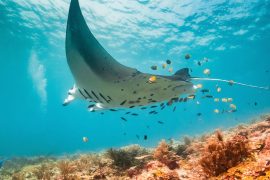
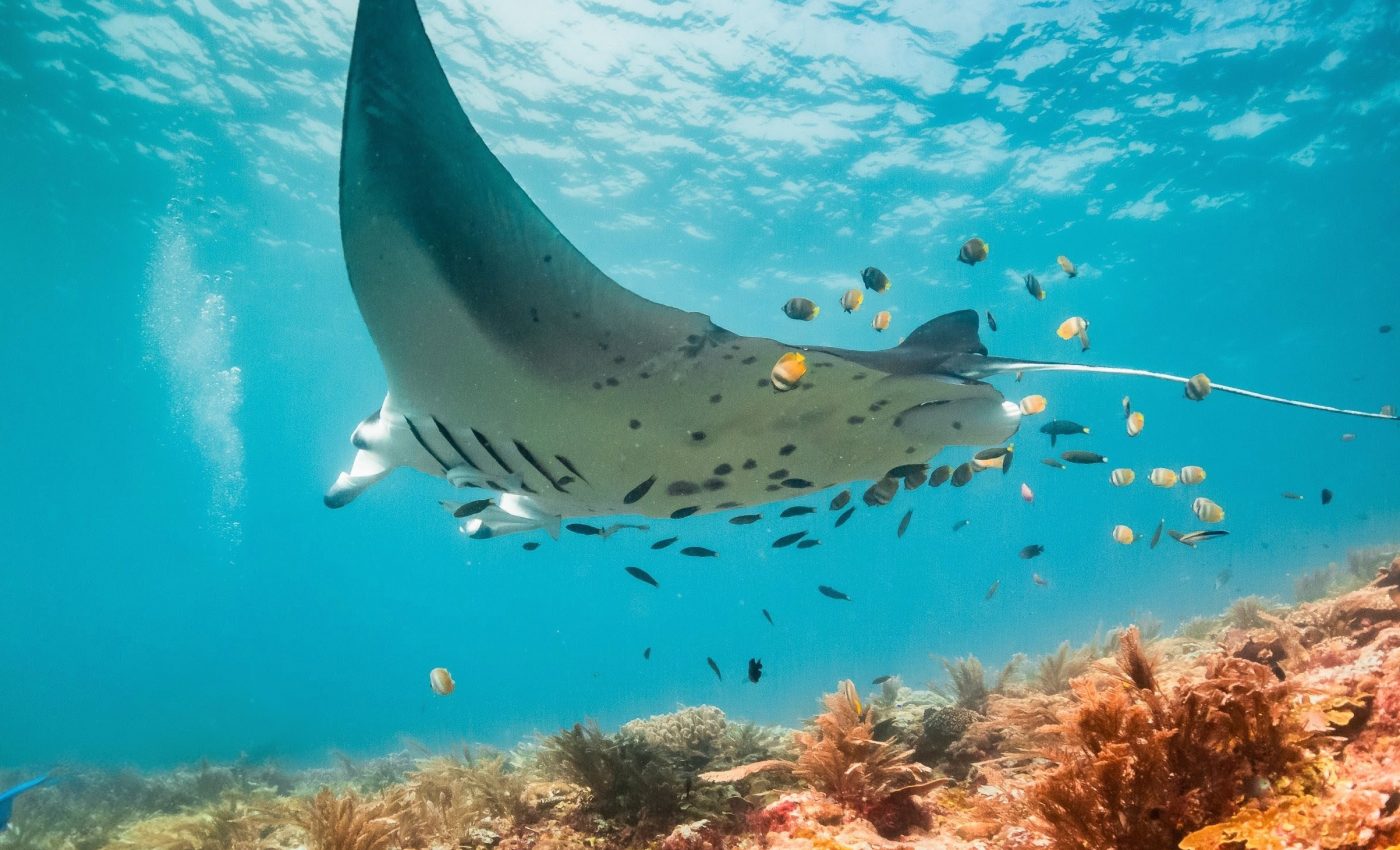
Video footage from South Florida reveals that young manta rays rarely swim alone. Instead, they carry small groups of fish that move with them as they cruise nursery waters.

Each juvenile manta becomes a mobile refuge – a living structure that shelters, feeds, and supports other fish during their most vulnerable life stages.
This discovery shows that protecting one juvenile manta also protects an entire moving community that depends on its presence.
Where young manta rays thrive
Palm Beach County, Florida, hosts one of the only known juvenile manta nurseries in the eastern United States. Shallow sandy and hardbottom seabeds create safe early life conditions close to shore.
Researchers observed repeated appearances of the same young manta rays across several years. Consistent return patterns confirm long-term use of these coastal waters.
Early life stages matter deeply for manta survival. Low reproductive output and slow maturity leave little margin for error.
Why fish follow manta rays
Fish swimming beside mantas do not gather by chance. Marine symbiosis theory explains such contact as a structured biological interaction.
Remoras, jacks, and cobia relatives appear again and again alongside juvenile mantas. Association patterns remain stable across seasons and years.
Every observed manta hosted fish partners. The absence of empty encounters highlights reliability of these relationships.
A body mapped for shelter
Fish do not swim around manta rays in random places. Each part of the manta’s body offers different benefits, so fish choose specific spots. Many fish stay close to the gills, eyes, fins, and tail because these areas provide safety and easy access to water flow.
The underside of the manta, known as the ventral side, attracts the largest number of fish. Water moves more smoothly along this surface, which makes swimming easier. Fish can stay close without using much energy.
Certain body areas also create less resistance as the manta moves forward. By staying in these low-drag zones, fish save energy during long periods of swimming.
Some fish also find food near the manta’s body, such as small particles in the water or leftovers from feeding, which makes these positions even more useful.
Manta rays as mobile habitats
Some large ocean animals do more than move through the sea. They create living space for other marine species. Studies on whale sharks already show that smaller fish use these giants as moving nursery areas while growing.
Manta rays work in a similar way. Fish stay close to manta rays because the body offers protection, helps with travel, and provides chances to find food. Swimming alongside a large animal reduces risk from predators and saves energy.
Groups with many different fish species usually grow larger. Variety allows each species to use the manta in a slightly different way. This mix helps the group stay stable and survive longer while moving together through the ocean.
Fish groups change seasonally
The types of fish that swim with manta rays do not stay the same all year. During drier months, remoras appear more often around manta rays. During wetter months, other fish from the Carangidae family become more common.
Even though the kinds of fish change with the seasons, the total number of fish around each manta stays similar. One group replaces another without increasing or decreasing overall group size.
Location along the coast also makes a difference. Manta rays seen in northern parts of the nursery tend to carry larger groups of fish. Conditions in these areas likely support more fish gathering around a single manta ray.
Danger in busy waters
Juvenile mantas feed near the surface in busy boating zones. Boat strikes and fishing gear injuries appear frequently during surveys. Risk extends beyond individual mantas. Fish communities face disruption when a host is injured.
“Understanding ecological interactions between species is essential to conserving the marine environment,” said Dr. Catherine Macdonald, the director of the Shark Research and Conservation Program at the University of Miami.
“Our results suggest that these species may be interdependent and form long-lasting and relatively stable relationships, creating mobile ecosystems where fish may mature, feed, or mate.”
How to protect manta rays
Conservation action does not require complex tools. Speed reduction near surface feeding zones lowers collision risk.
“Slowing down in areas where mantas are known to feed near the surface is a simple but crucial step toward protecting these young rays,” said Jessica Pate of the Marine Megafauna Foundation, a co-author of the study.
“Responsible boating and fishing can help protect these species and their critical ecological interactions long-term.”
Juvenile manta rays support far more than their own survival. Every slow glide carries an ecosystem forward.
The study is published in the journal Marine Biology.
—–
Like what you read? Subscribe to our newsletter for engaging articles, exclusive content, and the latest updates.
Check us out on EarthSnap, a free app brought to you by Eric Ralls and Earth.com.
—–