Little-known tree has enormous potential as both food and medicine



 Follow Earth on Google
Few trees in food science work harder than Hymenaea courbaril, a towering tropical species whose fruit, sap, bark, and seeds all matter.
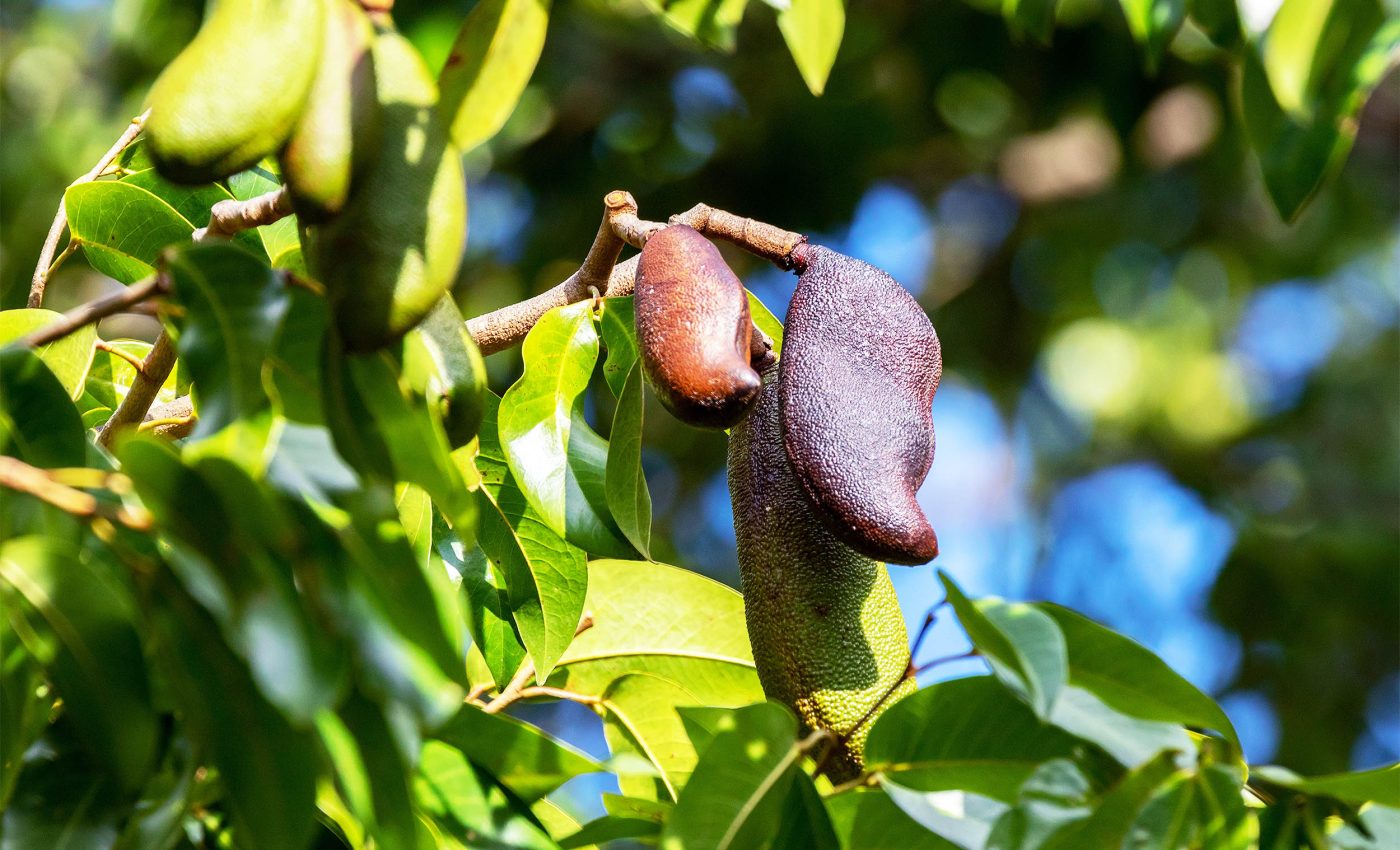
One mature tree can hang roughly a hundred pods in a good year, and entire forests across Latin America are full of them.

Inside the hard brown pods sits a pale floury pulp rich in fiber and antioxidant molecules, wrapped around large seeds loaded with natural gum.
Researchers in Colombia and Brazil are now mapping each part so food makers can use it without putting human health at risk.
Hymenaea courbaril as food
The work was led by Luz María Alzate Tamayo, a food scientist at the Lasallian University Corporation in Colombia.
Her research focuses on how this carob-like tree can supply safe natural ingredients for the food industry.
Hymenaea courbaril is native to tropical forests from southern Mexico through the Amazon basin and into parts of the Caribbean.
Local people know it by many names, including algarrobo, guapinol, and jatobá, and value it both as shade and as food.
Each pod is built like a tough container, with a woody shell and a dry but edible pulp pressed around the seeds.
The pale pulp tastes slightly sweet and floury, and it dries well, which makes it easy to mill and store.
For centuries, communities across these regions have milled the pulp into flour for porridges, drinks, and simple baked foods.
The tree has also fed animals and supported traditional remedies for digestive troubles and chronic respiratory infections.
Lab tested nutrients
One detailed analysis looked at pulp flour and fibrous residue from a Brazilian variety known as jatobá da mata and measured its nutrients.
That team found 44 grams of dietary fiber, indigestible plant material that adds bulk, and 11 grams of protein per 100 grams.
Nutrition researchers describe these concentrated fractions as functional foods, everyday products formulated to deliver a health benefit beyond basic calories and protein.
Pulp flour blended into breads, snacks, and breakfast foods could lift fiber intake without adding sugar or synthetic additives.
The better known Mediterranean carob tree, Ceratonia siliqua, supplies cocoa like powders and drinks that use most of the pod instead of discarding it.
A recent scientific review described these beverages as naturally sweet, caffeine free, and rich in polyphenols, fiber, and minerals for health focused consumers.
Hymenaea courbaril as medicine
Modern studies show that the jatobá tree carries many polyphenols, plant molecules that can neutralize reactive oxygen and other unstable chemicals.
In bark, leaf, and seed extracts, researchers saw strong inhibition of Staphylococcus aureus growth at relatively low concentrations in culture.
These same preparations scored high in tests of antioxidant capacity, a measure of how well a substance blocks damage from reactive oxygen molecules.
In some tests, leaf extracts from Hymenaea courbaril matched or exceeded strong synthetic antioxidants, showing that the foliage is chemically very active.
Work on pod residues, the material left after the edible pulp, highlights compounds called procyanidins, flavonoid chains that give astringent taste and antioxidant behavior.
That study found these molecules alongside quercetin and taxifolin derivatives, giving extracts a profile that might support antimicrobial and anti-inflammatory effects in foods and possibly people.
Traditional medicine in Brazil and Colombia reflects these findings, using jatobá sap and bark decoctions as tonics for chronic coughs, fatigue, and difficult infections.
Early experiments hint at wound healing and liver protective effects in animals, yet doctors still need larger controlled studies before trusting those claims.
Lessons from Hymenaea courbaril
For food companies, the big industrial hook lies in the seed gum, a family of galactomannans, carbohydrates that swell and thicken water based mixtures.
Seed gums from Hymenaea courbaril appear structurally similar, which is why scientists expect them to behave much like the carob based gums used today.
In regulatory language, carob bean gum, also called locust bean gum, is classified as a thickener and stabilizer rather than as a flavoring.
A Joint FAO and WHO expert committee says carob bean gum has no set intake limit for the general population at approved uses.
In practical terms, seed gum from carob-like trees can stabilize ice creams and dairy desserts by binding water and slowing ice crystal growth.
That smoother texture can allow recipe developers to cut fat or sugar while delivering creamy products that keep structure during transport and storage.
All of this chemistry matters because isolated fiber fractions from carob relatives have shown direct effects on blood lipids in people with high cholesterol.
In one clinical trial, 15 grams of carob fiber for six weeks reduced LDL cholesterol by 10.5 percent in adults with high levels.
The study is published in Revista Lasallista de Investigación.
—–
Like what you read? Subscribe to our newsletter for engaging articles, exclusive content, and the latest updates.
Check us out on EarthSnap, a free app brought to you by Eric Ralls and Earth.com.
—–