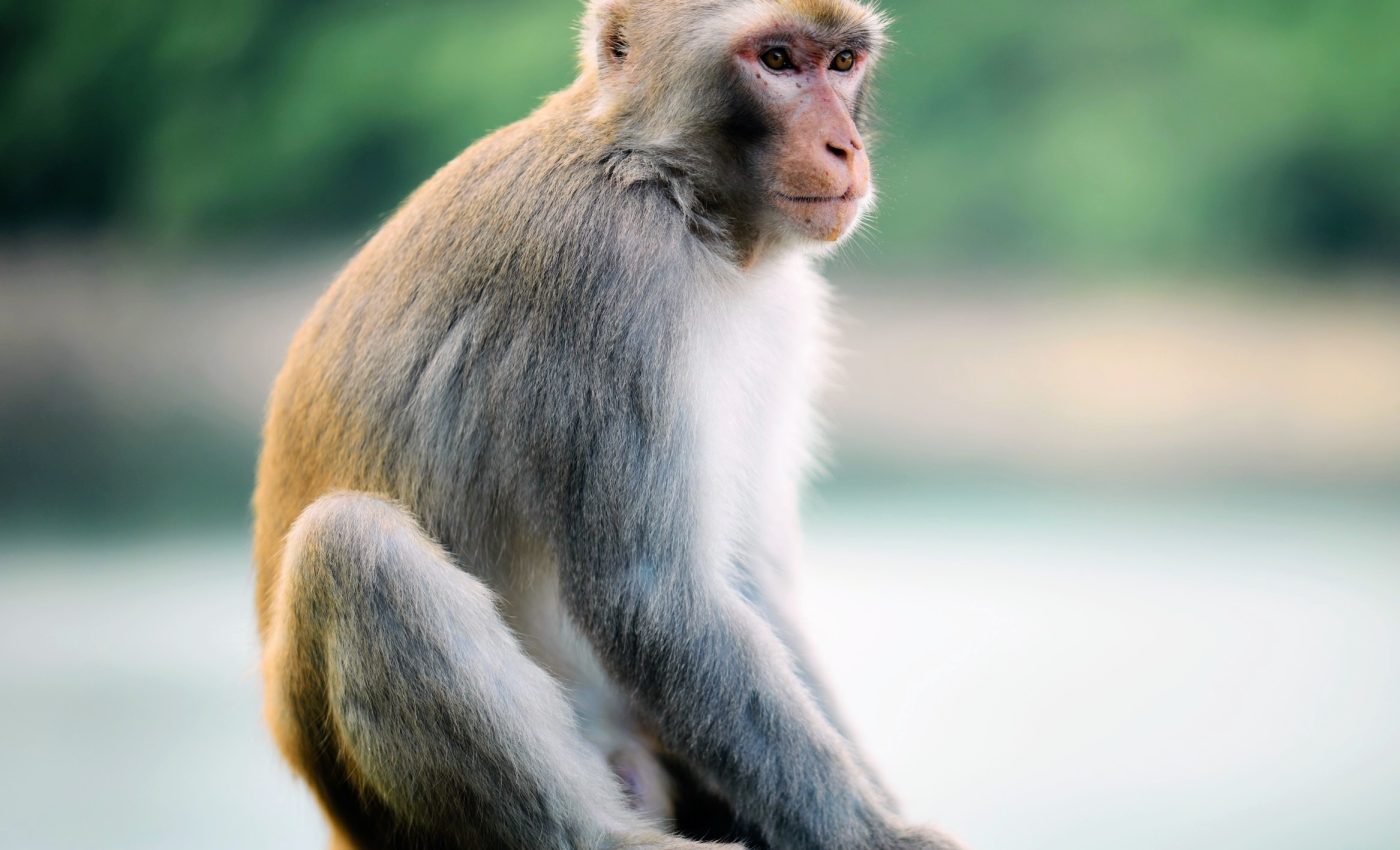
Monkeys that keep the beat: A new twist in musical evolution



 Follow Earth on Google
Two macaque monkeys in a Mexican lab have learned to tap along with human music. Their unexpected rhythm skills raise fresh questions about where our own sense of beat comes from.
In carefully controlled experiments, the animals locked onto the tempo of familiar and unfamiliar songs. They adjusted their tapping when the music sped up or slowed down.
Rhythm in the animal world

The work was led by Vani G. Rajendran, a neuroscientist at the National Autonomous University of Mexico (NAU). Her research focuses on how the brain keeps time in sound and movement.
Humans easily find a beat in music and plan movements around it, from marching bands to club dancing. That ability relies on beat perception, the skill of hearing a regular pulse in complex sound.
Many researchers have argued that only species with vocal learning, the ability to master new calls by imitation, can synchronize movements to a beat.
One trained California sea lion bobbed her head to music at tempos in an experiment, revealing beat keeping in a non-vocal learning mammal.
Testing rhythm in monkeys
In the new paper, two adult male macaques that had learned to tap with a metronome were tested with real songs.
Each trial began when a yellow cue appeared, then music played while the animals tapped a touch pad in front of them.
The monkeys had already learned to earn juice by keeping five taps in a row close to a target interval.
Real songs added melody and harmony on top of that training, pushing their brains to pull out a stable beat from richer sound.
The animals produced tapping intervals close to each song’s beat and kept that timing when they later heard a new song.
That pattern of sensorimotor synchronization, a tight link between heard rhythm and timed movement, even remained when the juice rewards were removed.
When music loses its rhythm
To tease apart music following from habit, the team played scrambled versions of the same songs that preserved pitch but destroyed rhythm.
In that setting, the monkeys tapped at the correct intervals to win rewards, yet their taps no longer showed a link to the sound.
The scrambled versus intact songs hint that the monkeys chose to use rhythm when it was present, rather than simply repeating a movement routine.
That choice makes the finding more than a simple case of animals reflexively moving whenever music plays.
Outside commentators have argued that this behavior is impressive but still built on conditioning, a view laid out in a recent perspective.
“A behavior that has been conditioned may not be equivalent to a behavior that emerges spontaneously,” wrote the researchers.
Trained monkeys can feel the beat
In a final test, the monkeys heard a different pop song at three speeds. They could win juice simply by keeping their own tapping intervals consistent within each trial, regardless of the song’s tempo.
The free-tapping data suggest that locking onto the song’s beat may actually help the monkeys keep their own movements steady over many taps.
Using the music as a timing guide seems to be one efficient strategy among several they could have used to satisfy the task’s demands.
Even with that freedom the taps most often clustered around the true beat interval of the song and not at random comfortable speeds.
When the taps landed near that tempo, their timing grew tightly grouped, hinting at a pull toward the beat once the animals had training.
A new look at musical minds
Rajendran and her colleagues describe the findings as support for a four components (4Cs) hypothesis, an idea that beat skills draw on four processes.
The 4Cs processes include tracking patterns in sound, predicting when the next beat will occur, timing movements in advance, and connecting success to reward.
These ideas fit with earlier rat recordings showing stronger responses when notes land on the beat than in between.
The auditory cortex, a sound processing area on the brain’s surface, shows stronger firing on beat moments in Rajendran’s previous research.
Human infants move rhythmically more to music and other regular sounds than to speech in a study of more than one hundred babies.
Those babies also adjusted their wiggles as the tempo changed, hinting that the urge to line up movement with sound appears early in life.
What this reveals about humans
Music itself shows up in every human culture that anthropologists have examined, according to a cross cultural survey of songs and social settings.
Those patterns make it striking that other primates rarely show clear rhythmic behavior without training, which is why these monkeys are attracting much attention.
Future work will likely test more monkeys, more songs, and more flexible tasks to see how far this ability extends.
Researchers also want to link behavior to neural recordings, tracking which circuits change when an animal moves from metronome practice to real music.
For humans, similar circuits likely involve the basal ganglia, clusters of neurons that help set timing and track rewards.
The 4Cs idea holds that linking prediction, movement, and reward to sound patterns can produce musical timing in toddlers, sea lions, and trained monkeys.
The study is published in the journal Science.
—–
Like what you read? Subscribe to our newsletter for engaging articles, exclusive content, and the latest updates.
Check us out on EarthSnap, a free app brought to you by Eric Ralls and Earth.com.
—–