Mosasaur tooth found in North Dakota will force a rewrite of the 'sea monster' textbooks



 Follow Earth on Google
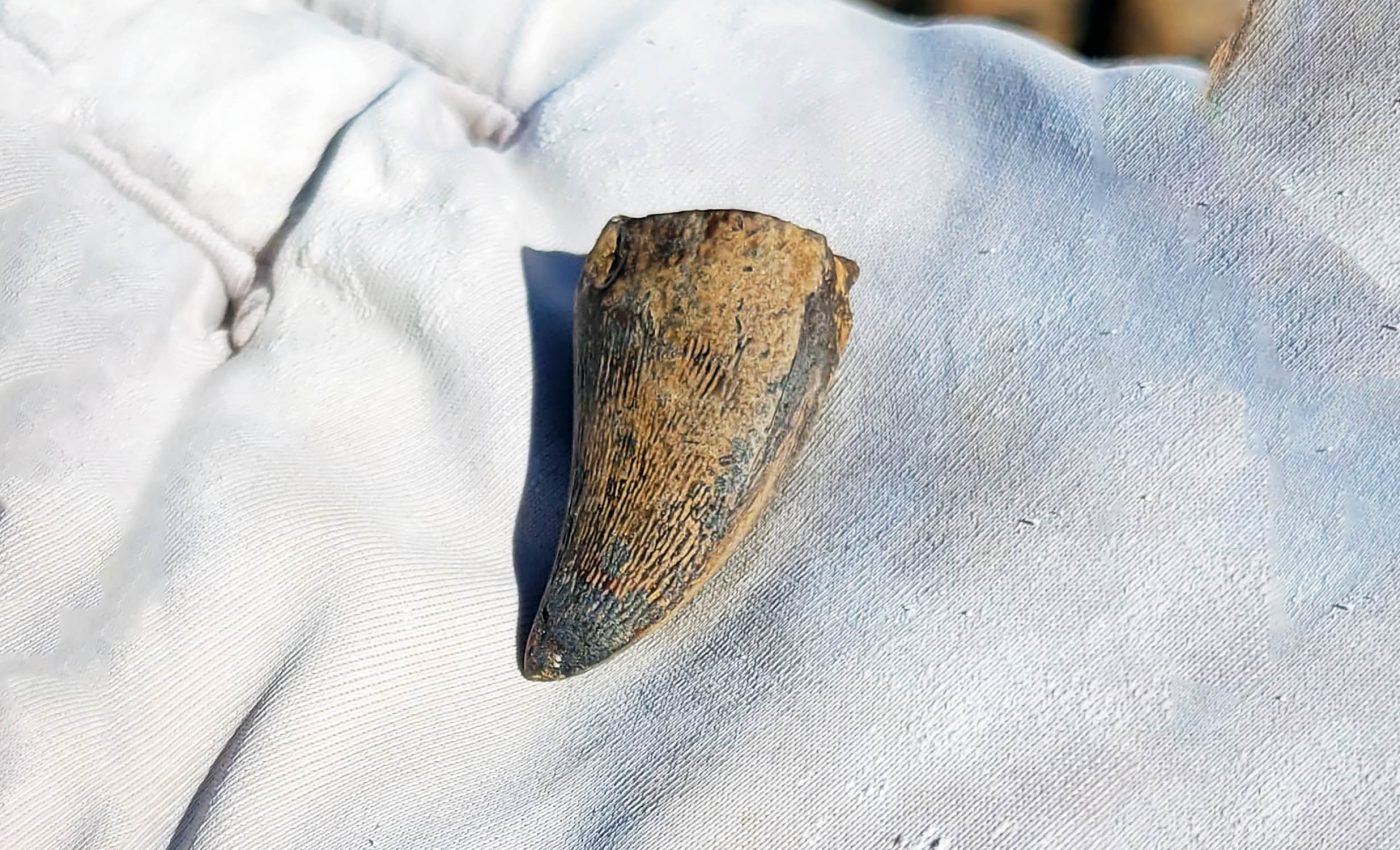
A massive predator’s tooth turned up in North Dakota, a place better known for dinosaurs than sea monsters. The discovery raised eyebrows right away.
Mosasaur fossils usually come from ocean sediments. These reptiles were built for life at sea, patrolling ancient waters during the age of dinosaurs. Finding one inland is not just unusual. It feels almost wrong.

What makes this discovery even stranger is where the tooth was found. It came from a river deposit, mixed in with fossils of land dinosaurs and freshwater animals. That kind of setting does not happen by accident.
So the question becomes hard to ignore: why would a creature known for open oceans show up in a river?
According to a new study, the answer is surprisingly straightforward. The mosasaur was not a washed-in corpse or a fossil out of place. It was living in that river.
Mosasaur tooth fossils don’t match
In 2022, paleontologists found the mosasaur tooth in North Dakota in a fluvial deposit. The same layer also contained a Tyrannosaurus rex tooth and a crocodylian jawbone, in an area already known for duck-billed dinosaur Edmontosaurus remains.
Those animals do not share the same lifestyle, so finding their fossils together in a single river layer begged for an explanation.
The new study argues the simplest answer is the one that changes the story. The mosasaur was not a visitor that washed in from the sea. It was living there.
Tooth enamel preserves life history
The research team, led by Uppsala University, focused on the tooth’s enamel because it locks in chemical clues while an animal is alive.
Melanie During, one of the study’s corresponding authors, worked with an international group from the United States, Sweden, and the Netherlands.
Researchers at the Vrije Universiteit in Amsterdam carried out the isotope analyses, measuring oxygen, strontium, and carbon isotopes.
Oxygen and strontium are especially useful for habitat questions because water leaves a lasting signature in the body.
The mosasaur tooth contained more of the lighter oxygen isotope (¹⁶O) than is usually seen in marine mosasaurs, pointing to a freshwater lifestyle.
The strontium isotope ratios also lined up with a freshwater habitat, matching what you would expect from an animal spending time in a river system rather than the open sea.
Tooth reveals Mosasaur diet
Carbon isotope ratios in teeth generally reflect diet, and many mosasaurs show low ¹³C values because they spent much of their time diving deep.
“The mosasaur tooth found with the T. rex tooth, on the other hand, has a higher ¹³C value than all known mosasaurs, dinosaurs, and crocodiles, suggesting that it did not dive deep and may sometimes have fed on drowned dinosaurs,” said During.
That higher ¹³C value matters because it hints at behavior, not just location. A mosasaur that did not dive deep fits better with a river environment, where deep diving is limited and prey is different. It also fits with a river that sometimes sweeps large bodies downstream.
Multiple fossils, same story
One fossil can be a fluke. So the researchers checked for a pattern. The isotope signatures show that this mosasaur lived in a freshwater river environment, and two additional mosasaur teeth from nearby, slightly older North Dakota sites display the same freshwater signature.
“These analyses show that mosasaurs lived in riverine environments in the final million years before going extinct,” said During.
That final million years matters because it frames this as a late-life pivot for a group already under pressure near the end of the Cretaceous.
It is not a small tweak in habitat. It is a move into a place most people never associate with an animal built for open water.
Continent split by water
To understand how a mosasaur ends up in a river, you have to zoom out to North America’s geography near the end of the dinosaur age.
At the time, the Western Interior Seaway split the continent, stretching north to south across what are now the prairies and dividing North America in two.
Over time, freshwater input increased and the water shifted from saltwater to brackish and eventually to mostly freshwater.
The researchers point to a halocline as a key part of the setup, with freshwater sitting above heavier saltwater. Their isotope comparisons support that layered-water idea.
“For comparison with the mosasaur teeth, we also measured fossils from other marine animals and found a clear difference,” said paleontologist and study co-author Per Ahlberg.
All gill-breathing animals carried isotope signatures tied to brackish or salty water, while lung-breathing animals did not.
This pattern suggests that mosasaurs, which had to surface for air, lived in the upper freshwater layer rather than the more saline water below.
That detail about breathing is easy to overlook, but it shapes where an animal can live in a layered system. If the surface water turns fresh, an air-breather can still use it, even if saltier water lurks below.
Rare giant far from the sea
Marine deposits across North America, Europe, and Africa contain abundant mosasaur fossils dated to about 98-66 million years old, but researchers rarely find them in North Dakota, which is why this discovery stands out.
The tooth is large enough to suggest an animal that could reach about 36 feet (11 meters) long, and earlier mosasaur bones from a nearby North Dakota site support that size estimate.
The tooth belongs to a prognathodontine mosasaur, though researchers cannot identify the genus with certainty. Close relatives such as Prognathodon have bulky heads, powerful jaws, and sturdy teeth, a build well suited to an opportunistic predator.
“The size means that the animal would rival the largest killer whales, making it an extraordinary predator to encounter in riverine environments not previously associated with such giant marine reptiles,” said Ahlberg.
Lessons from a mosasaur tooth
Moving from marine habitats into freshwater generally requires far fewer adaptations than the complex shift from freshwater to the open ocean.
The point of the study is not that mosasaurs stopped being ocean animals everywhere. It is that at least some of them adjusted quickly when their world changed, and they did it right near the end.
A river in North Dakota, about 66 million years ago, may have hosted a predator most people still picture only in open water.
The full study was published in the journal BMC Zoology.
—–
Like what you read? Subscribe to our newsletter for engaging articles, exclusive content, and the latest updates.
Check us out on EarthSnap, a free app brought to you by Eric Ralls and Earth.com.
—–