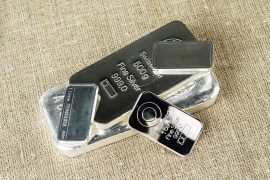
New tech recycles silver with without using cyanide or other harsh chemicals



 Follow Earth on Google
Researchers in Finland have shown that simple molecules related to everyday oils, plus visible light, can dissolve silver without relying on harsh chemicals.
The same chemistry can pull silver from waste and then return it as solid metal ready for reuse. Today, only around one fifth of global silver supply comes from recycling. This is despite the fact that demand keeps rising in electronics and solar panels.

Scientists call this urban mining, recovering metals from discarded products instead of digging new ore. The new chemistry helps make that recovery even more practical.
Safer silver recycling
Work on the new recycling route was led by postdoctoral researcher Anže Zupanc at the University of Helsinki. His research focuses on using simple organic molecules as tools for cleaner metal recovery.
For more than a century, many mines have used cyanide leaching to pull metals from crushed ore. That approach is efficient but dangerous. Recent research warns about cyanide’s toxicity and the growing regulatory pressure around its use.
The Finnish team set out to design a silver recovery method that fits a circular economy, reusing materials instead of discarding them.
Their answer was to start not with strong mineral acids, but with molecules close to those found in everyday vegetable oils.
Fatty acids pull silver into solution
In the laboratory, the team worked with fatty acids, simple organic acids found in many plant-based oils, to dissolve pieces of silver metal.
When they added hydrogen peroxide, the metal’s surface slowly oxidized and slipped into the liquid as positively charged ions. Under these mild conditions, the liquid could hold up to 4.6 percent of its own weight in dissolved silver.
The researchers also measured dissolution rates as high as 1.62 moles of silver per square meter of metal surface each hour. As the silver entered the solution, it formed carboxylates, which are salts created when metal binds to the acid groups.
By adding ethyl acetate, they made the silver compounds crystallize out and left the unused acid for collection and reuse.
From dissolved metal to pure silver
Once the silver carboxylate crystals were collected, the team placed them in a reactor and shone light from compact fluorescent lamps onto the mixture.
This photoreduction turned silver ions back into metallic silver. The light was produced by two 30 watt lamps that emit wavelengths between 400 and 650 nanometers.
Throughout the process, a 30 percent hydrogen peroxide solution served as the oxidant, a chemical that steals electrons so other substances change their state. Because this reagent breaks down into water and oxygen, it avoids leaving behind persistent contamination.
At the end of the light step, the researchers were left with fine metallic particles. These could be filtered and weighed. That closed the loop; both the recycled acids and recovered silver were ready for another round of processing or manufacturing.
Urban mining from electronics
Those concerns are real for the scientists working on this chemistry. They see silver-rich parts of modern devices discarded after short lifetimes, instead of being reused.
“Recycling silver from waste materials is becoming increasingly important for securing the supply of this precious metal,” said Zupanc.
In their experiments, the team applied the method to waste silver-coated keyboard connection plastics. These components combine silver films with polymers and other metals.
The technique could pull the precious metal away from these multi-metal substrates, while leaving most base metals behind.
The solvents themselves bring extra benefits, because fatty acids are often biocompatible, biodegradable, low in acidity, and non volatile.
These traits make both equipment and working conditions gentler than when strong mineral acids are used.
Importance of silver recycling
Modern photovoltaic cells, devices that convert light directly into electricity, depend on silver-rich pastes to carry current through each panel.
Industry analysts report that silver use in solar technologies reached 193.5 million ounces (5.5 million kilograms) in 2023 and climbed, compared with the previous year.
As more sectors electrify, silver joins a list of critical metals that are seen as essential yet vulnerable to supply shocks.
A recycling route that uses this chemistry will not replace mines, but it can ease pressure by capturing metal often lost in products.
Adapted to larger equipment and waste streams, this chemistry could help make recycling automatic whenever silver-rich components reach the end of their life.
That shift would turn more discarded devices into sources of silver, supporting urban mining and reducing the need to expose communities to mining risks.
The study is published in Chemical Engineering Journal.
—–
Like what you read? Subscribe to our newsletter for engaging articles, exclusive content, and the latest updates.
Check us out on EarthSnap, a free app brought to you by Eric Ralls and Earth.com.
—–