Student turns recycled plastic cups into a type of 'yarn' to make clothing



 Follow Earth on Google
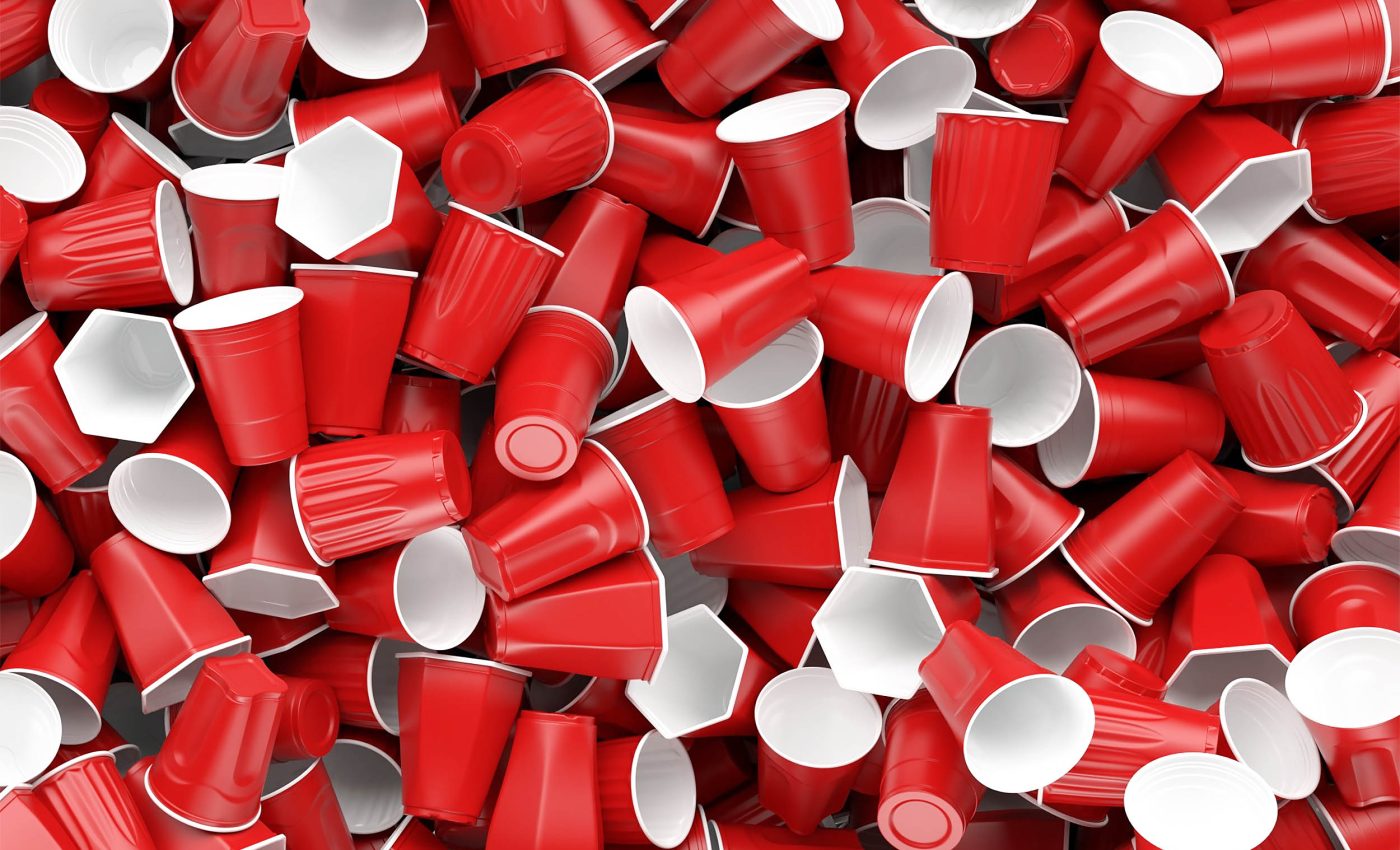
On many college campuses, red plastic cups pile up after parties and go straight into the trash. An engineering graduate is turning thousands of those cups into soft sweaters and beanies instead, creating a type of “yarn” from the plastic for her first collection.
The effort started at Johns Hopkins University and now stretches through North Carolina, Virginia, and New York. It also takes aim at a larger issue, the plastic dust that synthetic clothes release into air and water with every wash.
From party plastic to textile yarn

The idea grew from a project where the team built an extruder, a machine that melts plastic and pushes it out as long strands. Those strands are chopped, cooled, and later turned into yarn that feels much softer than a stack of party cups suggests.
The work was led by Lauren Choi, a graduate of Johns Hopkins University (JHU) who founded The New Norm to turn party cups into textiles. Her research focuses on ways to make hard to recycle plastics into soft, durable fabrics that still feel good on skin.
After graduation, Choi secured grants, including support from Reynolds Consumer Products, to refine the recipe and scale the process beyond her parents’ garage. Shredded cups go to facilities in North Carolina and Virginia, rather than a campus recycling bin.
There they are mixed with synthetic fibers, man made threads from plastic, to create yarn. The yarn then heads to a factory in Brooklyn, where a computer controlled 3D knitting system shapes each piece.
Instead of cutting fabric panels and sewing them together, the machine knits whole sweaters and beanies in one go. Every link in that chain, from keg party bin to knitting floor, is designed to keep plastic in use and out of landfills.
Clothes and microplastics
Scientists worry about microplastics, plastic pieces smaller than a fifth of an inch, because they show up from deep oceans to human blood.
One widely cited study estimated that washing synthetic clothes alone produces about 35 percent of the primary microplastics entering the worlds oceans.
When those clothes spin in a washer, they release microfibers, thin plastic threads that flake off the fabric surface, into the soapy water. In one washing machine experiment, a 13 pound load of acrylic fabric shed more than 700,000 fibers in a single cycle.
Another lab paper found that even a single polyester garment can release more than 1,900 fibers with each wash. Most of that shedding happens early in the garments life, so the first washes send a rush of plastic into wastewater pipes.
Textile researchers have also shown that nearly half of microfiber pollution can come from manufacturing steps, long before people ever wear the clothes.
That means cutting waste at the factory and design stages may matter as much as what happens later in home washing machines.
Rethinking yarn to cut shedding
Most synthetic sweaters are made from spun yarn, thread created by twisting together many short fibers like tiny pieces of hair. That twist leaves countless loose ends at the surface, which easily break away as lint in the dryer or fluff in the wash.
The New Norm uses filament yarn, a single long strand of fiber with no breaks along its length. That structure leaves fewer exposed ends than fuzzy spun yarn, so there are fewer chances for tiny fibers to snap off.
“Her yarn is made from continuous filaments, rather than fibers that are spun together,” said Choi, explaining why the material behaves differently from ordinary polyester.
Filament based fabrics still shed some fibers, yet their smoother surfaces and long strands offer fewer chances for loose pieces to break away.
Choi hopes this structure means fewer harmful microplastics drift into rivers and oceans every time a New Norm sweater gets washed.
More garments, less waste
Most clothing factories still use cut and sew methods, where flat fabric is cut into shapes and stitched into shirts, pants, and sweaters. That process leaves odd scraps on the floor, and much of that leftover fabric is too small to turn into anything useful.
“3D knitting has a lot less waste compared to traditional cut-and-sew, where many fabric scraps are wasted,” said Choi. In her system, textiles come off the machine as complete pieces, not panels that must be cut apart.
Factory designers who tested three dimensional knitting strategies in industry reported 10 to 30 percent higher production efficiency than older setups. Higher efficiency usually means less wasted yarn, less wasted machine time, and fewer emissions tied to each finished piece of clothing.
By knitting each sweater to shape, The New Norm keeps every inch of plastic yarn in the garment itself instead of on the floor. That approach does not erase the footprint of plastic fashion, yet it shrinks one of the most visible waste streams inside factories.
Lessons from plastic yarn
The brand’s first collection of party cup sweaters and beanies sold out in about two months, sending a clear signal that customers were curious.
Since then, production runs have grown from small batches measured in tens of pounds to industrial runs measured in thousands of pounds of yarn.
Sweaters currently sell for 45 to 85 dollars, a range similar to many mid price fashion labels that use far less recycled material.
For buyers, that means this kind of sweater can fit into a normal clothing budget rather than feeling like a luxury science project.
Globally, more than 60 percent of clothing fibers are synthetic, and most still come from brand new fossil fuel based plastics.
Projects that reuse existing plastics cannot solve that entire system, but they can chip away at waste while pressure grows for deeper change.
For people choosing what to wear, New Norm sweaters show how design choices can change the impact of a plastic based hoodie.
Alongside buying fewer clothes, washing them less often, and supporting better filters, these kinds of innovations help turn party trash into something more hopeful.
—–
Like what you read? Subscribe to our newsletter for engaging articles, exclusive content, and the latest updates.
Check us out on EarthSnap, a free app brought to you by Eric Ralls and Earth.com.
—–