Tiny amoeba shatters the heat limit for complex life



 Follow Earth on Google
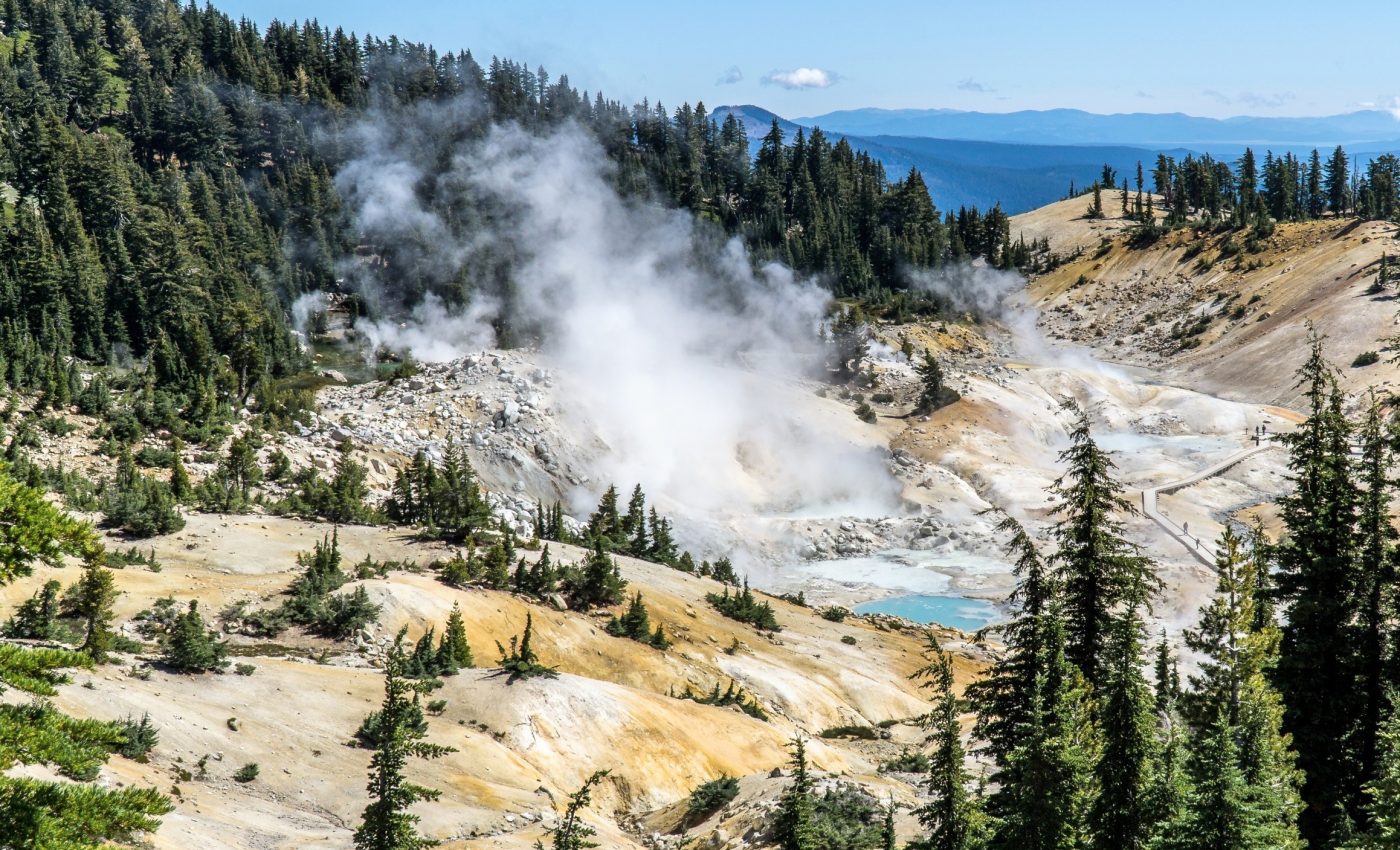
At a steaming creek in California’s Lassen Volcanic National Park, a tiny amoeba just raised the heat ceiling for complex cells.
A Syracuse University team reports that the single-celled eukaryote divided at about 145 degrees Fahrenheit.

For decades, the accepted upper limit for such organisms sat near 140 degrees Fahrenheit.
A new kind of heat lover
The work was led by Beryl Rappaport, a microbiologist completing her PhD at Syracuse University. Her research focuses on heat tolerant eukaryotic microbes in volcanic hot spring systems.
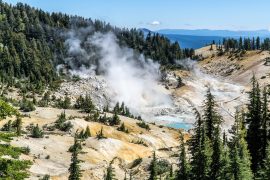
She and colleagues sampled a tributary of Hot Springs Creek near Boiling Springs Lake, a hydrothermal basin in the park.
The nearby lake stays at about 125 degrees Fahrenheit year-round. The new organism sits within Amoebozoa, a broad group of amoebae with flexible cell shapes. It moves and feeds with temporary extensions that let it glide over mineral rich films.
“Eukaryotes can grow at higher temperatures than we thought was possible for them,” said Rappaport. The team raised incubator settings stepwise until cell division held steady at the new record.
Why heat wrecks most cells
High heat initiates protein denaturation, which is a loss of structure that halts normal work inside cells. Beyond a tipping point, membranes leak and enzymes stall.
Eukaryotes carry internal compartments that add vulnerability at extreme heat. Even the most hardy red algae, members of the Cyanidiales group, top out near 133 degrees Fahrenheit in volcanic springs.
Many organisms counter heat with chaperone proteins, helpers that refold damaged proteins and guard them from clumping. Cells that keep membranes rigid with tighter lipids also resist leaks when water gets close to boiling.
Nucleic acids can fray as temperature climbs, and that threatens replication accuracy. The new amoeba’s success hints that it may stabilize DNA and RNA in ways we have not seen.
Complex cells in hot springs
The discovery resets how scientists frame the limits for complex cells in natural hot springs. It shows that some eukaryotes can adapt to heat that previously seemed off limits.
Rappaport’s team plans genome sequencing to look for heat-adapted proteins and membranes. They will test which genes switch on as temperatures rise in controlled cultures.
“This opens the doors to what eukaryotes might continue to be capable of,” said Rappaport.
Testing heat limits
To pin down a ceiling, researchers often grow cells across a series of set temperatures. They track cell division, morphology, and survival over days in consistent media.
The Lassen team used culture to move from field samples to stable lines. Stepwise heating lets scientists separate short-lived survival from true reproduction at a target temperature.
Controls at lower heat provide a baseline for growth rates and cell health. Replicate flasks reduce the chance that a single lucky lineage drives the result.
The search for alien life
Microbes without nuclei, mostly archaea, already thrive far beyond the eukaryote mark. One archaeal strain can proliferate under pressure at 252 degrees Fahrenheit.
Such high-temperature survival informs how we look for life in hydrothermal settings on ocean worlds. It pushes mission planners to consider hot brines, steep chemical gradients, and long-lived heat.
The Lassen amoeba also invites wider surveys of hot streams and pools around the world. Researchers will likely revisit sites where earlier sampling missed fast moving cells in thin films.
Good field practice matters near boiling water, and the park’s trails keep visitors on firm ground. The surrounding basin is fragile, and stepping off path can break crusts that vent scalding steam.
Broader implications of the study
What stabilizes this cell at such heat is the first question. A plausible answer is a toolkit of heat shock proteins, stress responders that protect other proteins during thermal spikes.
Membranes may also carry more saturated lipids that resist softening. The cell could tweak ion balance, the mix of dissolved salts, to keep enzymes in working shape.
If these strategies hold up, they offer clues for an industry that runs hot. Enzymes and biomaterials that tolerate heat can cut cooling costs and simplify sterilization.
Finally, the discovery brings attention back to overlooked hot springs in smaller parks. Big science can hide in small creeks, even just a few steps from a trail.
The study is published in bioRxiv.
—–
Like what you read? Subscribe to our newsletter for engaging articles, exclusive content, and the latest updates.
Check us out on EarthSnap, a free app brought to you by Eric Ralls and Earth.com.
—–