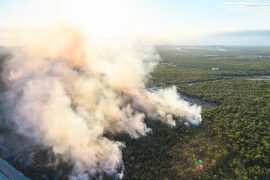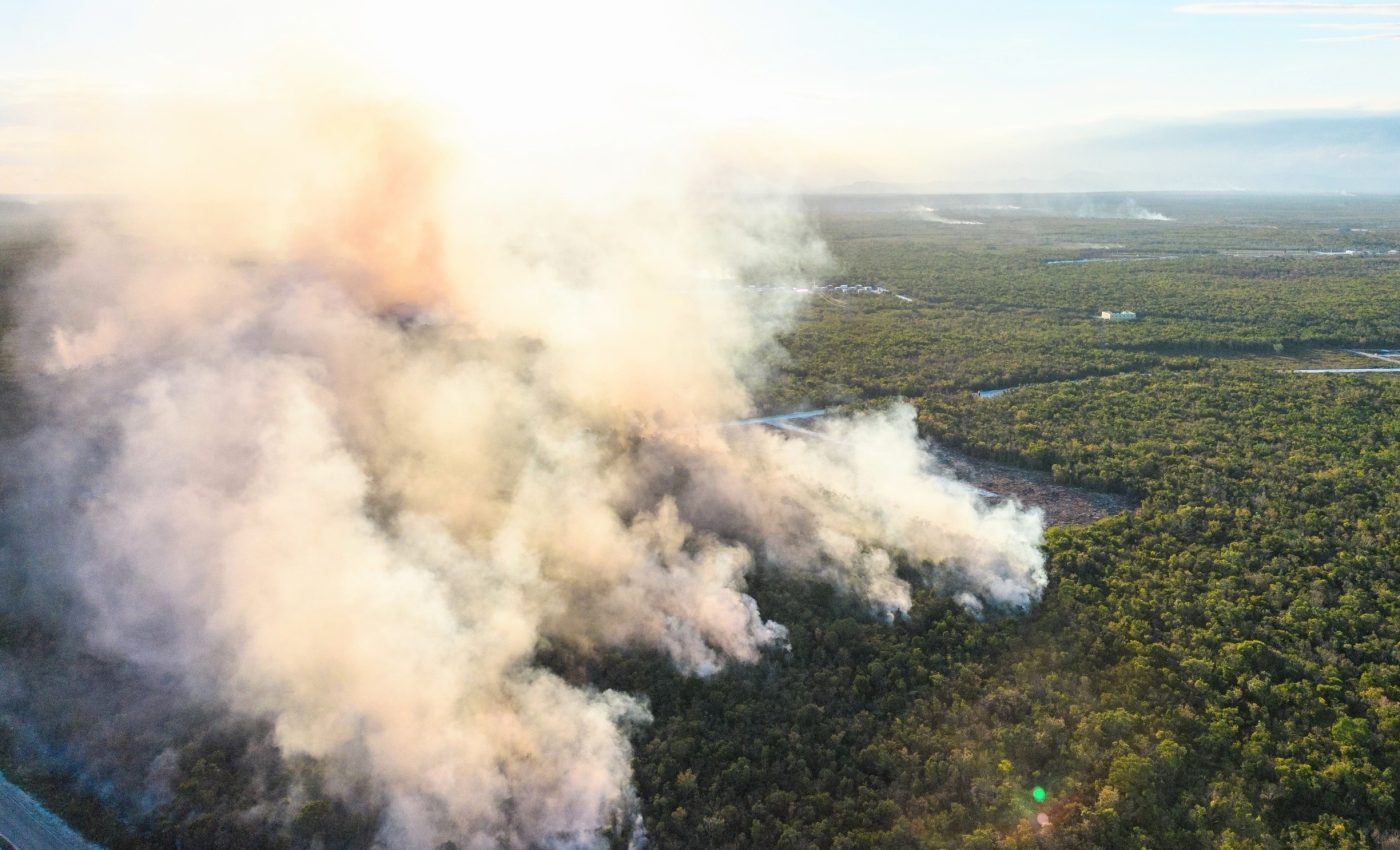
Wildfire smoke now offsets decades of cleaner air progress



 Follow Earth on Google
A new Harvard analysis finds that human-caused warming drove about 65% of western U.S. wildfire emissions from 1997 to 2020.
Using weather records and air-quality modeling, the researchers tracked that signal from California forests to Oregon valleys and inland deserts.

The research ESA led by Loretta Mickley at Harvard’s John A. Paulson School of Engineering and Applied Sciences (SEAS).
Her team studies atmospheric chemical reactions that create and change pollutants, particularly during large fires fueled by heat and drought.
Warming burns more
Across western forests, the researchers estimated that human-driven warming explained 60% to 82% of total area burned since the early 1990s.
In central and southern California, the team traced about 33% of burned area to climate change, with people still starting most fires.
Lightning-set wildfires responded more strongly to warming than human-set fires in most regions, because weather limits how far they spread.
Hotter air raises vapor pressure deficit, how strongly air pulls moisture from plants, which leaves needles and grasses easier to ignite.
To track those changes, the researchers combined decades of weather data with satellite measures of plant greenness and dryness.
A 2016 paper showed that human-caused drying doubled cumulative forest fire area since 1984 in western forests.
Measuring human warming
The study focused on anthropogenic climate change – warming driven mainly by human greenhouse-gas pollution – and treated other year-to-year swings as natural.
Large climate models helped the researchers estimate what local temperature and humidity would have looked like without that added human heat.
They compared predicted burning under observed conditions with a climate-corrected world to compute the share linked to warming.
The team used machine learning to connect temperature and dryness to fire activity. They divided the West into five ecoregions and modeled each separately.
Using this approach, the experts analyzed fire behavior in mountain forests, Mediterranean California, prairies, and cold-desert shrublands.
How smoke harms health
Wildfire smoke contains PM2.5, tiny particles that can reach the bloodstream after inhalation, raising risks for breathing and heart problems.
“Our goal was to quantify how much climate change has amplified and exacerbated smoke exposure,” said Mickley.
Across the same years, the researchers estimated that climate change drove nearly half of smoke-related PM2.5 across the West.
The analysis showed that nonfire particle pollution fell about 44% over the study period, reflecting decades of cleaner engines and smokestacks.
Wildfire smoke moved the opposite way, and the last decade of the study saw climate change drive 58% of the smoke PM2.5 increase.
This matters because regulators can control tailpipes and factories, but they cannot regulate a lightning storm or a heat wave.
Exposure to wildfire smoke
Northern California plus Oregon, Washington, and Idaho saw climate-driven smoke make up 44% to 66% of total PM2.5.
In some regions, at least half of the fine particulate matter people inhaled came from wildfire smoke.
Big-fire years pushed smoke into cities and suburbs, including California valleys and Colorado’s Front Range, far from many ignitions.
To estimate where smoke landed, the researchers ran a chemical-transport model. They compared smoke in today’s climate with smoke from a world without the added heat.
Natural swings remain
Even with a clear climate signal, year-to-year weather swings still drive huge differences, including the worst fire seasons.
The team noted that their statistical models underestimated burned area during extreme years by about 19%, a common issue for pattern-based tools.
They also flagged missing pieces, like expanding development at the wildland edge, that can change ignitions and exposure.
Fire suppression worsens wildfire smoke
Many western forests grew denser after a century of putting out frequent low-intensity fires that once trimmed underbrush naturally.
Dense stands can burn hotter and throw more embers, raising the odds that flames cross firebreaks and reach homes.
Mickley’s team is now trying to measure how much that legacy stacks onto climate impacts when drought and wind line up.
Managing wildfire risk to reduce smoke
Land managers use prescribed burning, planned fires set under safe conditions, to clear fuels before the next lightning season.
These planned burns can reduce accumulated underbrush and help crews steer later wildfires toward milder behavior and smaller footprints.
Burn windows are short, so agencies often need strong smoke plans and clear communication with nearby communities and tribes.
Health dangers from wildfire smoke
Short spikes in wildfire PM2.5 can trigger asthma attacks and heart strain, especially for older adults, kids, and pregnant people.
Researchers tie major smoke events to more hospital visits, and they see the sharpest jumps among people with chronic disease.
Health clinics and public agencies can treat smoke as a recurring disaster and plan staffing, supplies, and messaging ahead of time.
What communities can do
Local planners can expand smoke forecasts, open clean-air shelters, and help schools and clinics prepare for weeks of bad air.
Better building filters and portable cleaners can lower indoor particle levels when smoke rolls in for several days.
Workplaces can adjust outdoor schedules and provide protective masks when smoke is thick, especially for firefighters and farm crews.
The study is published in Proceedings of the National Academy of Sciences.
—–
Like what you read? Subscribe to our newsletter for engaging articles, exclusive content, and the latest updates.
Check us out on EarthSnap, a free app brought to you by Eric Ralls and Earth.com.
—–