Ancient reptiles grew bigger by changing their posture



 Follow Earth on Google
Around 250 million years ago, as life was clawing its way back from Earth’s greatest mass extinction, some reptiles began to experiment with a new way of moving.
Instead of sprawling with limbs splayed to the side like lizards, they started standing taller, pulling their legs beneath their bodies.

This subtle change in posture would reshape the course of evolution, making it possible for reptiles to grow into giants – the crocodiles, dinosaurs, and birds that followed.
Standing tall changed everything
A new study shows how more upright limb postures helped ancient reptiles overcome the mechanical limits of body size.
When animals grow, their muscles and bones must bear increasing stress. For early reptiles, that meant there was a size ceiling beyond which their limbs could no longer support their weight.
By bringing their legs closer under their bodies, they reduced those stresses and unlocked the potential for much larger forms.
Change in posture for reptiles
Researchers used advanced computer models to simulate how posture affects the forces in a reptile’s hind legs.
The results showed that when alligators shift toward a more erect stance, their bones and muscles experience lower mechanical loads, making it easier to carry heavier bodies.
This biomechanical adjustment may have been the evolutionary key that allowed some reptilian lineages to grow to enormous sizes while others remained small and sprawled.
Lessons from living alligators
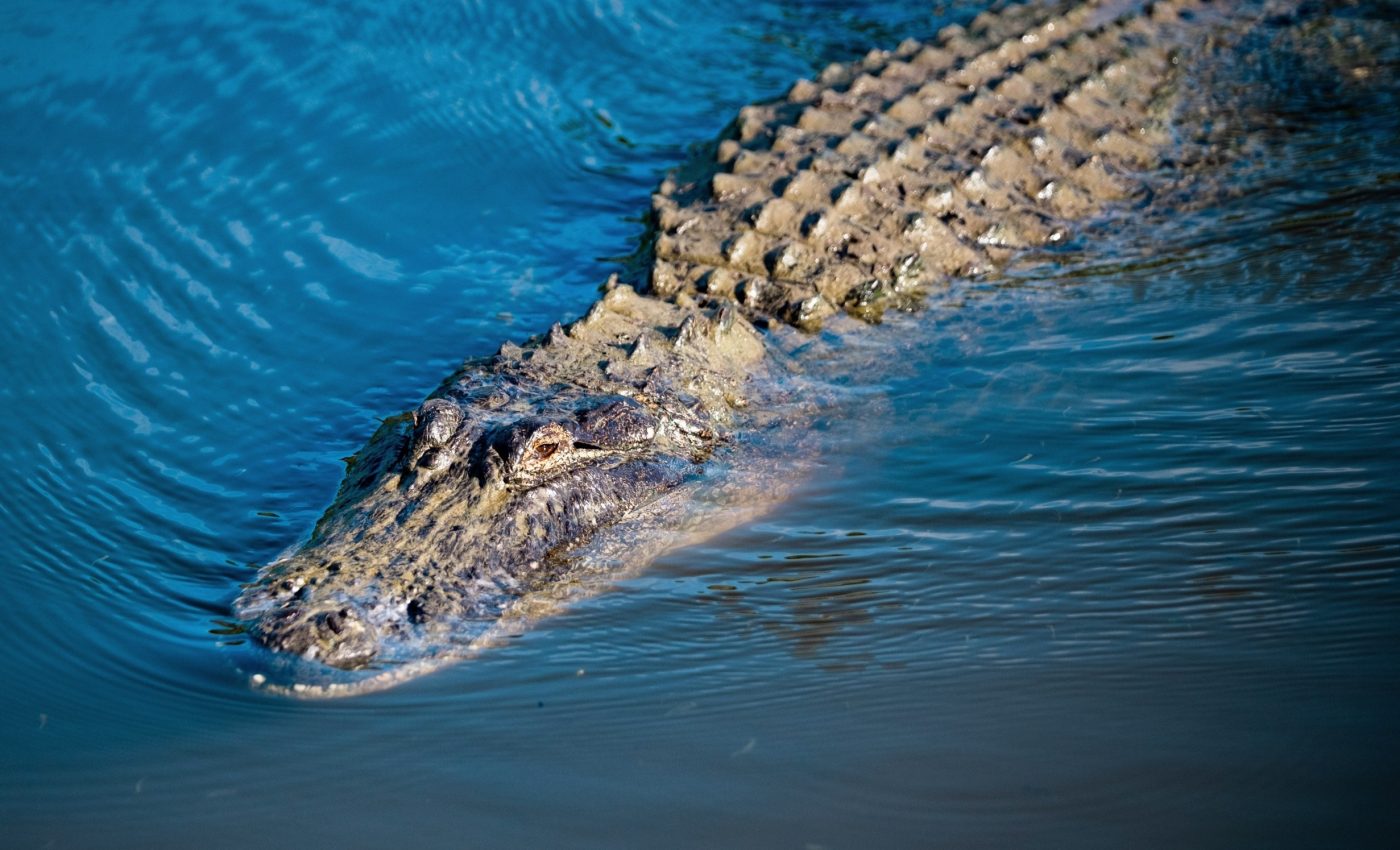
The research team turned to American alligators to explore this ancient transition. These reptiles belong to an evolutionary line that stretches back to the Triassic period, offering a living window into early archosaur anatomy.
Using computational simulations, scientists examined hindlimb movement, muscle use, and thigh bone stresses across body sizes – from juveniles to adults.
The analysis revealed a clear trend: as the alligators grew, mechanical stresses on their limbs increased sharply. Yet by standing more upright, those stresses decreased.
The principles of locomotion
It’s a small change with massive consequences – an evolutionary tweak that may have shaped the success of the archosaurs, the group that eventually produced crocodiles, dinosaurs, and modern birds.
Study co-author John Hutchinson is a professor of evolutionary biomechanics at the Royal Veterinary College.
“Extinct animals often had forms and sizes unlike those of living animals. Science can indirectly test how those forms and sizes might have produced locomotion, and how that locomotion compares with that of living relatives,” said Professor Hutchinson.
“We thereby can learn more about the fundamental principles of locomotion than we can by purely studying living animals.”
Reconstructing a prehistoric giant
To test how these principles applied to ancient giants, the team built a biomechanical model of Deinosuchus riograndensis – a massive alligatoroid that roamed what is now Texas during the Late Cretaceous.
Weighing more than three metric tons, Deinosuchus dwarfed today’s crocodiles, reaching roughly three times the mass of the largest living saltwater crocodiles.
The simulations revealed that such immense animals may have struggled to lift their bellies completely off the ground.
Instead, they likely relied on a belly-dragging gait for land movement, reserving their strength for the water, where buoyancy eased the burden of their weight.
This finding illustrates a limit in how far reptilian biomechanics can be pushed. Once animals exceed the size of modern alligators – several hundred kilograms – their limbs face forces too great to sustain full walking.
Impacts of the posture change in reptiles
Dr. Masaya Iijima, associate researcher at the Institute of Vertebrate Paleontology and Paleoanthropology in Beijing, China, is the study’s lead author.
“We have studied modern alligators for years, through both experiments and simulations to investigate the evolution of limb posture and its functional implications,” said Dr. Iijima.
“To further explore the evolutionary link between limb posture and body size in four-limbed vertebrates, our next step is to analyze fossil evidence – including skeletons and footprints – to reveal their evolutionary patterns.”
That fossil evidence could show when and how often reptiles shifted toward a more erect stance.
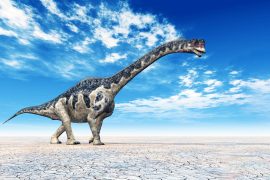
This posture change may have been a turning point in the history of vertebrates, paving the way for the towering sauropods, armored ankylosaurs, and swift-running theropods that dominated later ecosystems.
The legacy of standing upright
For every species that grows bigger, there comes a point when biology and physics collide. Muscles can only generate so much force, and bones can only handle so much stress before they fail.
By studying these limits, scientists can better understand why some animals evolve into giants while others stay small.
Study co-author Professor Richard Blob is a professor at Clemson University in South Carolina.
“Giant body size puts extreme demands on organisms, but it has still evolved multiple times in Earth history,” noted Professor Blob.
“Understanding how organisms survive extremes is a powerful tool for understanding what factors place boundaries on biodiversity.”
“Biomechanical analyses like ours can give insight into how organisms push those boundaries and help explain why we see the range of body designs that we do today.”
The research is published in the journal Science Advances.
—–
Like what you read? Subscribe to our newsletter for engaging articles, exclusive content, and the latest updates.
Check us out on EarthSnap, a free app brought to you by Eric Ralls and Earth.com.
—–