China discovers something never seen before on the far side of the Moon



 Follow Earth on Google
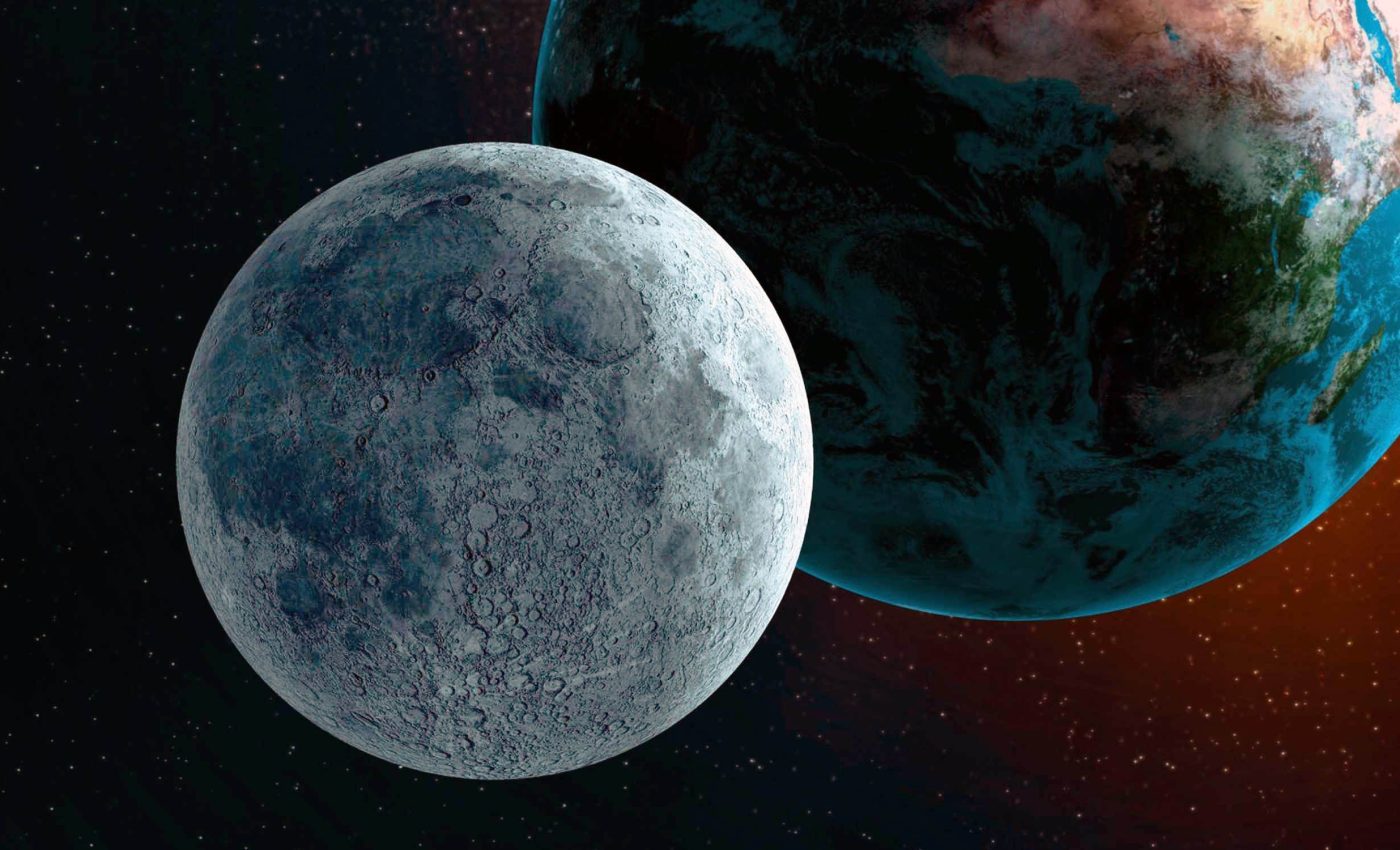
Seven tiny grains of dust from China’s Chang’e-6 Moon mission have revealed traces of an unusually fragile, CI chondrite meteorite in lunar soil. It is the first confirmed time that this specific meteorite type has been found on the Moon.
The CI chondrites found on the Moon are rare, water-rich stony meteorites that carry many easily-evaporated elements.

Their survival inside Moon soil suggests that ancient water-bearing asteroids once bombarded the Earth Moon system more often than meteorite collections alone show.
The Moon and CI chondrites
China’s Chang’e-6 mission brought the first samples from the Moon’s far side back to Earth. The return capsule carried a little over 4 pounds of dusty rock and glass rich soil from a landscape no human has visited.
Leading the new analysis is Jintuan Wang, a geochemist at the Chinese Academy of Sciences (CAS). His research focuses on how meteorites transfer material, including water, between asteroids, planets, and the Moon in the early Solar System.
Chang’e-6 landed inside the Apollo Basin, a crater nested within the giant South Pole Aitken Basin on the lunar far side.
This region likely exposes very old rocks from deep in the Moon’s crust, which makes it a rich hunting ground for ancient impact debris.
Unlike Earth, the Moon has no air to slow incoming rocks, so most meteorites slam into its surface at enormous speeds.
Fragile types such as CI chondrite material would usually be expected to vaporize, melt, or be blasted back into space during those impacts.
Rare kind of space rock
Because CI chondrite rocks are soft and porous, they tend to crumble when racing through a planet’s atmosphere or striking the ground as they did on the Moon.
Only a small number have ever been recovered on Earth, which makes any new trace of them especially valuable.
Sample return missions from near-Earth asteroids now show that some of these bodies closely resemble CI chondrites.
Analyses of grains from asteroid Ryugu found that its oxygen isotopes, atoms of an element with different masses, match those in rare CI meteorites.
CI chondrites are also chemically primitive, meaning they preserve a mixture of elements close to that of the early Solar System.
Finding CI chondrite dust sealed in the Moon‘s soil therefore offers a kind of long-term record of what once orbited near Earth.
China, the Moon, and CI chondrite
Back in laboratories on Earth, the team sifted through more than 5,000 small fragments from the Chang’e-6 sample. Most of these bits were pieces of lunar regolith, a loose layer of dust and crushed rock.
Researchers concentrated on grains containing olivine, a magnesium iron mineral common in volcanic rocks and many meteorites.
They mounted and polished these grains, then examined them using scanning electron microscopes and other tools that can measure chemistry in microscopic regions.
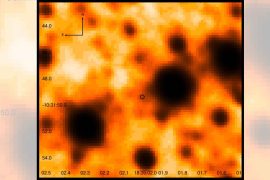
Among the thousands of pieces, the team identified seven olivine rich clasts, small rock fragments welded into other material.
Their ratios of iron, manganese, and nickel matched those seen in CI like meteorites, according to a study from Wang and colleagues.
The clasts also showed crystals of olivine set inside a glassy matrix, the signature of impact melt, rock briefly liquefied by an impact.
That texture indicates that the asteroid material melted when it struck the Moon, then cooled so quickly that its chemistry stayed frozen in place.
Connection to lunar water
Scientists suspect that volatiles, easily vaporized substances like water and carbon dioxide, reached the young Moon when asteroids smashed into it.
Studies of lunar rocks indicate that water-rich carbonaceous asteroids provided most of the Moon’s water.
The CI-like clasts in the Chang’e-6 soil give direct physical evidence that this fragile class of asteroid really did hit the Moon.
Because those impacts likely happened early, the material trapped in the soil records conditions from a time when Earth was still forming its oceans.
Wang’s team estimates that CI-like impactors could make up roughly 30 percent of the meteoritic material mixed into the Moon’s soil.
If that estimate is correct, many of the projectiles that struck the Earth Moon system may have been rich in water and other volatiles.
CI chondrites and Moon missions
If CI type asteroids struck the Moon, they almost certainly hit Earth during the same period. Those impacts would have carried water and carbon-rich material that helped shape Earth’s early surface.
Samples from Ryugu and Bennu show that small bodies can hold organic compounds and water. The Moon adds support by preserving dust from similar asteroids that arrived long ago.
Future sample missions will help reveal how common CI-like material was in the inner Solar System.
The team notes that their method for identifying outside material in returned samples can help with that work.
The study is published in Proceedings of the National Academy of Sciences.
—–
Like what you read? Subscribe to our newsletter for engaging articles, exclusive content, and the latest updates.
Check us out on EarthSnap, a free app brought to you by Eric Ralls and Earth.com.
—–