Electrical sparks detected on Mars for the first time using a rover's microphone



 Follow Earth on Google
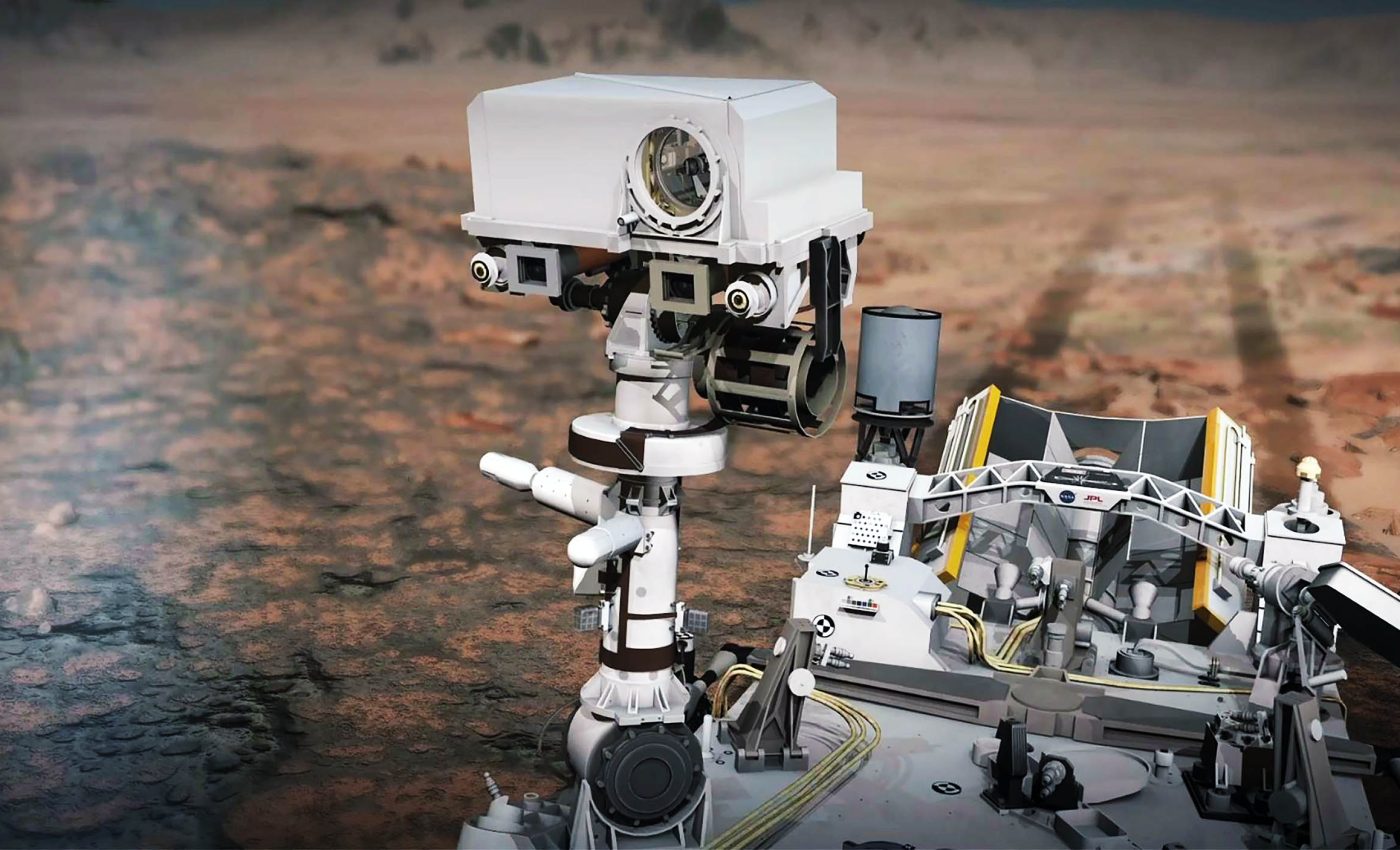
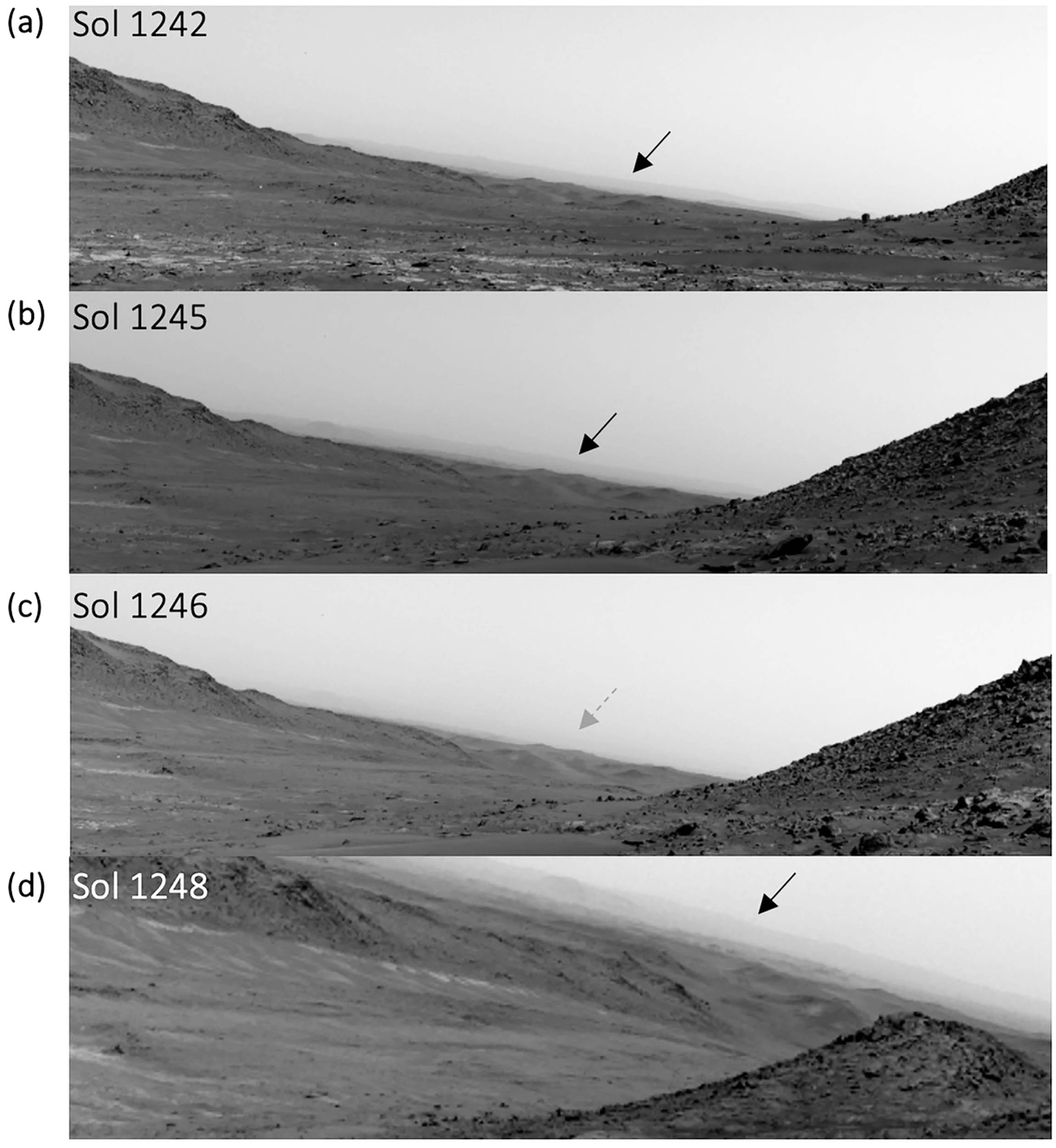
On Mars, gritty winds constantly whip up spinning columns of dust. Twice now, NASA’s Perseverance rover has rolled straight through the heart of these “dust devils” while its SuperCam microphone was running.
Those chance audio captures revealed sharp, high-energy transients on Mars that scientists have traced to tiny electrical sparks inside the vortices of Martian dust devils.
Electrical sparks on Mars

Planetary scientists have suspected for decades that dust on Mars becomes electrically charged, generating sparks.
Laboratory experiments and models hinted that grain-on-grain collisions in a thin, dry, carbon dioxide atmosphere should separate charges efficiently and lower the voltage needed for breakdown.
But until now, no one had caught sparks in the act. A team of scientists from researchersat the Institut de recherche en astrophysique et planétologie (IRAP) analyzed the SuperCam recordings.
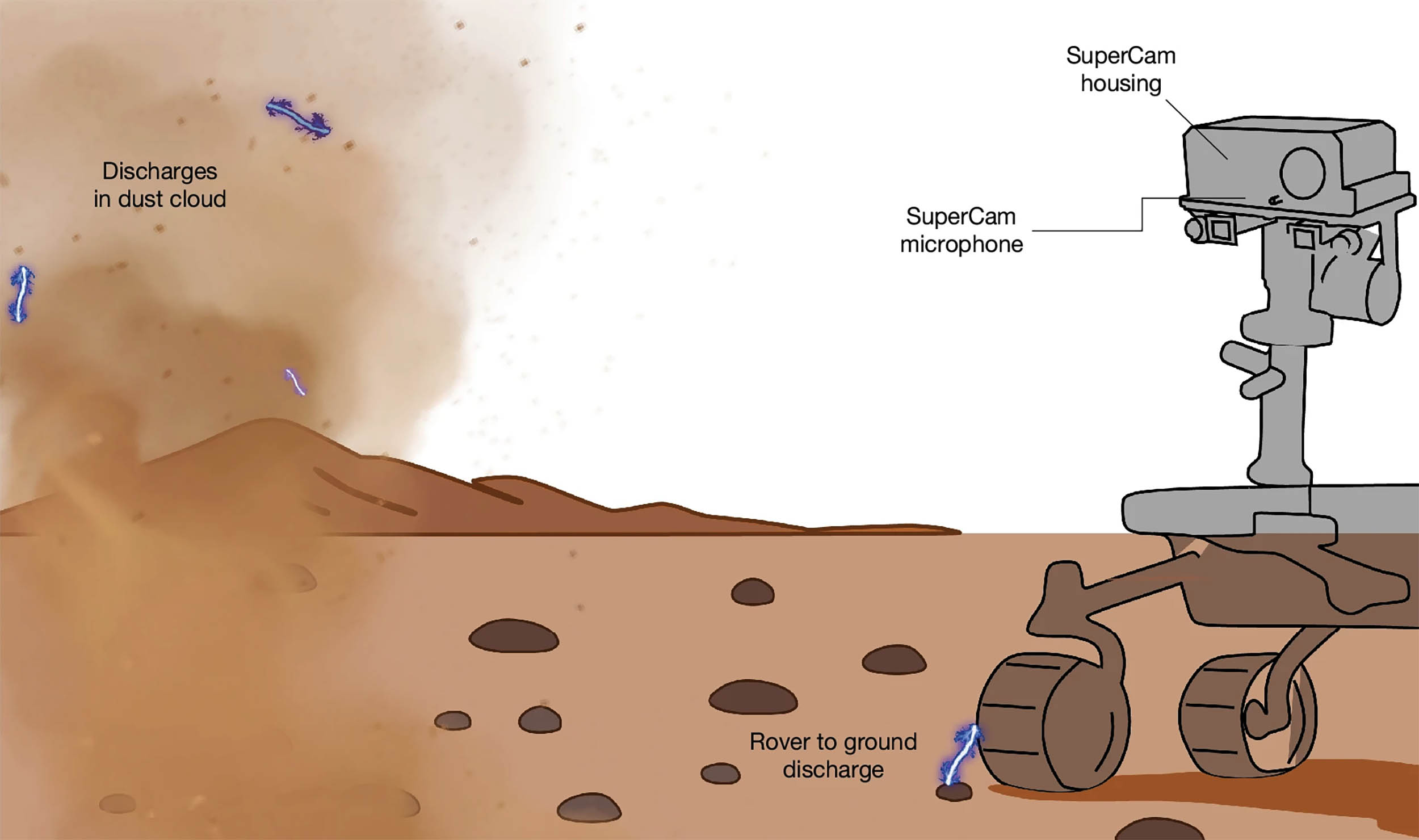
The scientists identified the telltale pairing of an acoustic “pop” with a coincident electromagnetic burst – exactly the signature expected from centimeter-scale static discharges.
This is the first observational confirmation that dust devils on Mars generate electrical sparks.
Mars’ dust is primed to spark
The mechanism is classic triboelectric charging: countless collisions shuffle electrons between grains, leaving some positively charged and others negative.
As a dust devil spins, turbulent mixing concentrates these charges until they leap across tiny gaps as miniature arcs.
On Earth, the same process happens in deserts and ash plumes, but our dense, moist air pushes the breakdown threshold higher, so most events fizzle out before a spark forms.
Mars turns all those knobs the other way – tenuous air, low humidity, and abundant fine dust – so breakdown happens at much lower voltages. Inside a vigorous vortex, there are ample opportunities for micro-arcs to fire and propagate.
Solving the methane mystery
Those tiny sparks may punch far above their weight in atmospheric chemistry. Electrical discharges can generate highly reactive oxidants that gnaw through organic molecules at the surface and reshape the lifetimes of trace gases overhead.
That extra reactivity offers a fresh angle on a long-running puzzle. Methane on Mars seems to appear and vanish faster than sunlight-driven chemistry alone can explain.
If dust devil discharges are common, they could help destroy methane and other reduced species more quickly, nudging the planet’s photochemical balance toward oxidizing by-products and altering what orbiters and rovers are able to detect.
Climate, dust, and hazards
Electrification doesn’t just change molecules. It can also change motion. Charge on grains influences how particles clump, loft, and settle, which in turn affects how storms grow, how long dust hangs aloft, and how haze spreads around the globe.
Because dust helps control how sunlight and heat move through the atmosphere, electrified grains are likely woven into Mars’ climate in ways scientists are only beginning to chart.
There’s also the practical side: charged environments can zap electronics, complicate dust mitigation strategies, and add a new risk factor for future crews.
Understanding when and where sparks fly will matter for instrument design today and human exploration tomorrow.
Crackles of dust devil electricity
SuperCam’s microphone delivered the first Martian sounds in 2021 and has been switched on regularly ever since, logging more than 30 hours of audio that range from gusts and rover zips to the thrum of the Ingenuity helicopter.
Hidden in that soundscape were the crackles of dust devil discharges. The strength of the approach is simplicity: the mic captures the shock wave from a nearby spark while SuperCam’s electronics sense an accompanying electromagnetic blip.
Paired with Perseverance’s detection of pressure, wind, and temperature, those audio “pops” turn a small sensor into a probe of atmospheric electricity.
It’s a reminder that acoustics, long overlooked in planetary exploration, can reveal processes that cameras and standard meteorology miss.
What it means for future missions
Now that sparks are confirmed, atmospheric and climate models will need to include electrification – how charge builds, how often it breaks down, and what that does to dust transport and chemistry.
That feeds directly into mission planning: choosing landing seasons and sites with lower electrification risk; adding discharge-tolerant designs and grounding paths; and planning operations to avoid the worst of dust devil season.
However, if oxidants from electrical activity are common at the surface, sampling strategies may need to dig deeper or target sheltered niches to escape chemical “scorching.”
Lessons from sparks on Mars
More crossings will help map how often sparks occur and how strong they get, from tiny vortices to the leading edges of regional dust storms.
Coordinated observations – microphone, electromagnetic pickups, pressure dips, and cameras – can tie each acoustic event to vortex size, wind speed, and dust load.
Beyond Jezero crater, orbiters can watch for dust devil fields while surface assets listen from below, building a planet-wide picture of when and where electrification peaks.
If future landers carry dedicated electric-field sensors alongside microphones, the Red Planet’s soundscape could become a routine way to monitor atmospheric electricity.
Dust devils on Mars aren’t just scenic swirls. They’re natural laboratories. Every crackle they emit is a clue about how the planet moves heat, cycles dust, and cooks its chemistry.
With a few lucky passes and a simple microphone, Perseverance has turned a long-standing hypothesis into a measurable phenomenon.
From here, the challenge is to weave sparks into the larger story of Martian weather, climate, and habitability and to make sure the next generation of explorers is ready for the snap.
The study is published in the journal Nature.
—–
Like what you read? Subscribe to our newsletter for engaging articles, exclusive content, and the latest updates.
Check us out on EarthSnap, a free app brought to you by Eric Ralls and Earth.com.
—–