Hawkmoths hiss like snakes to scare away predators



 Follow Earth on Google
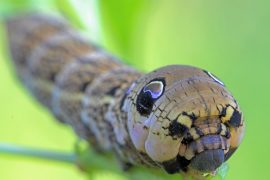
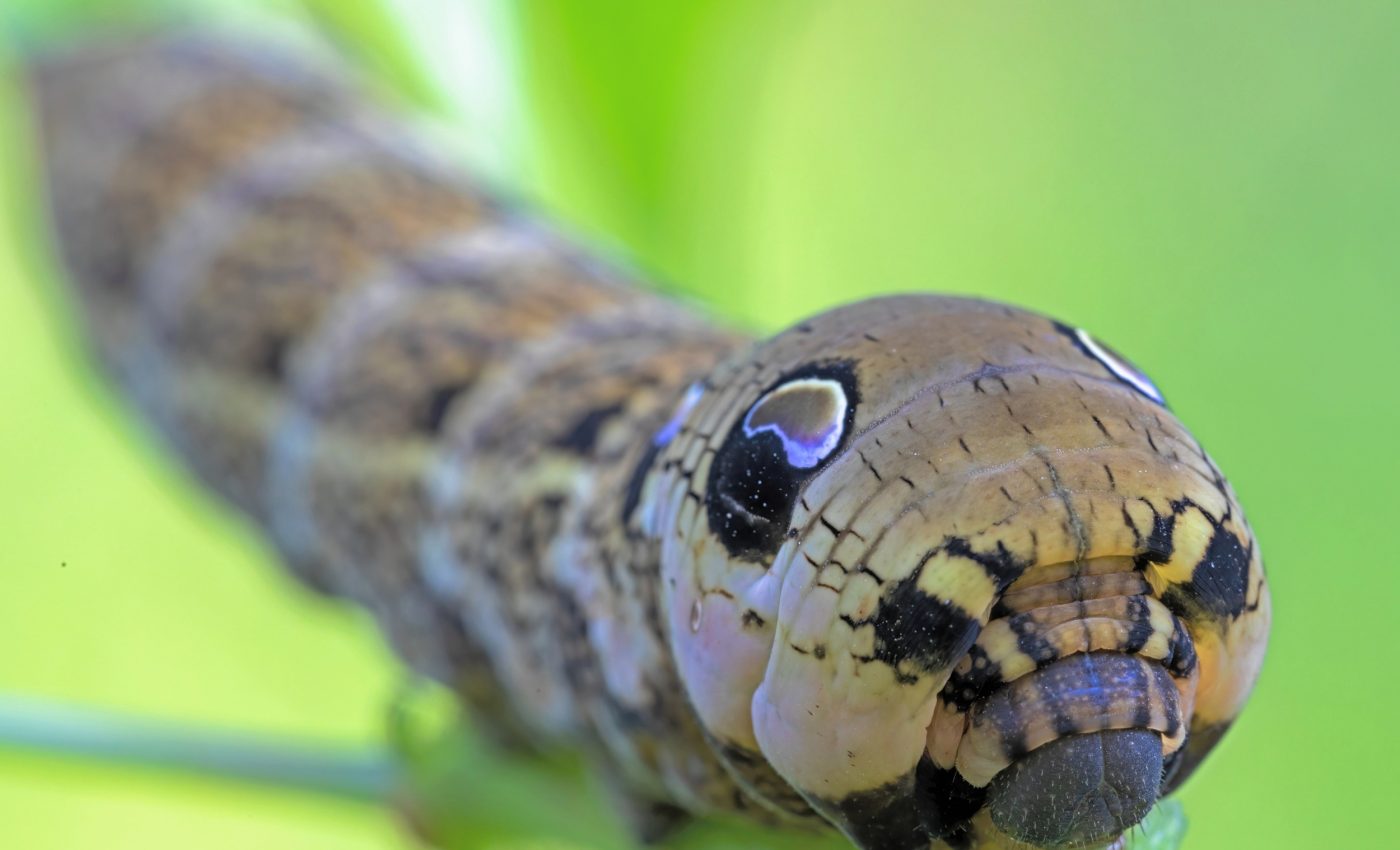
The buff-leaf hawkmoth has evolved an unusual way to defend itself: it weaponizes its own breath.
Both larvae and pupae force air through their spiracles – tiny breathing openings – to produce a sharp hiss that startles potential predators.

In lab tests led in Japan, older larvae reached volumes of about 60 decibels, while pupae produced softer but still clearly distinct bursts of sound. And because the pupal stage is typically silent and immobile, any noise coming from it is especially striking.
This discovery reshapes how scientists think about insect defenses and expands the known diversity of acoustic strategies in moths.
How a hawkmoth hiss is produced
Mature larvae vent air through a single pair of spiracles, small breathing holes on the body, to create sharp pulses. Pupae use several spiracle pairs along the abdomen to release a string of puffs that add up to a hiss.
“Until now, pupal sound production was thought to occur only through physical friction between body parts or against the substrate,” said study lead author Shinji Sugiura, an ecologist at Kobe University.
“This is the first evidence demonstrating a sound production mechanism in pupae that is driven by forced air.” Underwater tests showed tiny bubbles at those openings, which matched the timing of the hiss.
Key frequency and volume ranges
Larvae produced pulses with a sound pressure level, a decibel measure of loudness, between roughly 50 and 62 dB. Pupae produced pulses around 42 to 54 dB, which are quieter but still detectable to nearby animals.
Larvae used the eighth abdominal spiracle pair, while pupae recruited multiple pairs from the second through seventh segments. That split hints at a shared air-forcing tactic expressed through stage-specific hardware.
The frequency bands ranged from about 4 to 22 kilohertz across pupae and 9 to 13 kilohertz in larvae. Some energy reached ultrasound – sound above human hearing – which could carry to different predators.
Researchers simulated pecks and bites with forceps to trigger the responses, then recorded body movements alongside the audio. Airflow paths lined up with spiracle anatomy in images and matched the bubble trails in water.
Hawkmoth hiss as a warning sound
The authors propose acoustic mimicry – copying another species’ warning sound to mislead enemies – as one possible function.
“Both the larvae and pupae of this species produce similar acoustic patterns,” said Sugiura. “Their hissing air sounds resemble the warning sounds made by snakes.”
“We hypothesize that this hawkmoth species acoustically mimics snake warning signals to protect itself.”
There is precedent in birds that hiss like rattlesnakes when threatened. Classic work on burrowing owls found that their hiss can pass for a snake to mammal and bird intruders.
Still, that does not prove mimicry. Rather, it sets up a strong test: run controlled playback to birds and small mammals and measure whether hisses change approach, handling, or attack.
Predator responses to hissing
Many birds rely on quick decisions when choosing whether to strike or step back. A sudden hiss can interrupt that split-second choice and push an animal toward caution.
Small mammals that hunt insects often respond to noise cues before visual ones. When a hawkmoth pupa hisses, it may trigger an instinctive pause that gives the insect a brief advantage.
Predators learn through experience, and some may associate sharp hisses with dangerous encounters. A harmless insect that taps into that memory gains a level of safety without a physical fight.
Researchers studying predator behavior often see that hesitation can be enough to prevent an attack. This makes acoustic defenses an efficient option for insects that cannot run or bite.
Hiss as a defense tool
Caterpillars are not new to breath-based defenses. The walnut sphinx caterpillar uses its spiracles to whistle during attacks, and the mechanism has been mapped in careful research.
Those whistles can startle birds and buy time. One behavioral study in 2017 conducted playback experiments with foraging red-winged blackbirds and showed increased startle scores and delayed returns to food.
Other research demonstrated that adult hawkmoths also make defensive sounds but with a different tool. The Death’s-head hawkmoth squeaks by moving air in and out of the pharynx, a throat chamber inside the head.
Emerging questions in defense
The next steps are clear. Playback trials with birds and small mammals can test whether hisses change choices under risk and whether the effect holds outside the lab.
The spiracle route offers an evolutionary path that does not require rubbing body parts or specialized instruments.
The strategy may also emerge in other species that face similar predators yet must remain motionless during development.
The study is published in the Journal of Experimental Biology.
—–
Like what you read? Subscribe to our newsletter for engaging articles, exclusive content, and the latest updates.
Check us out on EarthSnap, a free app brought to you by Eric Ralls and Earth.com.
—–