How did consciousness evolve? Bird brains offer new clues



 Follow Earth on Google
Consciousness remains a mystery. Minds can create joy, pain, memories, and imagination, but no consensus yet explains why awareness emerged in the first place.
Two research groups from Ruhr University Bochum now argue that evolution shaped awareness in clear layers, each with a distinct role. Their work also shows how avian minds help reveal these roles with surprising clarity.

A deeper look at the ALARM theory and evidence from bird behavior and avian neural systems expands our view of conscious life.
Minds may not rise from one blueprint. They may emerge from many biological designs guided by shared pressures.
How awareness emerged
Researchers Albert Newen and Carlos Montemayor outline three core forms of awareness: basic arousal, general alertness, and reflexive awareness. Each form supports survival in a different way.
“Evolutionarily, basic arousal developed first, with the base function of putting the body in a state of ALARM in life-threatening situations so that the organism can stay alive,” said Newen.
Basic arousal emerges from ancient brain centers. It reacts to heat, hunger, injury, sudden threats. Pain signals urgent danger in a way unconscious reflexes cannot. It keeps the body safe even after the first reaction.
Evidence from non-cortical injury cases and animal research supports the view that early awareness came from subcortical systems, not cortex.
General alertness arrived later. Focused attention helps an organism select one signal among many. That focus supports learning of new patterns and new causal links. It enables flexible action beyond rigid reflex.
Reflexive awareness builds on that base. It allows an individual to track inner states, evaluate motives, and plan future actions. This ability grows with meta-cognition, linked in humans to memory and social navigation.
Evolutionary pressures and awareness
The ALARM theory proposes clear roles for each layer. Basic arousal triggers survival behavior, protects the body, and supports rapid general learning.
General alertness enables complex learning through selective attention and long-term memory.
Reflexive awareness supports long-range planning by tracking mental states in self and others. Together the layers form a rising hierarchy shaped by evolutionary pressures.
These roles challenge older views that tied awareness strictly to cortex. Early neural systems can support conscious states. Later systems refine and expand those states.
Clues to consciousness in bird brains
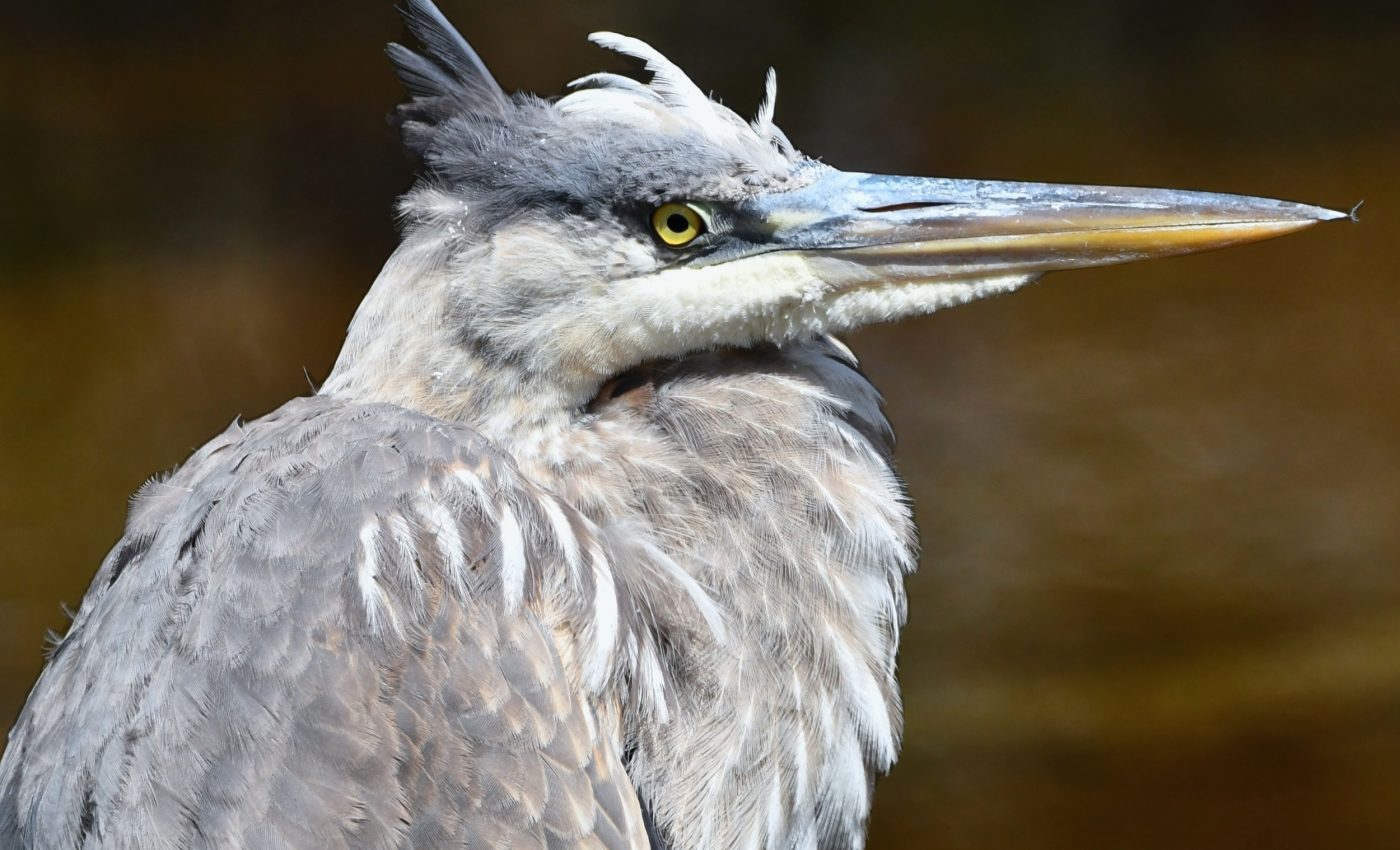
Bird research adds a striking perspective. Gianmarco Maldarelli and Onur Güntürkün show that avian minds align with many requirements for awareness.
Avian species produce subjective perception, handle ambiguous stimuli, and show state-dependent neural activity in regions linked to conscious processing.
Pigeons shift between interpretations when viewing ambiguous patterns. Crows produce neural signals tied to internal experience, not sensory input alone.
The nidopallium caudolaterale (NCL) is a region in the bird brain that functions much like the prefrontal cortex in mammals. Activity in the NCL predicts reported perception during threshold detection tasks.
Neural data show separate coding for stimulus presence and absence when those states matter for behavior. The patterns match key predictions from theories such as Global Neuronal Workspace and Recurrent Processing Theory.
Avian neuroanatomy also reveals a cortex-like sensory pallium with layered and column-like structures. Yet the NCL remains nuclear, not cortical.
Conscious processing can therefore arise from two different structural plans, united by similar connectivity patterns and functional demands.
Self-awareness in birds
Bird studies also suggest forms of self-awareness shaped by ecological context. Classic mirror tests give mixed results in avian species, yet new tasks reveal deeper nuance.
Pigeons can match video feedback to ongoing movement. Roosters distinguish a real partner from a mirrored image during predator-risk scenarios.
Chickens and pigeons react to mirrors in flexible, context-sensitive ways that show awareness of contingency rather than confusion.
These abilities point toward situational self-awareness that does not depend on human-designed mirror tasks. Reflexive forms may vary across species according to ecological needs.
Shared evolutionary paths
Taken together, the ALARM theory and avian studies show that conscious life likely rose early and spread widely. Basic arousal may stand as one of the oldest cognitive tools shaped by natural selection.
Bird behavior and brain studies reveal that awareness can arise without a cortex. When evolution faces similar challenges, very different neural architectures can converge on the same solutions.
Consciousness may therefore reflect a shared set of adaptive challenges rather than a single evolutionary event.
From ancient subcortical circuits to complex social planning, awareness continues to guide living systems through risk, opportunity, and choice.
Both the ALARM theory paper and the avian consciousness paper are published in the journal Philosophical Transactions B.
—–
Like what you read? Subscribe to our newsletter for engaging articles, exclusive content, and the latest updates.
Check us out on EarthSnap, a free app brought to you by Eric Ralls and Earth.com.
—–