Violent storms help drive carbon deep into the ocean



 Follow Earth on Google
In the middle of the COVID lockdowns, a multinational team of scientists sailed into the North Atlantic to answer a deceptively simple climate question: how does carbon made at the ocean’s surface end up stored in the deep sea?
Pandemic restrictions strained every step, and the ocean added four major storms that battered the ships with high winds and heavy seas.

“It’s a friggin’ miracle that we pulled this off,” said UC Santa Barbara oceanographer David Siegel.
They did – and what they found reshaped how scientists understand the ocean’s biological carbon pump.
The expedition showed how storms first shred fragile “marine snow,” then trigger delayed pulses of sinking carbon, a process central to Earth’s climate system.
The ocean’s carbon conveyor
Every day, photosynthetic plankton turn dissolved carbon (including CO2) into organic matter – fuel for the ocean’s food web.
Globally, phytoplankton fix an astounding 55 to 60 billion metric tons of carbon each year, and roughly 15 percent of that leaves the surface layers, hitching a ride to depth largely on particles that sink.
Once that carbon falls below the reach of rapid mixing, it can be sequestered from the atmosphere for months to millennia, helping to moderate Earth’s climate.
Carbon rides marine snow
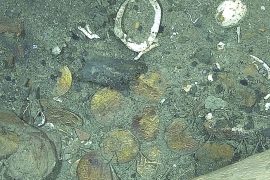
A big chunk of that sinking flux travels as marine snow – fluffy, millimeter-scale clumps of detritus that look like submerged snowfall as they drift downward.
“It’s incredibly porous,” Siegel said, and it moves fast: marine snow can fall as much as 100 meters (about 330 feet) a day, compared with about 1 meter (3 feet) a day for a single phytoplankton cell.
Oceanographers Alice Alldredge and Mary Silver first mapped out its formation, fragility, and sinking speeds in the 1980s. But the open ocean throws far more turbulence and biology at these particles than a lab beaker ever could.
“We knew quite a bit about marine snow – the dust bunnies of the ocean – especially about their composition,” said co-author Uta Passow. “But we knew very little about their real behavior in the ocean.”
Following carbon into the deep
NASA has long tracked ocean photosynthesis from space. The EXPORTS campaign (Export Processes in the Ocean from Remote Sensing) was proposed in 2012 and executed in two major field efforts.
The campaign was designed to connect a satellite view to the messy, three-pump reality below the surface.
This system consists of vertical mixing (the “mixing pump”), nightly animal migrations that shuttle carbon downward (the “migrant pump”), and the gravity-driven rain of particles (the “sinking pump”).
This North Atlantic leg zeroed in on the last of the three and – crucially – moved from observing to predicting how much carbon actually makes it into the deep.
Science during a shutdown
The North Pacific phase ran in 2018. The North Atlantic phase was supposed to launch in spring 2020 – until the world shut down.
After a year’s delay, the fleet sailed in April 2021. U.S.-based scientists scrambled to get vaccinated in time.
Organizers juggled quarantine plans and health protocols for 40 institutions across five countries, and ships had to be recommissioned after long months at dock.
The result: three vessels at sea, zero onboard COVID cases, and a NASA Administrator’s Group Achievement Award recognizing the effort “in the face of adversity.”
How storms trigger carbon pulses
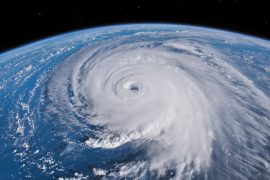
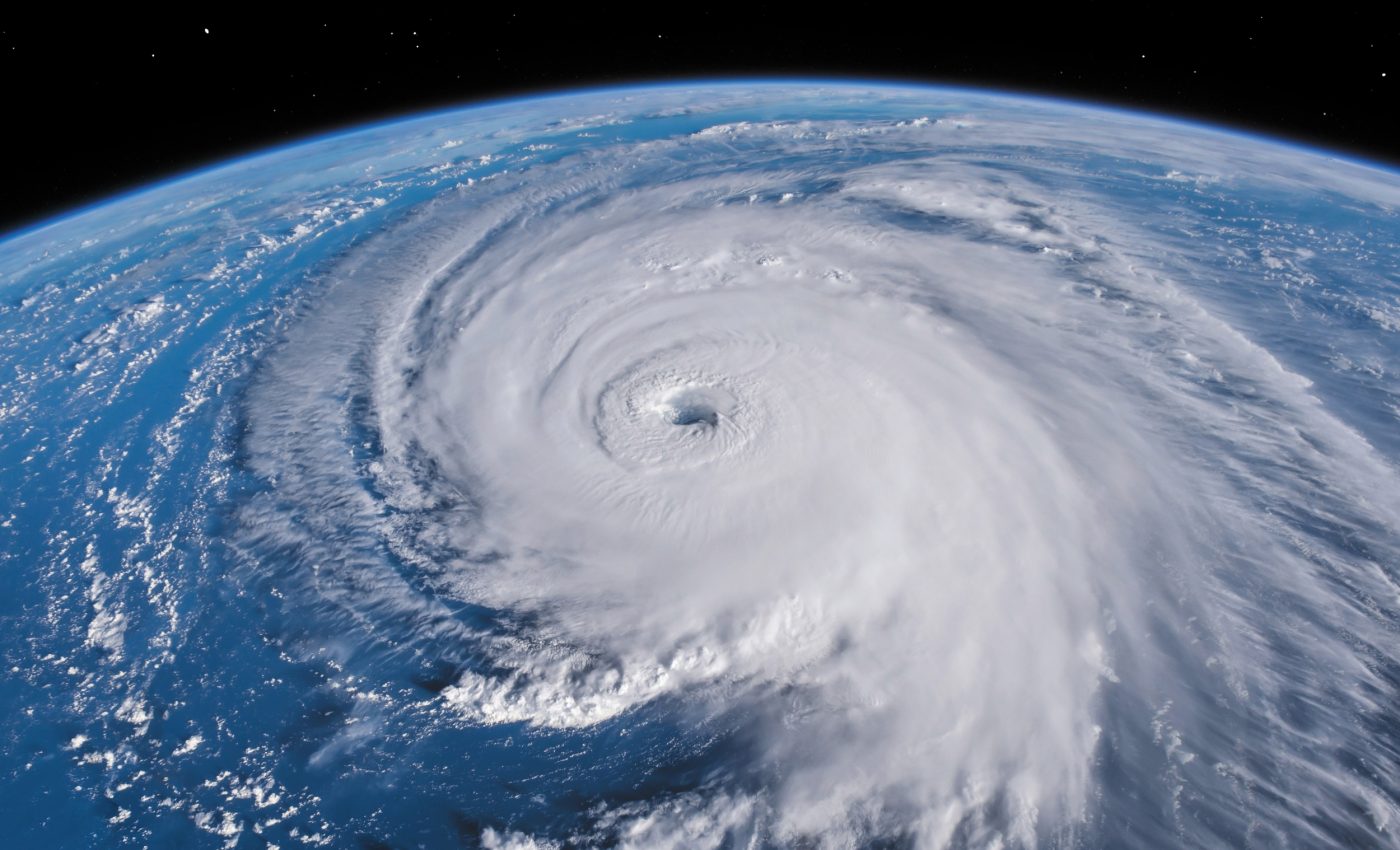
Then came the weather: four major storms, winds topping 50 knots, and waves over 20 feet. The team watched as each storm shredded marine snow into smaller fragments.
That fragmentation initially reduced the sinking flux because finer particles fall more slowly. But two days after each blow, instruments recorded a pulse of sinking particles leaving the surface ocean.
Here’s what happened. Storms deepened the ocean’s mixed layer, stirring particles far below normal. When calm returned, the mixed layer shoaled, stranding a stockpile of shredded particles beneath the turbulence.
Free from surface churning, those bits “found” each other and reassembled into larger aggregates – marine snow – now poised to sink.
Ocean data backs carbon lab work
For the first time in field observations, EXPORTS captured this coupling between turbulence, aggregation and disaggregation, and the timing of the downward carbon flux.
Even better, the measured size shifts in particles lined up with classic lab studies by Alldredge and the late Tommy Dickey.
“Usually, scientists assume that data collected in a relatively small container in the lab does not represent the conditions of the ocean very well,” Passow said.
“However, in this case the experimental values aligned closely with the values we observed during the expedition.”
Who is eating sinking carbon?
Below the sunlit layer – roughly 200 to 500 meters (650 to 1,640 feet) – the team found something else. Tiny particles (less than 0.5 millimeters) roughly doubled over a month.
Turbulence at those depths was too weak to shred them, and the particles themselves couldn’t sink fast enough to explain the increase.
The only explanation: biology. Calculations showed large aggregates were being broken down at about 12 percent per day.
Who’s doing the eating and shredding? Not just microbes. By combining particle encounter rates with zooplankton counts, Alyson Santoro and doctoral student Nicola Paul concluded that microbes accounted for less than half of the consumed marine snow.
The rest was due to zooplankton nibbling, rasping, and repackaging carbon as it falls. Earth system models have typically given microbes the starring role in deep particle decay.
This study shows the midwater animals deserve top billing, and models will need to catch up.
Turning storm data into carbon forecasts
Tiny details add up over an ocean basin. Storm timing, layer depths, aggregation physics, and the appetites of billions of small animals all modulate how much carbon actually leaves the surface and how deep it gets.
“The results help explain the difficulty we have in generating solid predictions of carbon flux,” Passow said.
With EXPORTS’ measurements, the team could move past description to predict the pulses of flux, tying them to recognizable physical triggers and biological rates. That’s the difference between watching snow fall and forecasting the storm.
Why storms matter for climate
The biological pump is one of the planet’s big carbon valves. Storms routinely “shake the snow globe” in ways that first delay, then accelerate sinking. Zooplankton are the main editors of what survives the trip. Particle size and re-stickiness control the fate of carbon.
Because of these factors, climate models need those mechanisms to get future projections right. The second phase of EXPORTS now focuses on weaving these pieces into models that scale from stations to the globe.
A workshop in Glasgow in March 2026 will gather teams to embed this physics-plus-biology approach into the next generation of carbon cycle simulations.
Rethinking ocean carbon storage
These insights were years in the making. “We were incredibly fortunate that NASA assembled a team for EXPORTS who could address all the aspects of this problem,” Siegel said.
“I’ve been working on this topic for decades, and it took forever to figure out how this all fit together.”
Now, thanks to a storm-tossed, pandemic-era cruise and a lot of stubborn ingenuity, we have a clearer, more predictive map of how the ocean takes our carbon and tucks it away.
The study is published in the journal Global Biogeochemical Cycles.
—–
Like what you read? Subscribe to our newsletter for engaging articles, exclusive content, and the latest updates.
Check us out on EarthSnap, a free app brought to you by Eric Ralls and Earth.com.
—–