Earthworms help revive plants in plastic-polluted soil



 Follow Earth on Google
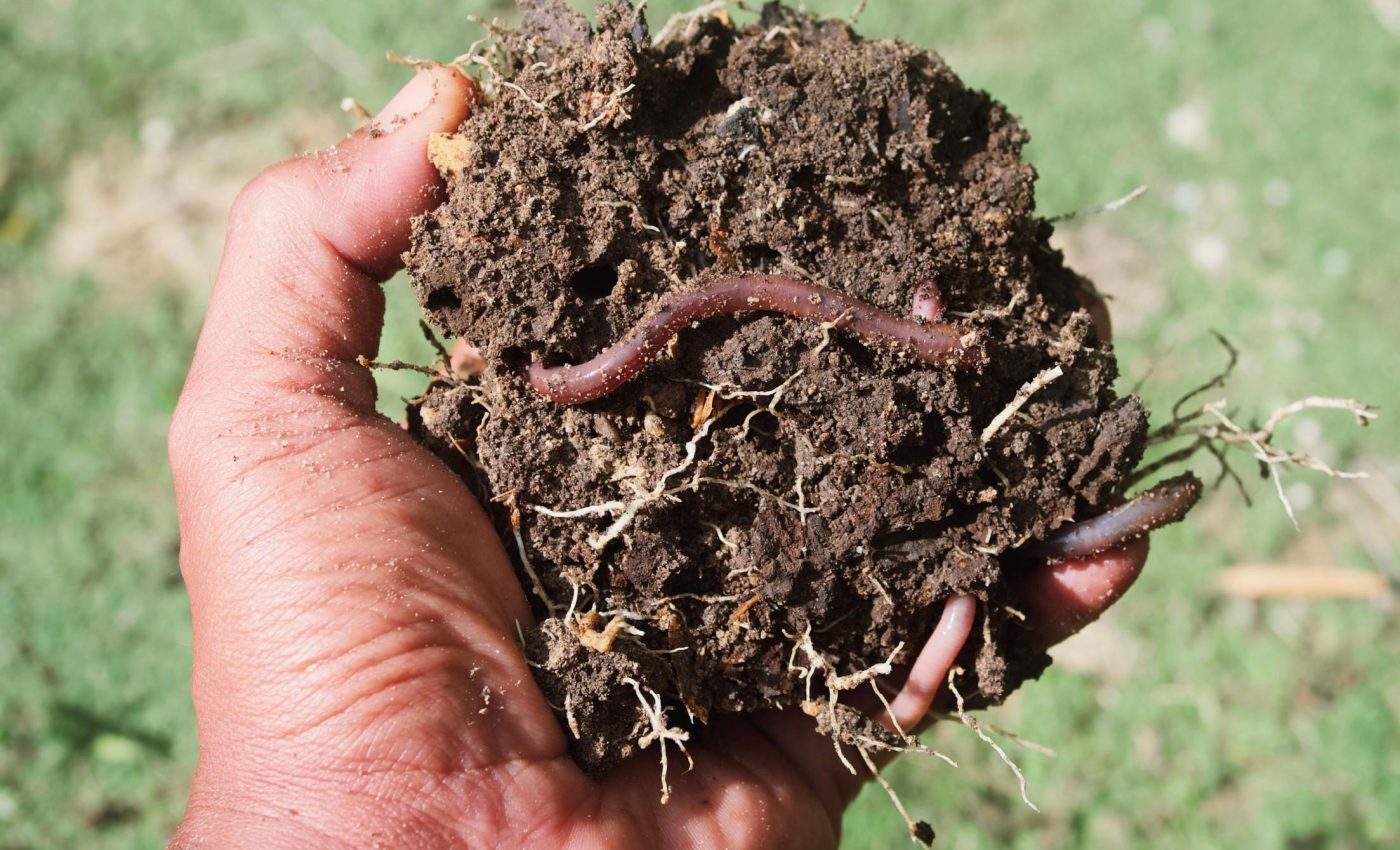
Earthworms are proving to be unexpected allies in the fight against plastic pollution in soil. In a new greenhouse study, researchers found that worms helped a common crop recover in soil laced with microplastics.
The results showed that plants grew about 50 percent taller when earthworms were present.

The experiment focused on Chinese milk vetch, a nitrogen-fixing legume widely used in Asia to enrich soil fertility between harvests.
Tests took place in Kunming, China, where scientists grew the plants in pots containing different amounts of microplastic particles.
Soil’s silent plastic stress
The global plastic surge keeps feeding tiny fragments into fields, and the trend line still points up. An OECD report estimates plastics production doubled from 2000 to 2019 while recycling lagged far behind.
The study at hand examined microplastics – tiny plastic pieces under 0.2 inches (5 millimeters), because they lodge in soil, cling to roots, and alter water and nutrients. That mix puts quiet pressure on food systems.
The work was led by Hailong Wang at Kunming University (KMU). His research focuses on soil pollution, plant stress, and nature-based restoration.
“Our research further reveals that earthworms can alleviate the adverse effects of microplastics on plant growth by regulating gene expression in plants,” said Wang.
Earthworms and microplastics
In pot trials described in the study, the team grew Chinese milk vetch in soil mixed with polypropylene (PP) microplastics, then added earthworms.
The researchers measured plant height and shoot dry weight, along with pigments, nutrient content, and stress markers.
One percent polypropylene microplastics cut plant height by about 28 percent and reduced shoot dry weight by about 20 percent.
Adding earthworms raised height by about 50 percent and increased shoot dry weight by about 32 percent.
Earthworms enrich the ground
Worms boosted soil organic carbon, total nitrogen, ammonium nitrogen, and available phosphorus. They also increased the activity of enzymes that unlock nutrients.
Those gains showed up in the rhizosphere, the thin zone of soil directly around roots, which acts as the plant’s front line for nutrient trade. More active soil sped the flow of nitrogen and phosphorus to the vetch.
Key enzymes rose, including acid phosphatase, an enzyme that frees phosphate from organic matter.
Urease and sucrase activity also climbed, pointing to faster nutrient cycling and stronger soil respiration.
Microbial teamwork underground
Earthworms shifted the mix of bacteria and fungi near the roots. Families tied to carbon use and phosphorus release became more common, while some groups linked to stress lost ground.
The network of bacterial relationships also became denser and more connected. That pattern suggests a sturdier microbial web that can better handle pollution pressure.
Soil pH dipped slightly with worms present. In tandem with enzyme gains, that change aligned with higher nutrient availability and improved plant nutrition.
Changes within the roots
Worms did not just tune the soil. They were linked to changes inside roots that support growth under stress.
The team saw stronger activity in the ribosome, the cell machine that builds proteins. That shift helps cells repair and grow when conditions are rough.
The researchers also saw signals in the transcriptome, the full set of active genes in a cell at once. Genes tied to sugar and energy pathways were up regulated, supporting pigment formation and energy supply.
Nature’s soil engineers
Earthworms are sometimes called ecosystem engineers, a term meaning species that reshape their surroundings in ways that help many others. Their tunnels improve air flow and water movement in the soil, while their castings add nutrients and stabilize structure.
These same traits that make worms valuable in gardens and compost heaps may also help agricultural soils rebound from subtle stresses like microplastic contamination, which interferes with nutrient and water exchange between roots and soil particles.
If earthworm activity can restore soil balance in plastic-affected areas, the implications reach far beyond this single crop.
Global estimates suggest that over 80 percent of terrestrial microplastic pollution ends up in farmland, where it could slowly erode soil fertility.
Earthworms’ ability to break down organic matter and promote healthy microbial communities offers a biological countermeasure, a low-cost ally that could help farmers and land managers protect yields while reducing reliance on chemical soil amendments.
Earthworms have limits too
Pot studies simplify real fields, which hold layers of complexity. Most farm soils contain far less plastic by mass than the one percent used here as a stress test, as a 2020 review of global soil data concluded.
Earthworms are not invincible. Certain plastics and concentrations can strain or harm them, producing measurable changes in detoxification enzymes and respiration, according to recent research. Caution is needed when translating lab results to farm conditions.
The crop studied here is a legume used as green manure, not a food crop. Field trials across different soils and climates will be needed to test persistence and safety.
A practical soil fix
Chinese milk vetch already serves as a cover crop that feeds nitrogen back into fields. If earthworms enhance its performance in plastic-stressed soils, that could help farmers restore fertility with fewer synthetic inputs.
Similar effects have appeared in tomatoes at much lower plastic levels – adding earthworms increased shoot and root mass and strengthened nitrogen cycling in one study.
Nature-based solutions are not a cure-all for plastic pollution. Still, they could buy time for soils under stress while policy and industry address plastic use, design, and waste on a larger scale.
The study is published in Environmental Chemistry and Ecotoxicology.
—–
Like what you read? Subscribe to our newsletter for engaging articles, exclusive content, and the latest updates.
Check us out on EarthSnap, a free app brought to you by Eric Ralls and Earth.com.
—–