Intense sexual selection sparks rapid evolutionary change in beetles



 Follow Earth on Google
Sexual selection sits at the heart of how every species on Earth tells its story of where it came from and how it changed over time. Some of these stories move slowly, almost hidden from view. Others leave clues we can catch in real time if we look closely enough.
One of those clues shows up when males compete harder for mates, because that pressure can push species to split and change faster.

This idea has floated around biology for years, but watching it unfold in real organisms is tough. Evolution usually takes far longer than a human lifetime.
Yet a group of researchers has kept a quiet, steady experiment running for almost four decades. Their work with tiny beetles shows how competition in the mating game can push populations apart.
Sexual selection takes shape
Sexual selection is a type of natural selection that has nothing to do with escaping predators or finding food. It is about winning a chance to reproduce.
In many species, males evolve bright colors or sharp weapons. Females may choose partners with certain traits. And whenever females mate with more than one male, the competition ramps up.
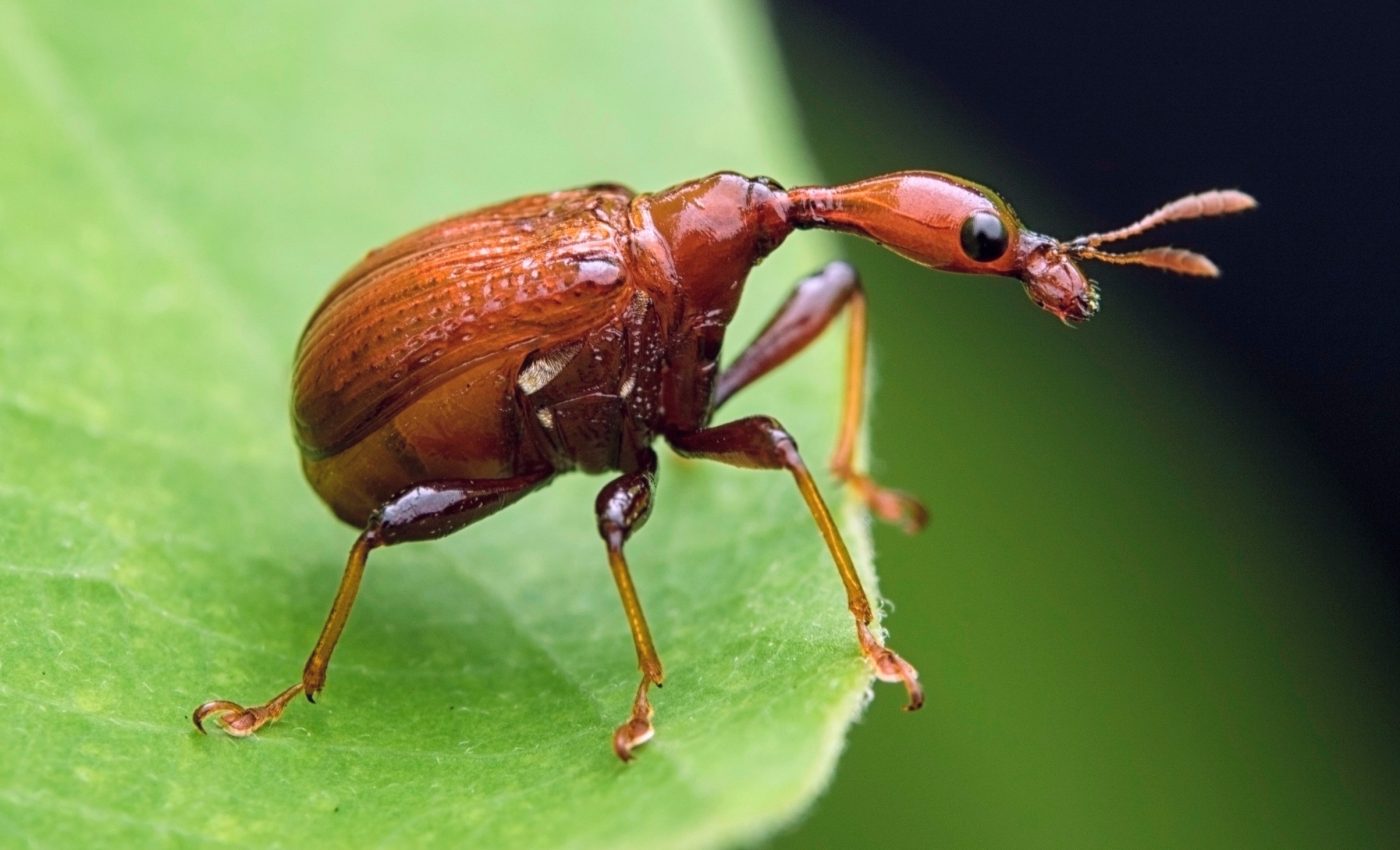
A team working across Uppsala and Belgrade spent almost 40 years tracking how different mating systems shaped the lives of seed beetles, Acanthoscelides obtectus.
They set up an experiment in 1986 and followed 200 generations, which is a long stretch for the beetles even if it feels short in human time.
Beetles under mating pressure
The team split a large beetle population into smaller groups. In some groups, females could mate with several males. That created intense sexual selection.
In other groups, each female mated once, which kept competition low. Over 200 generations, these lines drifted apart in clear ways.
“Previous research has suggested that competition between males plays an important role in the formation of new species,” said study lead author Göran Arnqvist, professor of animal ecology at Uppsala University.
“The unique thing about our study is that we‘ve been able to confirm this through experiments in the lab that have been going on since 1986.”
Forming a new species normally takes well beyond 200 generations, yet the first hints of that process are already showing up. The groups that evolved under strong sexual selection diverged dramatically in both genetics and reproductive characteristics.
“We have also observed that they evolved in different directions more than twice as rapidly when sexual selection was strong,” said Arnqvist.
Competition alters beetle traits
The males raised under heavy sexual selection grew larger and mated more often. They also mated for longer stretches of time.
“In animals with internal fertilization, the male not only transmits sperm during mating, but also a complex cocktail of proteins and peptides,” said Arnqvist. “This cocktail is crucial for which sperm gets to fertilize the egg.”
“We observed that the cocktail changed more in the seed beetles that were living under conditions of strong sexual selection.”
These changes may be small, but tiny changes can add up over many thousands of generations until two populations can no longer breed with each other. That is the point where biologists say a new species has formed.
Small shifts, major impacts
The mix of proteins – and even the bright feathers or elaborate plumage males display in some species – are all traits that boost reproductive success and help push evolution along.
Two hundred generations won’t create new species, but across 20,000 to 200,000 generations, populations can drift so far apart that they can no longer breed with one another.
“Among insects and fish, it’s been observed that there are more species in groups of these animals where the males are brightly colored or adorned in various ways than in groups where the sexes look more similar,” said Arnqvist.
Rethinking how species form
Watching species form is usually impossible because it takes so long. This decades-long project shows the first steps are not random or mysterious. They can be shaped by how often individuals compete for mates and what traits help them succeed.
The study also shows how much can change when a simple rule shifts. Let females mate once, and the population moves in one direction. Let them mate several times, and everything from genes to mating behavior changes.
Over long stretches, those differences can push populations far enough apart that they break into separate species.
Evolution’s first small steps
Experiments that last nearly 40 years do not come around often. Keeping beetles alive across 200 generations takes patience most people would lose after the first decade.
Yet the payoff is clear. This work gives a rare look at how new species start to form and how sexual selection can speed that process.
The beetles continue their quiet march through time, and scientists continue watching. Evolution never stops, even when it moves slowly enough that only a long experiment like this can catch it in action.
The full study was published in the journal Evolution Letters.
—–
Like what you read? Subscribe to our newsletter for engaging articles, exclusive content, and the latest updates.
Check us out on EarthSnap, a free app brought to you by Eric Ralls and Earth.com.
—–