Nursing lioness captured by a camera trap for the first time in six years



 Follow Earth on Google
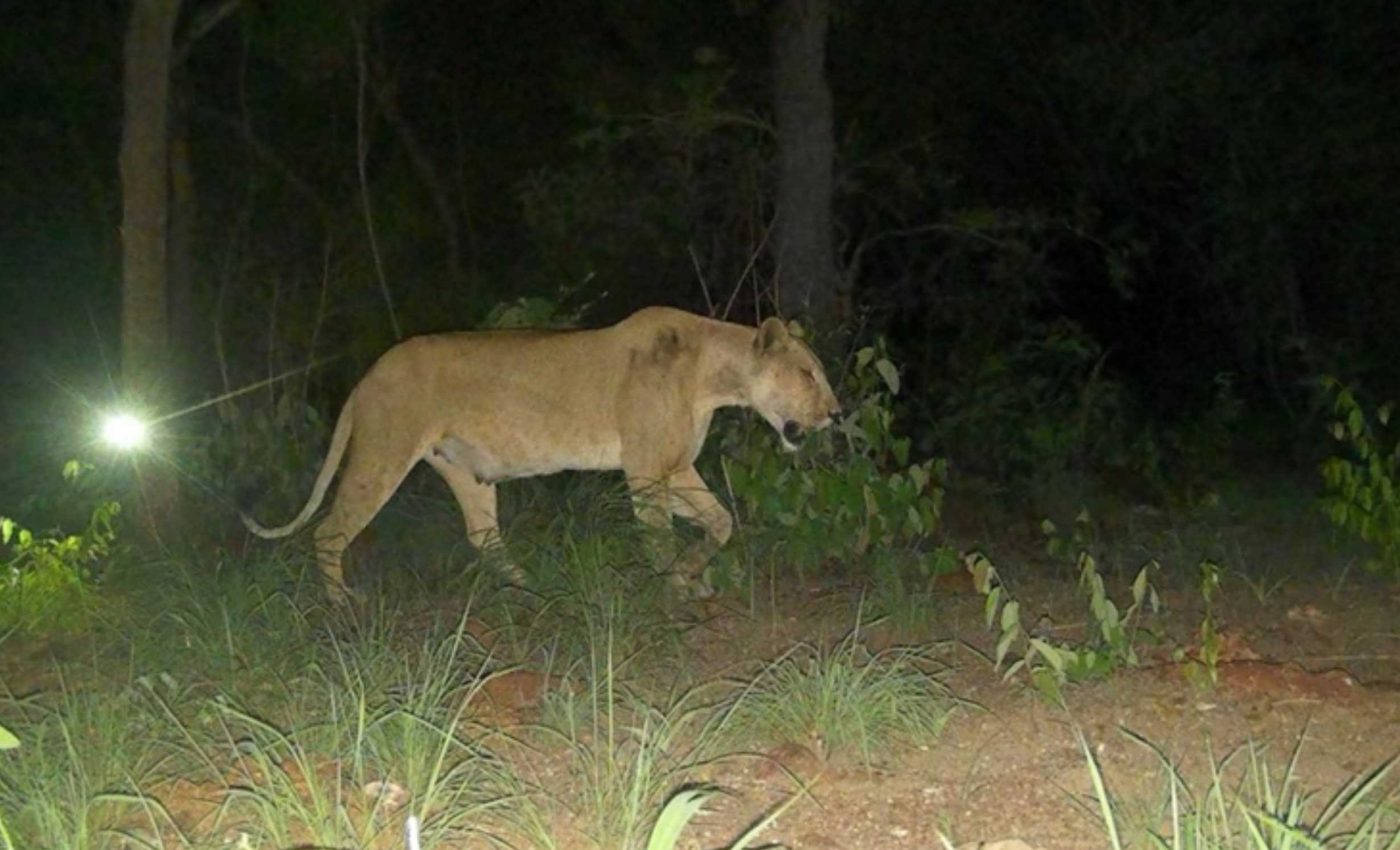
On a warm April night in 2025, a hidden camera in Bamingui-Bangoran National Park caught a female African lion walking through the trees. It was the first confirmed lioness seen in this northern Central African Republic park in six years, and she appeared to be nursing cubs.
Her single appearance hints at a larger story. After years of conflict, poaching, and habitat pressure across this huge savanna landscape, conservationists see her as a sign that lions may be starting to recover.
A lone lioness appears

The work was led by Luke Hunter, Executive Director of the Wildlife Conservation Society Big Cats Program (WCS), who is widely regarded as a leading expert on endangered carnivores and their habitats.
His research centers on restoring large cats to former ranges and rebuilding struggling lion populations in Africa.
Wildlife Conservation Society teams have been running a network of motion-triggered cameras in the park since 2019, checking the memory cards regularly for signs of lions and other carnivores.
Close examination of the new image shows swollen mammary glands, a sign that this lioness is producing milk for cubs.
Her home sits inside a protected mosaic known as the Northeastern Central African Republic (NCAR) landscape, which covers roughly 43,600 square miles (113,000 square kilometers) of mostly intact savanna and woodland.
Bamingui-Bangoran alone spans about 4,100 square miles (10,600 square kilometers), linked to nearby Manovo-Gounda St. Floris National Park and surrounding reserves under a 25-year management agreement between WCS and the national government.
A big decline in African lions
Across Africa, repeated surveys show that many lion populations are shrinking, with roughly a two-in-three chance that West and Central African numbers could drop by half over two decades. Small, isolated groups like the lions of NCAR are especially at risk when adult females disappear.
When a population shrinks to only a small cluster of animals spread over a vast area, losing breeding females can push it toward local extinction. Young males may still wander through, but without mothers raising cubs, the line eventually stops.
“Lions have suffered greatly due to decades of persecution, with the population in NCAR now estimated at only a few dozen individuals at best,” said Hunter. “Yet, the habitat remains largely intact, with low human densities, offering an extraordinary chance for recovery.”
Cameras uncover secret wildlife
Camera traps – remotely activated cameras that take photographs when an animal passes – have become one of the most widely used tools for studying shy wildlife.
A global review of these systems showed that they can track which species are present, how often they appear, and even estimate population trends when used with careful sampling designs.
In Bamingui-Bangoran, WCS teams position the cameras along game trails, river crossings, and remote clearings where African lions and their prey are likely to pass.
Each unit can operate for weeks at a time, building a timestamped record of who is using the park, day and night.
When scientists line up images over months and years, they can see whether particular species become more common, less common, or shift to new areas.
The appearance of a nursing lioness after years of only males suggests that at least one hidden pride has managed to survive hunting pressure and find enough prey.
Threats that emptied the savanna
Across the Congo Basin, commercial hunting for wild meat – often called bushmeat, meaning meat from wild animals sold as food – is now one of the most serious immediate pressures on wildlife.
That conclusion comes from a regional report produced by conservation groups working in Central Africa.
An aerial survey of northern Central African Republic found that numbers of large mammals fell by about 94 percent in 30 years, largely because of poaching, illegal grazing, and diseases spread by cattle.
In many protected areas, elephants, antelope, and buffalo have been reduced to tiny remnant herds, leaving predators with far less food.
Lions are apex predators – top hunters that sit at the highest level of the food web. When they decline, herbivores can increase, strip vegetation, and slowly reshape the savanna.
Where herders meet African lions
In this region, seasonal livestock movements known as transhumance – long-distance herding between wet-season and dry-season pastures, are now tightly linked to conservation and security.
An analysis for Central Africa found that rising numbers of cattle, armed conflict, and poorly defined land rights have pushed herders deeper into remote protected areas.
As herds follow grass and water into national parks, they compete with wild grazers, spread livestock diseases, and sometimes trigger violent clashes with rangers and nearby communities.
These tensions make it far harder to protect wildlife, because law enforcement must focus on safety as well as poaching.
To ease that pressure in the NCAR, WCS staff are working with transhumant herders to define alternative corridors that skirt the borders of parks instead of cutting straight through them.
When herders follow legal routes and conflicts are reduced, it becomes more realistic to maintain both viable livestock production and space for recovering lions.
Signs of a broader wildlife return
The lioness is not the only predator turning up on camera cards. Recent images from the same network of stations show leopards, caracals, African wildcats, and servals sharing the recovering grasslands and river valleys.
Among those servals, WCS teams have documented three distinct color forms, including the usual spotted coat, a finely freckled “servaline” pattern, and melanistic – unusually dark colored – individuals.
This kind of variation appears in only a few serval populations across Africa, which hints that the carnivore community in northern Central African Republic still holds unique genetic diversity.
Keeping that diversity will depend on steady funding for ranger patrols, long-term monitoring, and cooperation with communities that rely on grazing and hunting to survive.
“The discovery of this lioness, especially one that appears to be nursing cubs, demonstrates that with strong protection efforts, this landscape still has the potential to support a thriving lion population,” said Armand Luh Mfone, WCS’s Director of Programs for NCAR.
Image credits: WCS
—–
Like what you read? Subscribe to our newsletter for engaging articles, exclusive content, and the latest updates.
Check us out on EarthSnap, a free app brought to you by Eric Ralls and Earth.com.
—–