This shark fits in your pocket and glows in the dark



 Follow Earth on Google
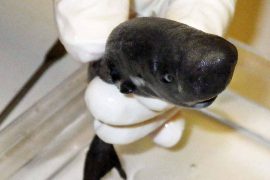
At just 5.5 inches long, the American pocket shark is small enough to rest comfortably in your hand. It also glows in the dark, using built in light organs scattered across its skin even far below the surface.
This miniature predator was hauled from deep water in the Gulf of Mexico during a 2010 research cruise.

Years later, scientists realized it was not only a new species, but also part of a shark group almost never seen in research nets.
Meet the American pocket shark
The work was led by Mark A. Grace, a fisheries biologist at the NMFS Mississippi Laboratories of NOAA Fisheries in Pascagoula, Mississippi.
His research often centers on sharks and other marine predators in the Gulf of Mexico during long term surveys.
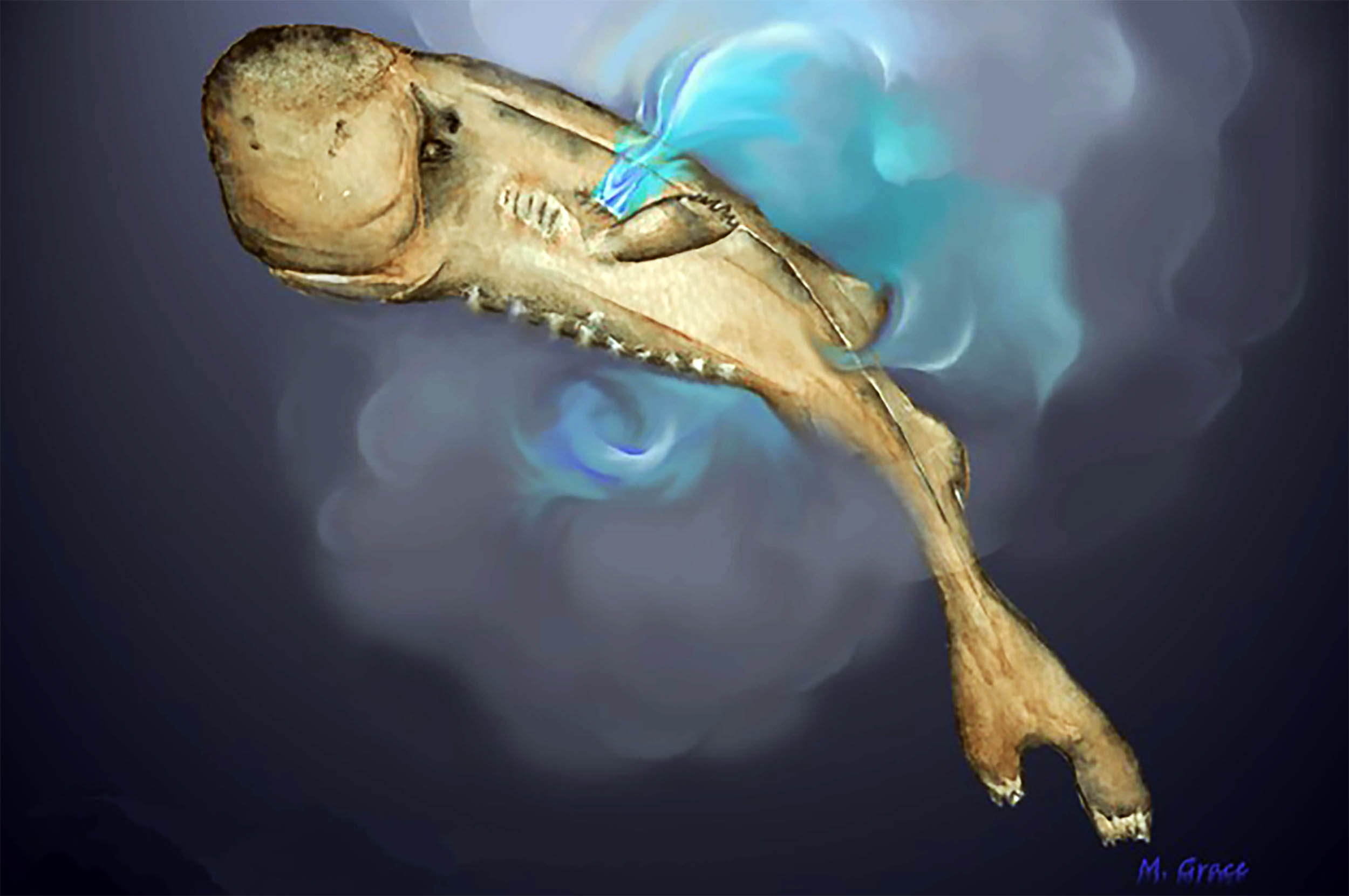
Pocket sharks carry two small cavities near the gills on each side of the body, whose exact role is still mysterious.
Their skin is sprinkled with photophores, tiny organs that produce light, turning this unusual animal into one of the smallest glowing sharks known.
Researchers formally described the species in a study that carefully compared it with the earlier Pacific pocket shark specimen.
They also noted a pit organ, a small sensory depression under the jaw, lights on the belly, and differences in teeth and backbone counts.
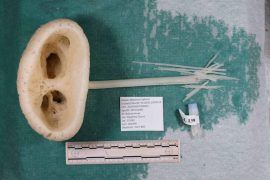
Before this description, scientists knew the genus from a single specimen netted off Chile in 1979 from deep offshore water.
Now the genus Mollisquama holds two species that live in different oceans and depths, far apart in geography and conditions.
Distinguishing between sharks
The tiny shark entered a freezer with thousands of other fish collected by the NOAA ship Pisces during surveys of prey for sperm whales.
Grace spotted it in 2013 while sorting preserved specimens, and he quickly sensed that the odd little shark did not match any known species.
Because the animal is so rare, the team avoided cutting into it during their entire investigation.
Instead they examined it with a dissecting microscope, X-ray images, and CT scans to see inside without leaving a mark.
They also turned to a synchrotron, a machine that makes extremely bright X-ray beams, at a facility in France.
At that center, the beam produced images that revealed details of the skeleton, tooth rows, and pockets that hospital scanners could not show.
Digital slices from those scans let the researchers count every vertebra and hidden tooth with confidence, even when they were still buried in cartilage.
That precision confirmed the new shark really is different from its Chilean cousin, rather than a young version of the same species.
Glowing bodies and hidden pockets
Many deep sea animals rely on bioluminescence, light produced by living tissues, to communicate, hide, or hunt in perpetual night conditions.
Sharks that live in the open water often glow from their bellies to erase their shadow when seen from below by prey.
Studies of other glowing sharks suggest that ventral light organs act as counterillumination, a camouflage system that matches faint light from above.
That mechanism helps predators sneak up on prey and keeps them hidden from larger hunters watching from deeper water.
The American pocket shark likely uses its glowing spots in similar ways, but the luminous pockets may add another trick.
A sudden burst of bright fluid from those pockets could startle a predator or lure curious prey closer long enough for a quick bite.
Nobody has seen this species alive in its natural habitat, so those functions remain educated guesses for scientists.
For now the single preserved specimen is the only window into how its light show might work.
Lessons from the pocket shark
“In the history of fisheries science, only two pocket sharks have ever been captured or reported,” said Dr. Grace.
His remark highlights just how rarely scientific nets cross paths with these tiny sharks.
The discovery underscores “how little we know about the Gulf,” said Dr. Henry Bart, director of the Tulane Biodiversity Research Institute (TUBRI).
He notes that this unknown world lies beneath shipping lanes, fishing grounds, and offshore platforms that people depend on every day.
Marine scientists estimate that hundreds of thousands of ocean species have yet to be formally described.
Many likely live in deep slopes, canyons, and offshore basins that only a handful of research cruises ever sample.
The pocket shark also shows the value of patient work in research collections, where specimens can sit unnoticed for years in museum drawers.
The tiny Gulf of Mexico shark also shows how NOAA scientists and university partners uncover discoveries by sharing data and specimens across institutions.
Photo by Tulane researcher Michael Doosey.
—–
Like what you read? Subscribe to our newsletter for engaging articles, exclusive content, and the latest updates.
Check us out on EarthSnap, a free app brought to you by Eric Ralls and Earth.com.
—–