Stunning remains of a dying star form the Spirograph Nebula



 Follow Earth on Google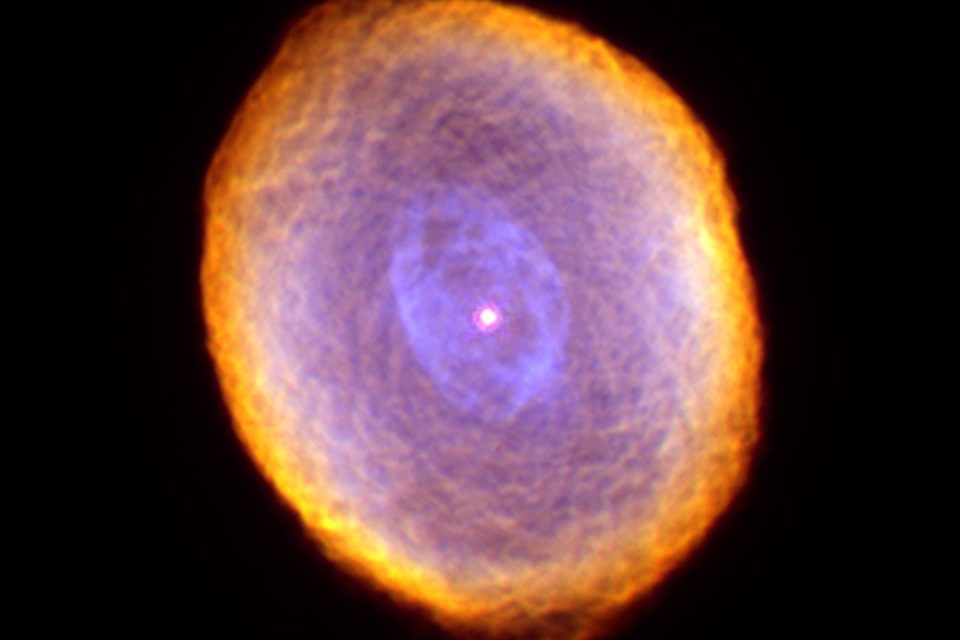
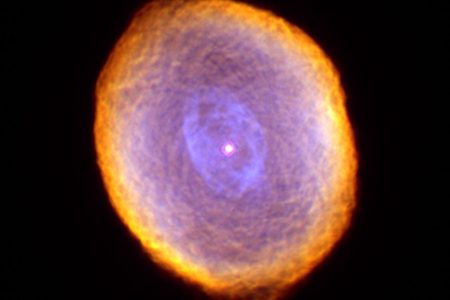
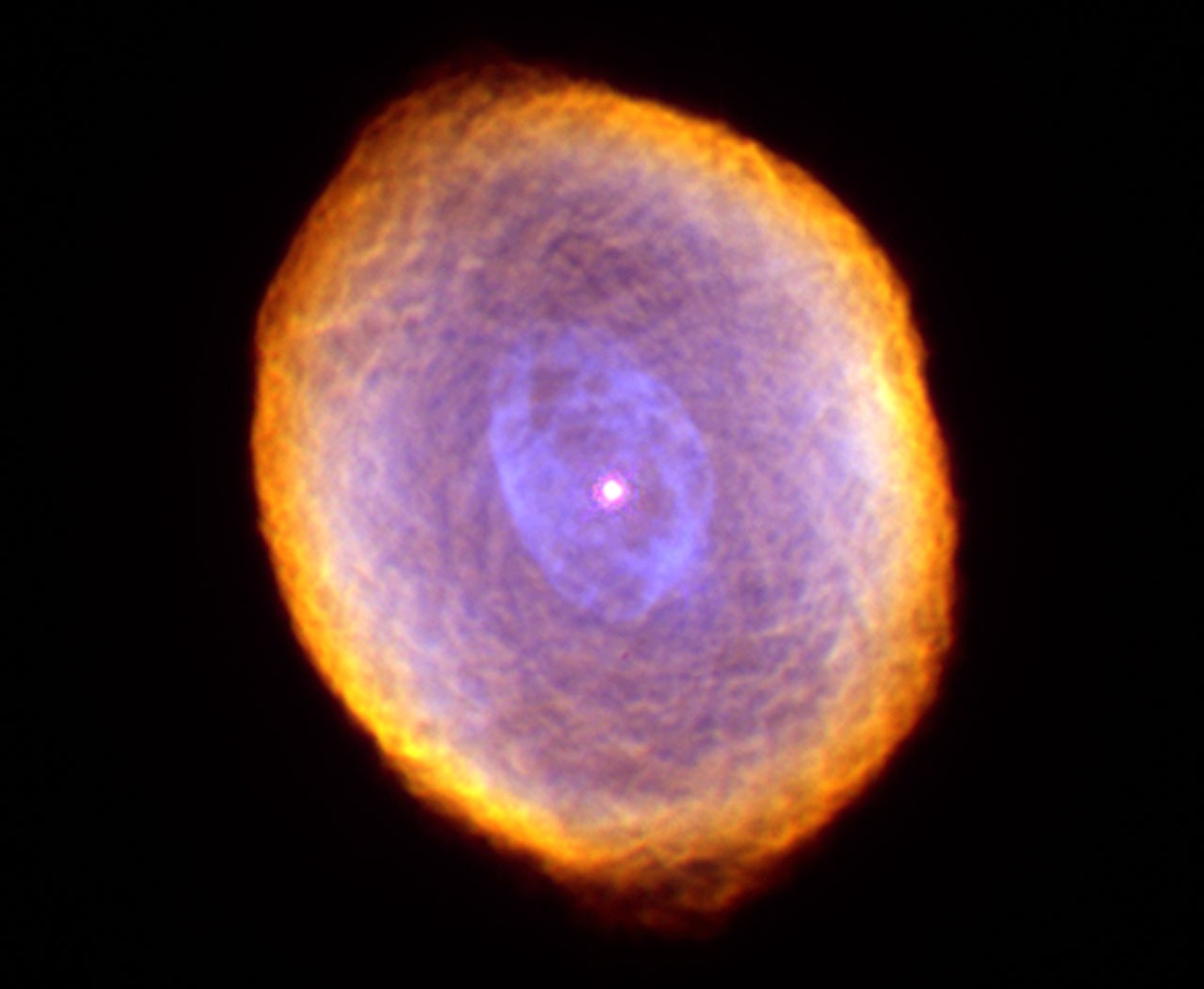
Today’s Image of the Day from the European Space Agency features IC 418, a small planetary nebula about 2,000 light-years from Earth.
The nebula shimmers with layers of light that seem to ripple across an empty stretch of the universe.
It’s a reminder that stars don’t simply disappear when they reach the end of their lives. Many leave behind shapes and colors that feel almost unreal.
IC 418 sits in the constellation Lepus and glows with the quiet intensity of a cut gemstone.
Astronomers have given it the nickname “Spirograph Nebula.” It looks delicate and intentional, yet its fine details remain a puzzle even after years of study.
A close look at a fading star
When the Hubble Space Telescope captured this image of IC 418, scientists noticed complex textures flowing across its face.
The image shows filaments, ripples, and knot-like structures, all sculpted by the expanding shell of gas cast off by a dying star.
The star at the center is now a white dwarf, finishing the last stage of its evolution. Over time, it pushed away its outer layers, leaving them to glow in ultraviolet light.
Only after these details were examined did researchers discuss where this picture came from and what it shows.
The teams working with the European Space Agency and NASA have studied nebulae like this for decades, yet even they don’t always understand what creates such intricate shapes.
In the case of IC 418, the textures appear “remarkable,” but their exact origin is still uncertain.
Why nebulae form such striking shapes
Planetary nebulae are created when Sun-like stars grow old and shed their outer material. The gas drifts outward and forms a glowing bubble around the hot core that remains.
This phase doesn’t last long in cosmic terms. Many nebulae fade within 10,000 years, which is a blink of an eye compared to the long life of a star.
IC 418 stands out because its structure seems unusually smooth in some regions and strongly patterned in others.
Most nebulae show layers created by periodic bursts of gas. Others are shaped by magnetic fields or stellar winds.
In this case, scientists can’t yet say which mechanism produced its distinct “Spirograph” appearance. They continue to compare it with other nebulae to narrow down the possibilities.
The future of the Sun
Modern telescopes make all of this possible. Hubble, in particular, has a long track record of turning faint patches of sky into crisp, detailed portraits. Its sharp images help experts understand how dying stars behave.
By tracing the shape, speed, and composition of these clouds, researchers can study how material flows back into space and eventually becomes part of new stars and planets.
Planetary nebulae might seem like distant pieces of cosmic art, but they offer clues about our own future. The Sun is expected to create one several billion years from now.
Studying nebulae such as IC 418 helps scientists predict what that final chapter may look like and how the Sun’s material might enrich the space around it.
The living legacy of dead stars
There’s also a broader story here. Every element heavier than helium – carbon, oxygen, nitrogen, and many others – was once released by aging stars. These materials drifted through the galaxy until they gathered into new systems.
Our bodies, the oceans, and Earth’s atmosphere all carry the fingerprints of stars that died long before the Solar System existed.
Space is full of phenomena that challenge simple explanations. IC 418 shows that even the quiet death of a modest star can produce stunning results. It won’t shine like this forever, but while it does, telescopes like Hubble allow us to admire it in sharp detail.
As the nebula continues to expand and fade, its patterns will stretch and soften. Eventually, they’ll drift into the background of the galaxy.
For now, IC 418 remains a luminous reminder that the universe is always changing and its energy is always shifting, even in the stillness of deep space.
Image Credit: NASA/ESA and The Hubble Heritage Team (STScI/AURA)
—–
Like what you read? Subscribe to our newsletter for engaging articles, exclusive content, and the latest updates.
Check us out on EarthSnap, a free app brought to you by Eric Ralls and Earth.com.
—–