Astronomers witness ultra-fast winds form in a black hole for the first time



 Follow Earth on Google
Supermassive black holes sit in the centers of galaxies, hidden by clouds of gas and dust, and usually keep their wildest behavior tucked out of sight. Every now and then, though, one puts on a show.
A recent observation caught one of these giants in the act as it lit up in X-rays and sent fierce winds racing through space.

The whole event happened fast. It lasted only hours, which is unusual for something that weighs millions of times more than our Sun.
Black hole sparks extreme winds
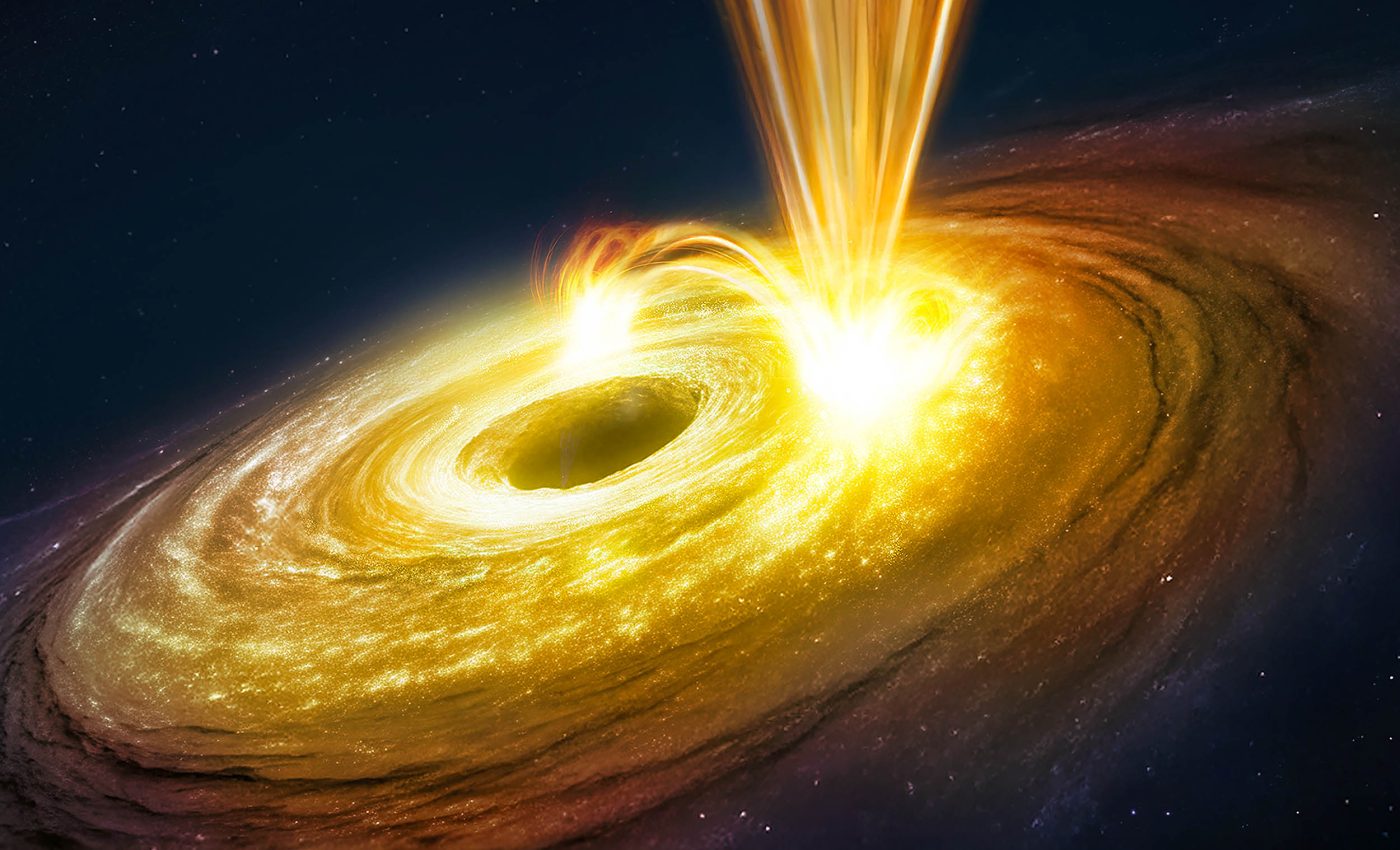
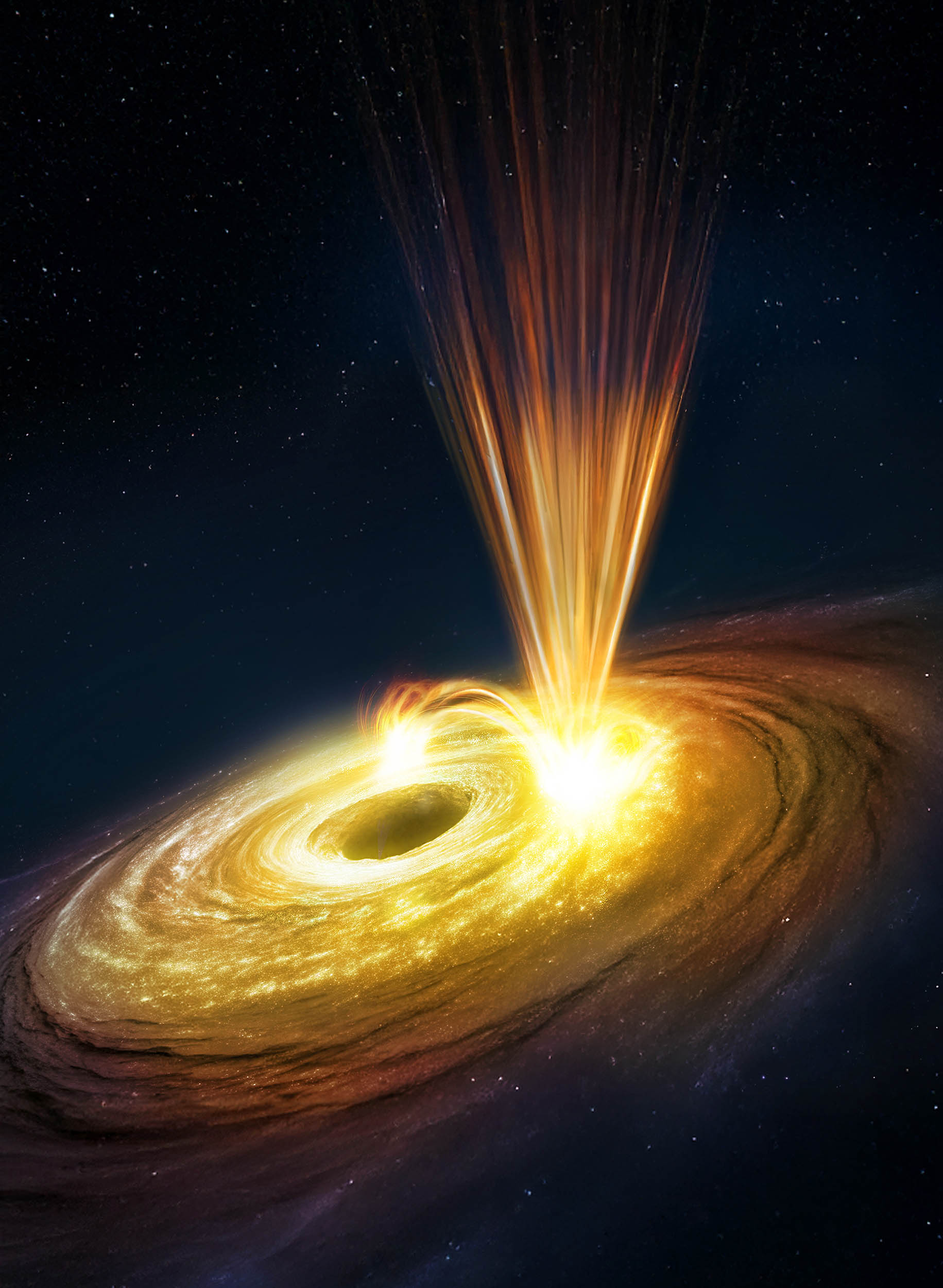
NGC 3783 is a spiral galaxy about 140 million light-years away. Astronomers studying it noticed a sharp flare of X-rays from the center. When the flare faded, winds rose from the area around the black hole.
These winds tore outward at 60,000 kilometers per second, roughly one-fifth the speed of light. This kind of sudden change doesn’t happen often, especially on such a short timeline.
“We’ve not watched a black hole create winds this speedily before. For the first time, we’ve seen how a rapid burst of X-ray light from a black hole immediately triggers ultra-fast winds, with these winds forming in just a single day,” said Liyi Gu, a researcher at the Space Research Organisation Netherlands (SRON).
Black hole flare in NGC 3783
The team used two major X-ray telescopes: XMM-Newton and XRISM. Working together, the instruments tracked the flare as it rose and fell. They also monitored the winds as they formed and changed.
XRISM examined the speed and structure of the winds, while XMM-Newton followed how the flare evolved and measured how strong the winds became.
The black hole powering this activity is about as heavy as 30 million Suns. It sits in the middle of the galaxy, where material spirals inward and heats up.
This bright region is called an active galactic nucleus, or AGN. These areas shine in many types of light and often push out strong jets and winds.
“AGNs are really fascinating and intense regions, and key targets for both XMM-Newton and XRISM.” said Matteo Guainazzi, ESA XRISM project scientist.
What might be driving the winds
Experts think the winds started when the AGN’s magnetic field shifted. Guainazzi explained that the winds may have appeared when the magnetic field suddenly “untwisted,” a bit like how the Sun unleashes flares.
The difference is scale. The Sun is small compared to a supermassive black hole, yet the same basic physics may apply.
By comparing these winds to events near our own star, the team found an interesting link. The team noted that coronal mass ejections can shoot out from the Sun at high speed.
One such eruption on November 11 sent material flying at 1,500 kilometers per second. That’s much slower than the winds from NGC 3783, but the idea behind both events may be similar.
Winds and galaxy evolution
Fast AGN winds can shape the future of a galaxy. They can carry energy outward and affect how new stars form.
“Windy AGNs also play a big role in how their host galaxies evolve over time, and how they form new stars,” said Camille Diez, a team member and ESA research fellow.
Their magnetic activity also gives scientists clues about how galaxies change across billions of years.
Lessons from NGC 3783
XMM-Newton has been studying the high-energy universe for more than 25 years. XRISM, launched in September 2023, focuses on how matter and energy move through space.
Together, they caught this rare event and provided a detailed look at the flare and the winds it unleashed.
“Their discovery stems from successful collaboration, something that’s a core part of all ESA missions.” said Erik Kuulkers, ESA XMM-Newton project scientist.
“By zeroing in on an active supermassive black hole, the two telescopes have found something we’ve not seen before: rapid, ultra-fast, flare-triggered winds reminiscent of those that form at the Sun.”
“Excitingly, this suggests that solar and high-energy physics may work in surprisingly familiar ways throughout the Universe.”
The full study was published in the journal Astronomy & Astrophysics.
—–
Like what you read? Subscribe to our newsletter for engaging articles, exclusive content, and the latest updates.
Check us out on EarthSnap, a free app brought to you by Eric Ralls and Earth.com.
—–