Warm water is melting Antarctica from below



 Follow Earth on Google
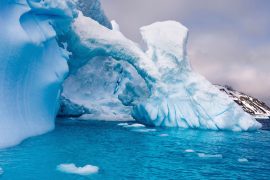
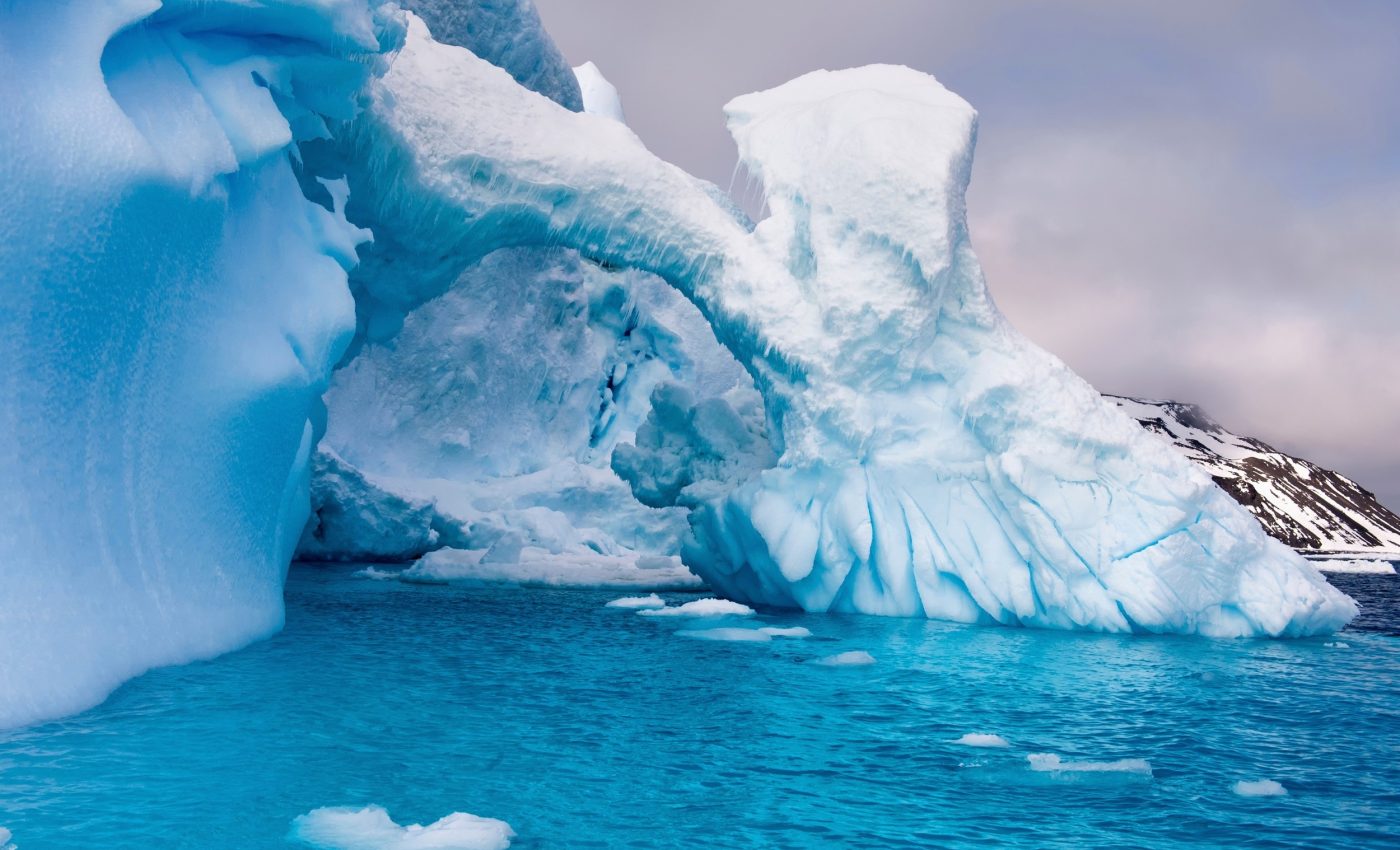
Warm water is quietly eroding Antarctica from below. Far beneath the surface, where ice shelves float on the ocean, seawater flows through hidden spaces and carries heat straight to the ice.
The heat makes ice shelves thinner and less stable, which affects how quickly glaciers slide into the sea and how fast sea level rises.

Scientists know this under-ice world matters, but the details of how warm water moves through these ice shelf “cavities” have stayed out of reach.
The circulation of warm water and the heat transport within these spaces remain mostly unknown, especially in places that are already losing a lot of ice.
One of those hotspots is the Dotson Ice Shelf in the Amundsen Sea, a region known for rapid glacial ice loss that is largely linked to increasing ocean heat around and beneath the ice.
A robot under the ice
To investigate, a team at the University of East Anglia (UEA) sent an autonomous underwater vehicle beneath the Dotson Ice Shelf, into the cavity where the ice floats over the sea.
The robot followed paths along the seabed and collected data across more than 100 kilometers of dive tracks, giving researchers a rare view of what is happening out of sight.
Study lead author Dr. Maren Richter is an expert in UEA’s Centre for Ocean and Atmospheric Sciences.
“Upward transport of deep warm water to the shallower ice-ocean boundary in ice shelf cavities is what drives melting at the underside of the ice shelf. This melting makes the ice shelf thinner, and therefore less strong,” said Dr. Richter.
When an ice shelf weakens, it can no longer hold back the glacier behind it as effectively, so changes below the ice matter far beyond the cavity itself.
How warm water reaches Antarctica
The Dotson survey shows that what happens to that deep, warm water is crucial.
“We found that while there is mixing of warm water with other, cooler, water, under the Dotson Ice Shelf most of the warm water is not mixed upward. Instead, it flows horizontally to the grounding line, the point where the glacier loses contact with the seabed and starts to float,” said Dr. Richter.
“This means that the water stays warm all the way to the grounding line, where it can melt the glacier directly. This can cause the glacier to retreat, speed up and lose more ice into the ocean. Together, the retreat, increased speed, and increased melt contribute to sea level rise globally.”
In other words, warm water can travel along the cavity, stay hot enough to matter, and then hit the grounding line where it has the most impact on the glacier’s stability.
A risky underwater mission
The vehicle used in this work is the Autosub Long Range autonomous underwater vehicle, better known by its nickname “Boaty McBoatface,” operated by the National Oceanography Centre.
During the mission under Dotson, Boaty recorded current speeds in a key inflow area to the east of the ice shelf of around five centimeters per second up to 10 centimeters per second. In the steepest parts of the seabed there, the gradient was about 45 degrees.
Boaty carried sensors that measured temperature, current, turbulence, and oxygen as it traveled along the bottom of the ice shelf cavity. It stayed about 100 meters above the seabed, and remained inside the cavity for approximately 74 hours.
The dataset comes from four missions in 2022. Missions that send a robot into an ice shelf cavity and then bring it back are very difficult, and ones that include instruments able to measure mixing are especially rare.
Warm water beneath Antarctica
Inside the Dotson cavity, the team observed warm, salty water sitting below colder, fresher water.
It was already known that warm water can be transported upward by mixing, and the new measurements show where that happens most strongly in this cavity.
The mixing and upward transport of warm water are strongest in the inflow areas to the east of the ice shelf, with the angle of the bedrock playing a particularly important role.
“We were expecting the influence of current speed on the mixing to be much higher than what we found. Instead, the shape of the seabed seems to be really important,” said Dr. Richter.
“We also found water in the deepest part of the cavity that was surprisingly warm, and we are now working to explain how and when it got there.”
Valuable insights for future research
The puzzle points to past changes in the circulation that may have carried heat into places that are hard to reach.
According to Dr. Richter, the mission was the first of its kind under the Dotson Ice Shelf.
“We gained very valuable baseline measurements which can now be compared to assumptions about mixing in regional and global models of ice shelf-ocean interactions, and to measurements under other ice shelf cavities, helping us understand how these cavities are similar or different from each other.”
The baseline measurements give modelers a firmer starting point when they estimate future ice loss and sea level rise.
The full study was published in the journal Ocean Sciences.
—–
Like what you read? Subscribe to our newsletter for engaging articles, exclusive content, and the latest updates.
Check us out on EarthSnap, a free app brought to you by Eric Ralls and Earth.com.
—–